87% of musicians now use AI. Here's what that means for your creative workflow
A new survey from music-tech platform LANDR found that 87% of musicians and producers use AI in at least one part of their process. Over 1,200 creators were polled, from beginners to full-time pros.
Use cases span writing, instrumental generation, arrangement help, mixing, final polish, artwork, and promotion. About 29% have used song-generation tools for parts of a track, while full auto-composed songs are still rare. Most artists prefer to steer the final product themselves.
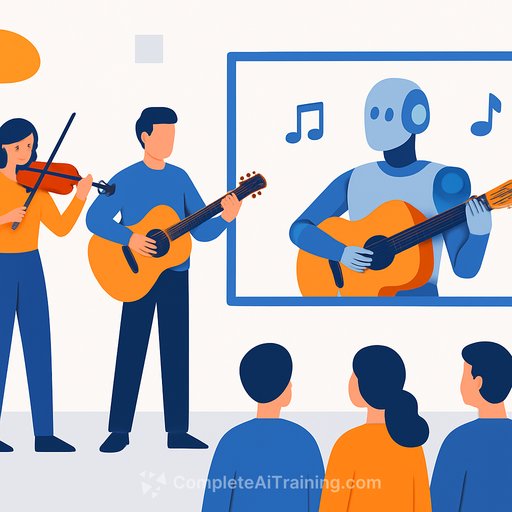
One respondent said they use AI "like a band of session musicians." Others lean on it for instrumental beds or placeholder vocals when collaborators aren't available.
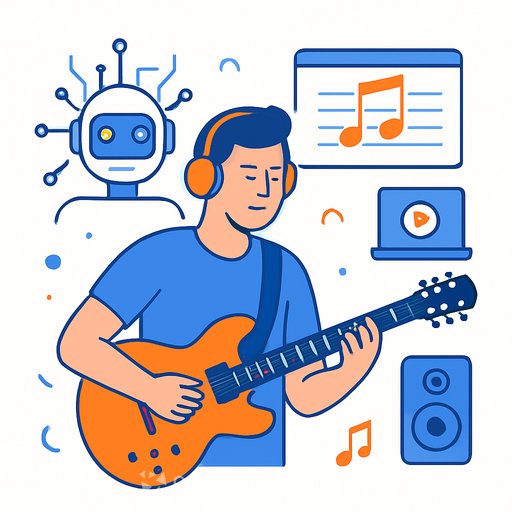
Where AI fits in your process
- Songwriting: draft lyric concepts, rhyme options, title lists, and story angles.
- Music ideas: generate chord progressions, basslines, drum grooves, and melodic hooks to spark momentum.
- Editing and arrangement: suggest structure, transitions, or alternate sections.
- Mix help: reference matching, noise cleanup, and first-pass balance.
- Final polish: loudness matching, format prep, and quick checks across systems.
- Visuals and promo: cover concepts, video ideas, press text, emails, and captions.
Why creators are using it
- Fills skill gaps so you can move from idea to draft without waiting on others.
- Speeds up low-leverage work, leaving more time for taste and performance.
- On-demand collaboration when schedules don't align.
- Cheap experiments: try five directions before committing to one.
The friction: uniqueness, emotion, and ownership
Some outputs can feel generic or low on emotion. That's fixable if you treat AI as scaffolding, not the structure. Keep your voice in front: swap sounds, rewrite lines, re-perform takes, and push timing and dynamics until it feels like you.
Ownership rules are still forming in many places. If your release plan depends on copyright, review current guidance from the U.S. Copyright Office and document your human contributions.
A practical setup you can copy
- Set clear constraints: mood, tempo, reference tracks, and a simple brief.
- Use AI for scaffolding: chords, groove, and a rough top-line. Keep versions.
- Replace placeholders with your own playing, sound design, and phrasing.
- Run a quick mix pass with AI tools, then finish by ear on your monitors.
- Generate 5-10 cover concepts, pick one, and refine your brand kit.
- Draft release notes, a one-sheet, and 3 caption variants per platform.
- Do a human pass before release: intent, emotion, and cohesion check.
Quick prompts to try
- "Give me three chord options in [genre] at [BPM] that carry a [mood] feel. Include roman numerals and suggested voicings."
- "Create an 8-bar drum pattern for a [genre] chorus. List kick, snare, hats in grid form."
- "Write a hook idea in 2 lines about [theme], vowel-heavy and easy to sing."
- "Suggest 5 release titles and a 120-word description for listeners of [artist/genre]."
- "Draft three social captions: tease, behind-the-scenes, and CTA to pre-save."
The indie edge
For solo artists, AI compresses the gap between idea and release. You can write, produce, mix, finalize, and ship without a large team or expensive studio. That reduces overhead and lets you publish more often, learn faster, and stay close to your listeners.
Keep your fingerprint
Use AI to move faster, not to replace your taste. Pick bolder sounds. Record real moments. Leave small imperfections that signal "human." That's what people come back for.
Tools and next steps
- Explore music-focused platforms like LANDR for ideation, mix help, and release tools.
- If you want a structured path to upskill, browse AI courses by job or scan popular AI tools.
Your membership also unlocks: