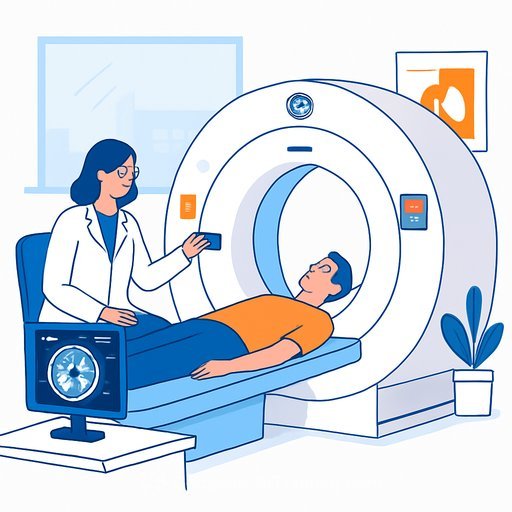
AI Is No Longer Optional in Radiology Operations
Health systems are not short on technology. They are short on people, time, and capacity. In imaging, that gap has pushed AI from "nice to have" to "we can't run without it."
That was the clear takeaway from Roland Rott, CEO and President of Imaging at GE HealthCare: "There is tremendous interest and growing trust [in AI]... without AI, I cannot imagine running my operation."
From Optional Tool to Operational Requirement
Radiology teams need to save time. Staffing isn't catching up, and demand keeps rising. The old approach-manual triage, manual scheduling, manual follow-up-cannot scale.
AI is being slotted directly into workflows to reduce friction: automating routine tasks, tightening handoffs, and giving leaders more throughput without more headcount. As Rott put it: "As a leader, I cannot do nothing. It is imperative that I give my users the tools to help them care for patients faster."
Turning Dormant Data Into Capacity
Healthcare is sitting on data it rarely uses. "We learned that 97% of all healthcare data has been unused until recently," said Rott. That unused data is now being put to work.
One practical example: using DICOM and prior exam data to set more accurate appointment lengths. If the patient's history suggests a complex scan, the slot expands. If it's straightforward, the slot shrinks. No extra keystrokes for staff. Just smarter scheduling and fewer wasted minutes.
This is not about flashy analytics. It is about converting idle data into predictable capacity and shorter waitlists.
What Healthcare Operations Leaders Are Asking
- Why is AI becoming a requirement in radiology operations?
Because staffing shortages and rising imaging volumes have outpaced manual workflows. AI absorbs operational strain by cutting wasted time, automating routine steps, and improving throughput without adding FTEs. - What problems is AI actually solving today?
Shorter exams, right-sized appointment slots, fewer bottlenecks at check-in and protocoling, and better use of scanner time. The value shows up in access, throughput, and workload-where it matters for operations. - How does AI use imaging and DICOM data to open capacity?
By analyzing prior exams, patient history, and scan characteristics to recommend precise slot lengths. This reduces overbooking and underutilization, creating more usable time in the day.
What to Do This Quarter
- Map the bottlenecks. Identify where minutes are lost: scheduling, prep, protocol selection, transport, or scan room turnover.
- Pilot targeted AI. Start with scheduling optimization that uses prior exams and DICOM metadata. Measure slot accuracy, no-shows, and on-time starts.
- Set guardrails. Define when staff can override AI recommendations and how those overrides feed back to improve the model.
- Measure what matters. Track throughput per scanner, average wait time by modality, and technologist overtime. Review weekly.
- Integrate, do not bolt on. Ensure AI plugs into RIS/PACS/EMR so staff do less clicking, not more.
- Train the team. Short, role-based training with live scenarios. Keep a tight feedback loop for quick adjustments.
Risks to Watch-and How to Mitigate
- Data quality. Bad inputs lead to bad slot recommendations. Establish data hygiene checks on DICOM tags and patient history fields.
- Workflow friction. If AI adds steps, adoption will stall. Design for fewer clicks and clear overrides.
- Equity and bias. Validate performance across patient groups and exam types. Monitor for drift.
- Privacy and security. Confirm PHI handling, audit trails, and vendor compliance before go-live.
Why This Matters for Operations
Access and stability are now the core metrics. AI that trims minutes from each stage of the imaging journey adds up to more patients seen, shorter queues, and fewer after-hours shifts. That is what keeps scanners productive and teams sane.
The playbook is straightforward: start narrow, integrate well, measure relentlessly, expand what works.
Useful Resources
- DICOM Standard - technical reference for imaging data that many AI tools rely on.
- RSNA: Radiology Workforce Shortage - context on staffing pressures driving operational change.
Level Up Your Team
- AI courses by job function - practical paths for operations leaders and imaging teams.
Your membership also unlocks: