How AI Is Changing Drug Discovery And Healthcare Investing
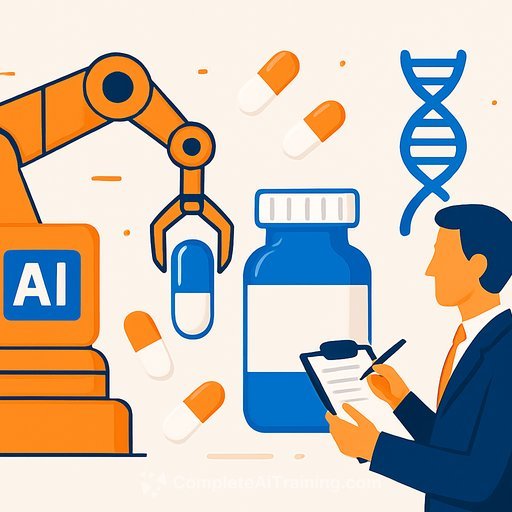
AI is changing how drugs are discovered by improving efficiency where failure is highest: the earliest stages of R&D. That shift is starting to influence how biotech innovators and large pharmaceutical companies plan pipelines, allocate capital, and manage long-term growth.
For healthcare teams, this means faster iteration, cleaner go/no-go decisions, and fewer dead ends before first-in-human studies. For investors, it points to better capital efficiency across the sector rather than overnight blockbusters.
What Problems AI Is Solving In Drug Development
Early discovery has been slow, expensive, and uncertain. AI helps focus resources earlier, trimming the list of candidates that reach the lab or animal studies.
- Target discovery: Mining multi-omics and literature to prioritize tractable biology and patient subgroups.
- Molecule design: Generative approaches to propose new chemotypes or peptide variants with multi-parameter optimization.
- Developability screens: In silico ADME/Tox, off-target, and manufacturability predictions before costly wet-lab work.
- Biomarkers and stratification: Early signal on who may respond, improving trial design from the start.
- Closed-loop labs: Active learning that links design, make, test cycles to accelerate cycle times.
The result: fewer blind screens, higher-quality leads, and quicker decisions on what to advance or cut.
Where Adoption Is Happening Across Healthcare
- Biotechnology: AI-native discovery platforms for novel targets and early innovation. Implication: exposure to breakthroughs and out-licensing opportunities.
- Pharmaceuticals: AI embedded across large pipelines to improve R&D throughput and durability. Implication: steadier pipeline refresh and better capital discipline.
Smaller biotechs push the frontier. Larger pharma firms bring scale, data, and global trial infrastructure to turn ideas into approved medicines.
Does AI Reduce Risk?
AI doesn't erase risk, but it can improve hit rates and timelines where attrition is worst. Even modest gains matter in a model where a few winners carry returns.
The takeaway isn't instant breakthroughs. It's smarter spend and more consistent progress through the "0 to 1" phase.
Why This Matters Now: The Patent Cliff
Major patent expirations loom through 2030, putting pressure on pipeline durability. AI-assisted discovery and developability screening can help established firms refresh assets more consistently.
For context on upcoming expirations, see Evaluate's tracking of global RX revenue at risk (EvaluatePharma). This backdrop is one reason pharma is scaling AI across therapeutic areas, including the growing field of peptide-based medicines.
How Fast The AI-Enabled Market May Grow
Industry estimates point to strong growth for AI tools in discovery through 2032 as platforms move from pilots into core workflows. Confidence is building that the biggest productivity gains sit in early research-where costs run high and failure rates are steep.
For a broader view of sector commentary, see this analysis from The Economist (AI in drugmaking).
What This Means For Healthcare Teams
- Data readiness: Clean assay data, FAIR principles, consistent metadata, and strict versioning.
- Model governance: Reproducibility, prospective validation, bias audits, and change control.
- R&D workflow fit: Tie models to specific decisions (e.g., triage thresholds, DMPK gates, toxicity flags).
- Automation links: Connect in silico design with high-throughput synthesis and screening.
- Partner strategy: Mix build, buy, and partner; protect data/IP while tapping external platforms.
- Clinical impact: Use AI-derived biomarkers and enrichment strategies to cut trial risk and size.
Track a small set of hard metrics: qualified leads per dollar, cycle time from hit to lead, preclinical attrition by cause, phase transition success rates, cost to first-in-human, and model lift versus historical baselines.
Accessing The Trend As An Investor
Two ETFs provide complementary exposure across the innovation cycle:
- VanEck Biotech ETF (BBH): Focuses on leading biotech companies at the discovery and innovation edge, including users of AI-enabled platforms.
- VanEck Pharmaceutical ETF (PPH): Tracks large, liquid global drugmakers with diversified revenue and strong commercialization capabilities.
Together, they balance earlier-stage upside with established pipelines and global scale. Past performance is no guarantee of future results.
Bottom Line
AI is making early drug discovery more efficient. That supports higher R&D productivity, steadier pipeline replenishment as patents roll off, and a stronger long-term setup for both biotech innovators and large pharmaceutical leaders.
If your organization is upskilling teams on practical AI for R&D or operations, explore job-focused resources at AI Research Courses and AI Productivity Courses.
Your membership also unlocks: