How AI Is Reshaping the Great Flattening: What Managers Need to Know
Companies are removing layers of middle management and giving remaining leaders bigger teams. On paper, it looks efficient. In practice, it changes the manager's job entirely.
"Increasing the number of direct reports to a single manager - often called 'span of control' - isn't just a structural change. It fundamentally reshapes the role of the manager and changes what it takes to practice effective leadership," said Jim Harter of Gallup.
The data: bigger spans, uneven readiness
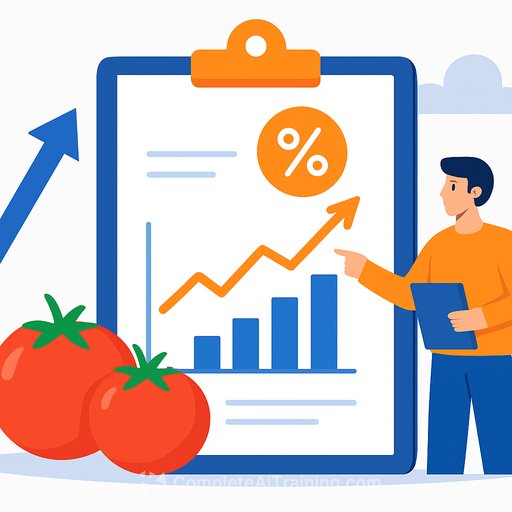
Gallup reports the average span of control in the U.S. rose from 10.9 in 2024 to 12.1 in 2025 - nearly 50% higher than in 2013. U.S. Bureau of Labor Statistics data show a similar ratio: roughly one manager for every 11.5 employees.
Yet the median manager still leads 5-6 people. A smaller but growing set of very large teams pulls the average up, driven by consolidating or removing middle-management roles.
Gallup's research is blunt: engagement - not headcount - limits scale. Across 92,000 teams, smaller teams with higher engagement consistently outperform. Teams of 20+ can win, but results swing widely by industry and working conditions. Large teams work only under the right setup.
How AI expands a manager's span (without burning them out)
"Up until now, I would have said removing all these management layers was a big mistake," said Jennifer Dulski, CEO of Rising Team. "However, it is now possible to remove layers of management and still be effective as an organization. That is because of AI tools that enable companies to turn managers into 'supermanagers' who can lead much larger teams."
In the past, she recommended 5-7 direct reports per manager. With AI support, she argues managers can effectively lead 15-20.
- Personalized leadership development at scale: AI can act as a personal coach, assess strengths and gaps, and deliver tailored practice - something too costly to do manually for every manager.
- Administrative load off the plate: Automate status updates, meeting notes, follow-ups, resource routing, and capacity planning so leaders spend their time on decisions and people, not paperwork.
- Augmented connection: AI's "perfect memory" keeps track of goals, preferences, and commitments so managers can run better 1:1s and team rituals, and actually follow through.
Feedback: the highest-ROI habit
Gallup finds that meaningful feedback at least once per week nearly triples engagement regardless of team size. Still, only 16% of employees say their last manager conversation was meaningful.
"The key is to try to give feedback as soon as possible, so people aren't waiting to understand how they are doing," Dulski said. "It's the most common mistake managers make."
- Make it meaningful: Include recognition for recent work, collaboration notes, current goals and priorities, and a focus on strengths.
- Keep it brief and consistent: 15-30 minutes weekly is enough if you show up prepared.
- Practice with AI: Roleplay tough conversations, get scored, and rehearse phrasing before high-stakes moments.
Can one manager lead 20 people? Use this decision guide
The honest answer: it depends. Large teams thrive only with the right talent, work design, engagement practices, and technology.
- Manager capability: Proven at coaching, prioritization, and context-setting. Comfortable delegating decisions and saying "no."
- Work design: Clear roles, fewer custom projects per person, and standardized workflows to reduce variability.
- Engagement system: Weekly 1:1s, team rituals, public goals, visible progress, and fast feedback loops.
- Tech stack: AI-enabled coaching, meeting capture, task triage, and performance insights baked into the team's daily tools.
If two or more of these are weak, don't expand the span yet. Fix the system first.
Leader operating cadence for teams of 12-20+
- Weekly 1:1s (15-30 min): Progress, priorities, blockers, and one strength-based coaching moment.
- Team ritual (30-45 min weekly): Wins, top priorities, cross-team asks, and decisions needed - recorded and summarized automatically.
- Monthly skip-levels: Sample the system for signal on process, clarity, and morale.
- Documentation: One-page living plan per person (goals, KPIs, growth focus). AI keeps it current from meetings and updates.
- Feedback rhythm: Real-time micro-feedback after key moments; weekly recognition; monthly growth check-in.
- Time allocation target: 50% people/decisions, 30% strategy/systems, 20% admin (drive admin toward 10% with automation).
- Decision hygiene: Clear owners, deadlines, and decision logs. Use AI to surface stalled decisions and unresolved risks.
Practical AI plays for managers
- Prepare faster: Auto-summarize updates into "what changed, what matters, where to help" before 1:1s.
- Coach better: Use AI prompts to frame strengths-based feedback and difficult conversations; rehearse before delivering.
- Reduce noise: Route status pings and approvals through AI agents; escalate only exceptions and decisions.
- Track commitments: Let AI log action items, nudge follow-ups, and flag slippage before it becomes a problem.
For executives: flattening isn't a strategy
Cutting layers without redesigning management creates hidden costs: slower decisions, churn, and missed priorities. The work is to build a system where bigger teams can actually succeed.
- Reset role design: Clarify decision rights, trim individual scopes, and standardize core workflows.
- Enable the managers: Provide AI-supported training, coaching, and feedback tools - and measure usage and outcomes.
- Instrument engagement: Track weekly feedback rates, recognition moments, and goal clarity alongside output.
- Fund automation first: Remove administrative drag before increasing span of control.
Bottom line
Team size doesn't decide performance - engagement and enablement do. With AI, managers can lead larger teams well, but only if the system supports it.
Start by upgrading feedback, simplifying work, and giving managers the tools to spend more time with people and decisions - the parts that actually move the needle.
Your membership also unlocks: