Generative AI Is Already Cutting Income for 1 in 10 Japanese Creators
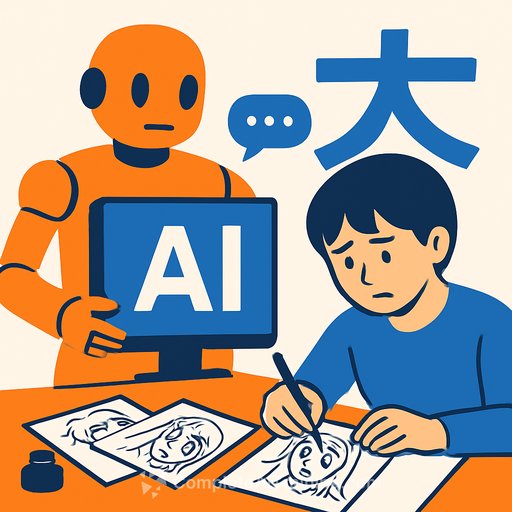
If you draw for a living-manga, illustration, animation-AI isn't a distant threat. It's affecting paychecks right now. A new nationwide survey of 24,991 creatives in Japan shows real income drops tied to generative AI.
What the numbers say
- 12% of respondents said their income fell due to generative AI.
- 9.3% saw a 10%-50% drop; 2.7% lost more than half their income.
- 88.6% view AI as a threat to their livelihood (65.3% strongly, 23.3% somewhat).
- Respondents: illustrators 54.2%, manga artists 15.0%, animators 2.2%, writers/novelists 7.5%, video producers 2.5%.
How the damage shows up
Creators reported pressure to accept shorter deadlines and lower fees under the assumption AI will "fill the gaps." Others lost commissions entirely as clients switched to AI. The takeaway: clients are resetting expectations on speed and price-often without a fair basis.
As one industry leader warned, the harm is already visible and likely to grow without intervention.
Use of AI among creators
- 62.9% don't use generative AI and have no plans to.
- 21.4% use it for brainstorming and idea generation.
- 9.3% automate routine tasks (e.g., backgrounds, proofreading).
- 4.1% use it for rough sketches/drafts; 2.8% use it to finish parts of a work.
This split explains the friction: many clients assume AI efficiencies that creators either don't want or can't ethically accept under current terms.
Reputation risks and disputes
- 77.8% witnessed trouble involving near-identical works, suspicion of AI use, or online abuse.
- 14.5% experienced these issues personally.
One novelist warned that as proof of non-AI creation gets harder, "witch hunts" are a risk. That's not hypothetical-false accusations are already causing damage.
What creators want from policy
- 92.8% say legal disclosure of copyrighted training data is essential.
- 61.6% want opt-in consent for training; 26.6% favor banning training on copyrighted works in principle.
One illustrator selling on stock sites put it plainly: they're now competing with images likely trained on their own work-without permission.
Practical steps to protect your work and income
- Update contracts: Add clauses covering AI usage, disclosure, and labeling. Set minimum rates and timelines that assume human work unless explicitly agreed otherwise.
- Document authorship: Keep layered files, timestamps, drafts, and process videos. This evidence helps counter false claims and supports takedown or dispute processes.
- Clarify deliverables: Specify what is human-made, what tools are used, and the client's rights. Require credit for human authorship where appropriate.
- Price the "AI assumption" upfront: If a client expects AI-accelerated timelines, quote separate rates for AI-assisted vs. human-only workflows-or decline.
- Use AI tactically (if you choose): Offload low-value tasks (e.g., reference boards, background iterations, spell checks) while keeping core style and decisions human.
- Educate clients: Show the difference between trained style and your originality. Make your process visible so clients value what only you can do.
Where to go next
- For current guidance on AI and copyright, see the U.S. Copyright Office's resource hub here.
- If you want structured ways to integrate AI on your terms (without diluting your style), explore role-specific learning paths at Complete AI Training.
The policy push
There's strong support for transparency in training data, labeling of AI-generated works, and revenue-sharing systems that include the original artists. The message to lawmakers is clear: move fast and make the rules concrete.
If you create for a living, this is the moment to lock down contracts, tighten your process, and speak up in industry groups. Protect your work now, and set boundaries before someone else sets them for you.
Your membership also unlocks: