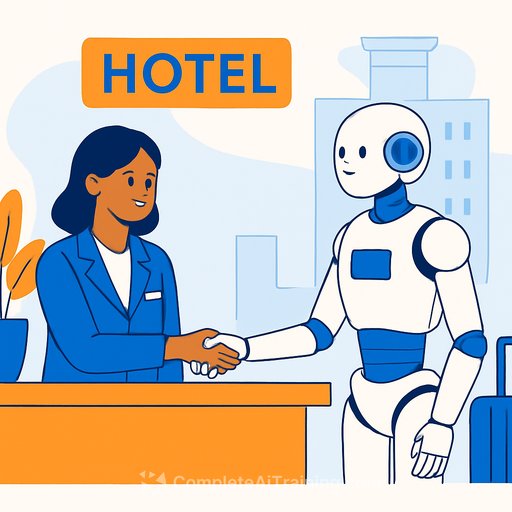
AI Belongs in the Background. People Make the Stay.
AI is everywhere in hospitality - pricing, forecasting, chatbots, digital concierges. It's useful. It saves time. But the moment a guest steps into your orbit, the rule still stands: the human touch is what they remember.
At ME by Meliá Dubai, that line is clear. The Aura team sits at the center of the guest journey, using tech to extend their reach while keeping emotional intelligence out front.
Convenience is up. Expectations are higher.
As one leader at the property puts it, AI has boosted speed and access - online check-ins, instant requests, always-on information. That shift raised the bar for connection. "Because of this digitalisation, the emotional aspect of a hotel stay has become even more valuable... Guests want to feel that what they are experiencing is real and that there is a genuine human presence behind the service."
In short: as operations get more automated, emotional currency goes up.
AI is not the star
Across the sector, AI is best used as an invisible assistant - not the face of the stay. That's the approach at ME by Meliá Dubai. "Technology is what allows us to be present beyond physical interaction... However, there is a very fine line between using AI as a support and allowing it to take control."
Data can store preferences. People read a room. "We use technology as an enabler, not as a substitute... A system can store data, but only a person can understand mood, context and emotion."
Where personalisation goes wrong
The trap: forced, intrusive "personalisation." Many brands chase profiles and push questions. It feels clinical. "Personalisation usually goes wrong when it becomes forced or intrusive... Guests do not want to feel analysed; they want to feel understood."
The best moments are simple and human. Spot a preference. Catch a detail in conversation. Act on it quietly, without making it a performance.
Personalisation starts before arrival
The guest's sense of care starts the second they touch your brand online. Tone, visuals, and response speed all set the expectation. "Personalisation is not communicated by listing services... but by the way the brand speaks to the guest."
Warm, conversational, guest-first communication signals: we see individuals, not bookings.
The real luxury: Emotional intelligence
True personalisation is adaptive. Some guests want space. Others want conversation. Emotional intelligence is the ability to sense which is which - and switch your approach without being asked.
It matters most when things go wrong. "A guest rarely remembers the issue itself; they remember how they were treated." That's the moment your brand is defined.
Your playbook: Blend AI with EI
- Decide what AI owns. Forecasting, pricing, routing requests, preference memory, and task automation. Keep guest-facing nuance with people.
- Make observation a core SOP. Train staff to note casual mentions (celebrations, routines, interests) and log only what's useful. Act later, subtly.
- Reduce data friction. Collect less, use it better. Explain why you ask. Offer opt-outs. Clean old data. Prioritise consent and privacy.
- Start before arrival. Audit website and pre-arrival emails. Use human language, segment by trip purpose, and respond fast with a human fallback.
- Coach emotional intelligence. Role-play tone shifts, active listening, and de-escalation. Reward empathy as much as efficiency.
- Design recovery that restores trust. Empower staff with clear limits to fix issues on the spot. Follow up personally. Close the loop.
- Measure what guests feel. Add "felt cared for," "felt recognised," and "staff anticipated needs" to your surveys. Track text sentiment, not just scores.
- Keep AI in the background. Use AI for triage and suggestions, but let people decide what to say and do.
Signals to act on (and how)
- Energy level. Short, quiet replies? Offer speed and privacy. Open, chatty tone? Offer options and conversation.
- Trip purpose. Business: reliability and silence. Leisure: discovery and small moments. Celebration: recognition and surprise.
- Timing. After a long flight: simplify, escort, hydrate. Mid-stay: check in without hovering. Pre-departure: smooth exit, offer help with transport.
Practical guest-facing examples
- Subtle recognition. "Welcome back - we set the same pillow type you liked last time. If you want to switch, say the word."
- Quiet celebrations. If a birthday was mentioned casually, place a handwritten note and a small amenity in-room - no announcement at check-in.
- Proactive recovery. If housekeeping missed a window, apologise once, fix immediately, and follow with a personal check-in later that day.
Team rhythms that keep tech helpful
- Morning huddles. Share VIPs, returning guests, and sensitive notes. Assign one owner per guest story.
- Midday scan. Review AI flags (late arrivals, room-readiness risks, unresolved requests). Convert the top issues into human outreach.
- Evening close. Log wins and misses. Update preference notes with context, not just checkboxes.
Bottom line
AI can process data and speed up the back end. People create meaning. The stays guests talk about aren't "efficient"; they feel honest, attentive, and real.
Use tech to get out of your team's way. Put your best people where it matters: seeing the person behind the reservation.
Further reading
Want practical ways to apply AI without losing the human element? Explore AI for Hospitality & Events for playbooks, tools and training focused on hotels and guest experience.
Your membership also unlocks: