AI Kiosks Set to Rewrite Rural Healthcare: Tata Elxsi Bets Big on Smart, Connected Care in America
Published: 03 Dec 2025
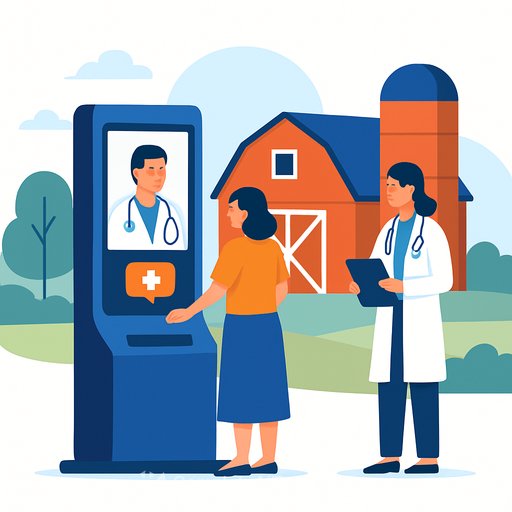
Tata Elxsi is rolling out AI-enabled digital health kiosks to extend clinical reach across rural U.S. communities. The goal is simple: shorten the distance to care, give patients real access to clinicians, and bring basic diagnostics closer to home.
The first deployments start in Illinois with the University of Illinois Urbana-Champaign and OSF HealthCare. This blend of engineering, clinical practice, and research targets high-friction gaps in chronic care, preventive services, post-discharge follow-up, and mental health support.
How the kiosks work
- Integrated platform: AI analytics, IoT health devices, telemedicine, and EHR connectivity in a single unit.
- On-site services: vital-sign checks, video consultations, screening workflows, and personalized health insights.
- Early detection: risk flags for chronic conditions and acute concerns based on real-time data.
- Cloud-first: fast processing, secure storage, and centralized fleet management for multi-site scale.
Clinical use cases that matter
- Chronic disease management: hypertension, diabetes, COPD monitoring with timely escalations.
- Preventive care: screenings, immunization reminders, lifestyle coaching prompts.
- Post-discharge: vitals tracking, symptom checks, and quick routes back to care teams.
- Mental health: basic assessments and referral pathways to licensed professionals.
Why this is useful for health systems and rural clinics
- Fewer avoidable visits: triage and early intervention reduce unnecessary ED utilization.
- Better adherence: automated nudges and consistent monitoring support treatment plans.
- Expanded panel capacity: clinicians can manage more patients without more buildings.
- Community presence: services move closer to where people live, work, and shop.
Deployment plan
Illinois is the launchpad. Additional regions will follow in phases so teams can capture feedback, refine workflows, and stress-test connectivity and staffing models before broader scale.
What to evaluate before adopting
- EHR integration: SMART on FHIR or custom APIs, data mapping, orders, and note routing.
- Network reliability: LTE/5G, satellite, or fixed broadband options; offline queueing for outages.
- Staffing and workflow: kiosk hosts, escalation protocols, remote clinician coverage, and hours.
- Clinical governance: inclusion/exclusion criteria, referral rules, quality and safety checks.
- Licensure and reimbursement: telehealth licensure, incident-to billing, remote monitoring codes, and payer rules.
- Security and privacy: encryption, access control, audit trails, and HIPAA-compliant operations.
- Community engagement: location selection, language access, and trusted local partners.
Metrics to track from day one
- Access: time-to-appointment, travel miles saved, visit availability by ZIP code.
- Utilization: encounter volume per kiosk, peak hours, conversion to follow-up care.
- Quality: A1c and BP control rates, 30-day readmissions, screening completion rates.
- Avoidable use: ED visits per 1,000, admission rates for ambulatory-sensitive conditions.
- Experience: patient satisfaction (CAHPS items), clinician workload, and escalation speed.
- Economics: cost per encounter, reimbursement yield, and total cost of care impact.
What's on the roadmap
- Advanced remote diagnostics and point-of-care testing integrations.
- Automated workflows that route data, orders, and follow-ups with fewer manual steps.
- Stronger connectivity options, including broadband partnerships for hard-to-serve areas.
Why now
Rural clinics and health systems need practical ways to extend care without adding brick-and-mortar. Kiosks provide a flexible node in a distributed model, bringing diagnostics and clinical touchpoints closer to patients while keeping data linked to existing records.
Getting started: a short checklist
- Pick two to three priority use cases and define clear inclusion criteria.
- Map the end-to-end workflow from intake to documentation and follow-up.
- Pilot in one or two communities with different connectivity profiles.
- Assign an operations owner and a clinical lead; review metrics weekly for 90 days.
- Plan a phased scale-up with standard operating procedures and training.
For policy and reimbursement context, see HHS Telehealth resources and the FCC Rural Health Care Program.
If your team is building AI skills for frontline care and operations, explore practical options in AI courses by job.
Bottom line
This initiative places reliable clinical entry points closer to people who have been cut off from routine care. If it scales as planned, it could become a workable blueprint for last-mile, AI-assisted healthcare across rural America and beyond.
Your membership also unlocks: