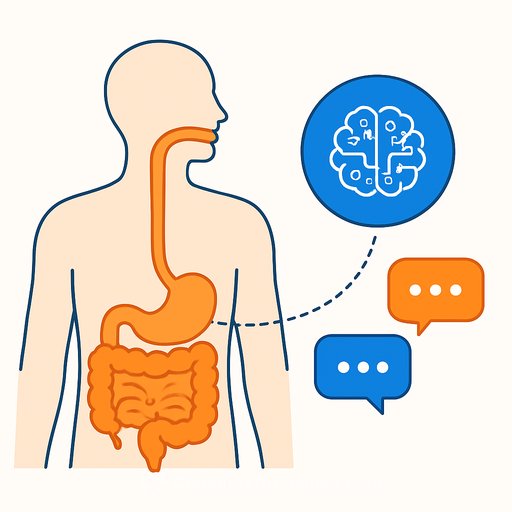
Clinical Trials on AI Language Models in Digestive Healthcare: What the RCTs Actually Show
AI language models are moving from demos to hospital corridors, but the clinical proof is thin. A new review in Gastroenterology & Endoscopy offers the first snapshot of randomized controlled trials evaluating these tools in digestive diseases-and the signal is early, cautious, and uneven.
The team mapped all published and ongoing RCTs since 2022; for broader work on LLMs and clinical studies see Research. They found 14 trials in total: four published and ten still in progress.
Where the RCTs are happening and what they test
- Geography: mostly China and the United States.
- Clinical focus: gastrointestinal and hepatobiliary diseases.
- Primary uses: clinical decision support and patient education.
- Core task: question answering dominates.
- Models under test: both general-purpose systems (e.g., ChatGPT-like tools) and domain-specific medical LLMs.
What the evidence actually says
Interest is high, but high-quality clinical evidence is still scarce. Many trials are single-center and exploratory, and only a subset use real patient data.
Most studies claim clinical relevance, yet few measure hard outcomes that matter to patients and operations. Reporting is inconsistent, and risk assessments for hallucinated outputs, bias, and data privacy are limited.
The message from the review is straightforward: LLMs should be evaluated as assistive tools under clinician oversight-not as replacements. RCTs need to show outcome improvements before these systems are scaled.
Practical actions for clinicians and researchers
- Start with adjunct use cases where oversight is natural (e.g., patient Q&A drafts, guideline reminders, discharge note support).
- Design trials that use real patient data and measure patient-centered outcomes, workflow efficiency, and safety signals.
- Adopt reporting standards built for AI interventions, such as the CONSORT-AI extension and SPIRIT-AI.
- Favor multicenter, pragmatic designs that reflect real clinical environments.
- Predefine monitoring for hallucinations, drift, bias, and privacy breaches; log model prompts and outputs for audit.
- Compare general-purpose vs. specialty models on the same tasks; document trade-offs in accuracy, cost, and maintenance.
- Set task-specific success metrics (e.g., adverse event reduction, time-to-disposition, patient comprehension scores).
- Build governance: credentialing, role-based access, human-in-the-loop checkpoints, and incident response protocols.
- Train staff on safe use, prompt discipline, and known failure modes. Keep the human decision-maker accountable.
What to expect next
The field is shifting from feasibility studies to outcome-focused testing. Expect more workflow-embedded trials, clearer reporting, and stronger scrutiny on safety and privacy.
If your team is building capability for AI-assisted care and wants structured upskilling, browse focused learning tracks: OpenAI Courses.
To track active and planned trials, start with the public registry: ClinicalTrials.gov.
Bottom line
LLMs show promise as clinical assistants in digestive healthcare, but the RCT evidence is early. Until rigorous trials demonstrate clear benefits and safety, keep deployments narrow, supervised, and measured.
Your membership also unlocks: