
AI news ·
AI law firm wins case in English court in first trial with AI lawyer
An AI law firm won a debt recovery case in what's believed to be the first trial with AI-led legal prep. It charged £400 to recover £7,000, a fraction of typical fees.
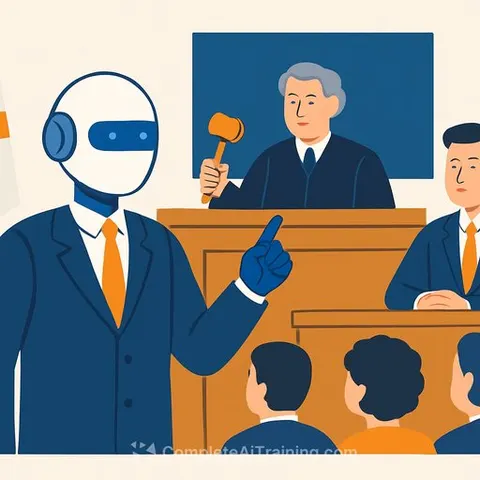
An artificial intelligence law firm has won a debt recovery case in an English court, believed to be the first trial secured with an AI lawyer handling the legal preparation. The firm, Garfield AI, charged a freelance HR consultant £400 to pursue an unpaid debt of £7,000, a fraction of what a traditional law firm would demand for a contested claim.
Tamires Camal Taquidir used Garfield to send a legal letter and issue court proceedings over the unpaid debt. When the defendant responded with a counterclaim, the AI firm prepared four witness statements and a document bundle for the three-hour trial at Wandsworth county court on 14 May. The court found in Taquidir's favour and awarded her the money owed.
How the AI law firm operates
Garfield AI was authorised by the Solicitors Regulation Authority in April last year. It handles claims from £30 to £10,000. The firm conducted all the pre-trial legal work, then instructed a human barrister to advocate for the client in court. Co-founder Philip Young called the outcome a "landmark moment" for access to justice. Many small businesses, he said, write off debts because the cost of litigation outweighs the potential recovery.
Human advocacy remained essential
Dominic Li, the barrister who represented Taquidir, said Garfield presented the case "clearly and efficiently," but added that advocacy at trial was "a fundamentally human exercise." Taquidir acknowledged that the AI support made the process viable. "When the counterclaim was brought, it was intended to intimidate me, but I knew I had accessible, cost-effective and competent support," she said. "I'm delighted by the result."
AI missteps elsewhere in the profession
The success sits alongside warnings about AI in legal settings. Last month, international firm Pinsent Masons referred itself to the Solicitors Regulation Authority after misleading a court twice based on results from an internal AI system. Such incidents highlight the risk of over-relying on the technology without human oversight.
Why this matters for legal professionals
The Wandsworth county court victory shows that AI can handle routine litigation preparation at a cost that makes small claims enforcement practical. For solicitors and barristers, this points to a future where tasks like drafting witness statements or compiling bundles are automated. As AI tools enter legal workflows, professionals are turning to AI for Legal training to understand where the technology fits and where human judgment remains non-negotiable.