AI Agents Clear a New Bar on Legal Tasks
San Francisco, CA - February 6, 2026: New benchmark results show a step-change in AI performance on professional legal work. The Mercor APEX-Agents Leaderboard reports stronger scores across legal analysis, contract review, and compliance tasks.
Anthropic's Opus 4.6 is leading this round: 29.8% accuracy in one-shot trials and 45.0% when allowed multiple attempts. That's a notable jump from the previous state-of-the-art.
What Changed
Last month, every major lab was under 25% on legal tasks. Many wrote off near-term impact on licensed practice. This week's numbers tell a different story.
"Jumping from 18.4% to 29.8% in a few months is insane," said Mercor CEO Brendan Foody. The trend line is pointing up, even if we're still far from human-level judgment.
The Benchmark at a Glance
- Focus: real professional workflows, not trivia or rote recall.
- Tasks: contract analysis, legal research, corporate compliance checks.
- Scoring: accuracy and reasoning quality across multi-step problems.
- Source: Mercor APEX-Agents Leaderboard official site.
The Technical Shift: Agentic Systems
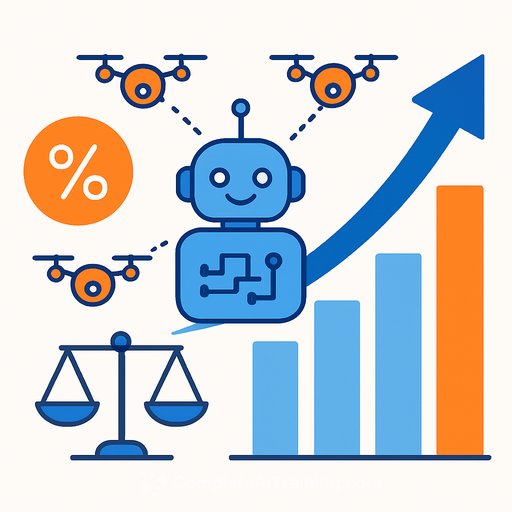
Opus 4.6 introduces "agent swarm" features. Multiple specialized agents split a matter into sub-tasks, compare outputs, and refine the answer.
Think Research, clause analysis, and compliance checks running in parallel, then merged. It mirrors how legal teams work and improves reasoning over single-pass prompts.
Benchmark Numbers (No Hype, Just Data)
- Previous State-of-the-Art (Dec 2025): 18.4% one-shot, 22.1% multi-attempt.
- Anthropic Opus 4.6 (Feb 2026): 29.8% one-shot, 45.0% multi-attempt.
- Industry Average (Current): 22.3% one-shot, 28.7% multi-attempt.
What This Means for Legal Teams
At 45% multi-attempt accuracy, AI won't replace licensed professionals. But it can shave hours off routine work and raise consistency on repetitive tasks.
The near-term value is augmentation: faster research drafts, first-pass contract reviews, and automated compliance flags. Human review remains essential.
High-Value Uses Today
- Document Analysis: First-pass review of contracts, issue spotting, clause comparisons.
- Research Assistance: Drafting case law lists, pulling citations, suggesting angles to explore.
- Compliance Checking: Mapping obligations to policies, flagging gaps and potential conflicts.
- Pattern Recognition: Finding inconsistencies across versions, exhibits, or large document sets.
Where AI Still Falls Short
- Judgment and Strategy: Client counseling, negotiation, and deal tradeoffs require human experience.
- Ethics and Liability: Confidentiality, privilege, and accuracy risks demand human oversight.
- Regulatory Limits: Many activities are reserved for licensed professionals.
- Data Quality: Poor inputs and ambiguous facts degrade outputs fast.
Practical Playbook for Your Firm
- Start Small: Pilot on low-risk tasks (internal research memos, clause libraries, intake summaries).
- Set Review Protocols: Require human sign-off and track error types for model-specific checklists.
- Guard Data: Use secure deployments, disable training on client data, and control prompt content.
- Evaluate Vendors: Test on your actual workflows and measure time saved, error rates, and consistency.
- Train Your Team: Teach prompt patterns, verification steps, and red-flag scenarios.
- Measure Outcomes: Compare against baselines for speed, quality, and cost per matter.
Risk and Ethics
Tech competence is part of professional competence. Review your jurisdiction's guidance and your firm's policies before deploying AI at scale.
For reference, see ABA Model Rule 1.1, Comment 8 (tech competence) via the ABA site. Align your use with confidentiality, supervision, and client consent requirements.
Looking Ahead
Progress is driven by compute, data quality, and algorithms. Expect more step-changes as agent workflows mature and evaluation methods get tougher.
Plan for steady integration: pick workflows, set safeguards, and keep people in the loop.
FAQs
What percentage accuracy did AI agents achieve on legal tasks in the latest benchmarks?
Anthropic's Opus 4.6 scored 29.8% in one-shot trials and 45.0% with multiple attempts on the Mercor benchmark.
How much improvement have AI legal capabilities shown in recent months?
One-shot accuracy moved from 18.4% to 29.8% within a few months, about a 62% gain on that metric.
What are "agent swarms" in AI systems?
They are coordinated sets of specialized agents that split complex matters into sub-tasks, exchange findings, and assemble a more complete answer-similar to a human team.
Will AI replace human lawyers in the near future?
No. Current systems help with routine work but lack judgment, ethics awareness, and client-facing nuance. Expect augmentation, not replacement.
What legal tasks are AI agents currently best suited to handle?
Document analysis, research assistance, compliance checking, and pattern detection across large document sets-with human review before anything leaves the firm.
Resources
- Mercor APEX-Agents Leaderboard: Current rankings and methodology
- Upskill Your Team: AI courses by job role at Complete AI Training
- AI for Legal at Complete AI Training
Your membership also unlocks: