AI Literacy Isn't Enough. Train Ethics.
Students already know how to use AI. Many outperform adults in discovering shortcuts and new tools. The gap isn't literacy-it's judgment.
If districts want fewer incidents and fewer gray areas, build ethics training into the school experience. Treat it like digital citizenship, but updated for AI's speed and reach.
Define "appropriate" AI use first
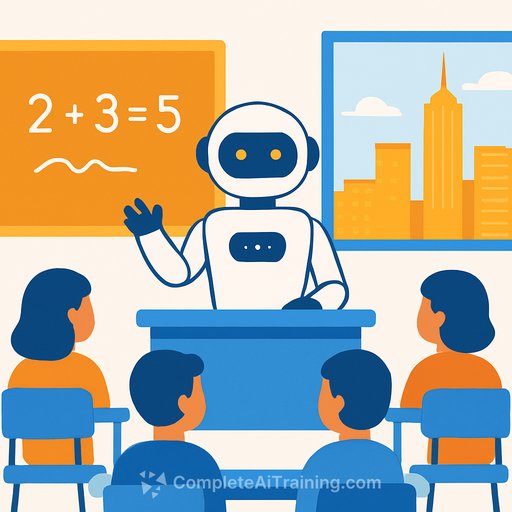
Clarity beats enforcement. Start by stating how AI should support learning-not replace it. A practical classroom approach echoes guidance shared by the Harvard Graduate School of Education.
- Stop pretending AI doesn't exist.
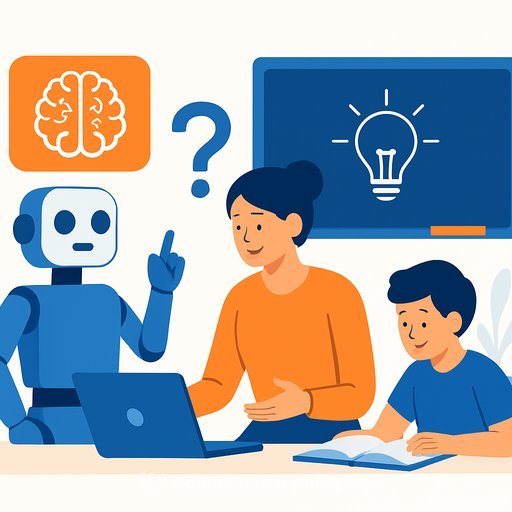
- Use AI alongside students (in person) and document the experience.
- Teach students how to ask better questions.
- Choose tools that spark imagination and critical thinking.
"You have to stop thinking that you can teach exactly the way you used to teach when the basic medium has changed."
Policy momentum-and real incidents
States and districts are moving. Utah's state board released a Portrait of an AI-Infused Educator and Learner to define roles and expectations. Many districts are piloting AI assistants and chatbots to cut teacher admin time.
At the same time, schools are seeing AI misuse: from plagiarism to deepfakes. In Radnor Township School District, parents called for policy updates after charges were filed against a juvenile for creating and sharing fake, inappropriate images of students. "We, like all of you, are learning the nexus between what happens away from school and how it can come into school and impact our students," a board member said publicly.
Officials in Wisconsin's School District of Jefferson have also reported investigations into a student who created and shared inappropriate, AI-generated images. These cases raise urgent questions about off-campus conduct and school impact.
What effective student ethics training looks like
Make it concrete. Scenario-driven. And repeatable.
- Ground rules: What "appropriate AI use" means for your district, by grade band and assignment type.
- Prompting with integrity: How to ask AI for ideas without outsourcing thinking; how to cite AI assistance.
- Consent and likeness: No creating, altering, or sharing images/audio of anyone without explicit consent.
- Privacy and data use: What not to paste into tools; how data is stored; school-approved tools only.
- Fairness and bias: How AI can be wrong or biased; how to cross-check and include diverse perspectives.
- Human-in-the-loop: Students remain responsible for accuracy, originality, and tone.
- Academic integrity: Plagiarism, contract cheating, and unauthorized AI use-clear examples and consequences.
- Deepfake literacy: Spotting manipulated media; reporting pathways; why "it was a joke" isn't a defense.
- Scenario drills: Quick practice: plagiarism prompts, fake profile incidents, harassment via AI, impersonation risks.
Delivery model you can run next month
- 90-minute kickoff workshop: Interactive demo + scenarios + citation practice. Do it by grade bands.
- Advisory micro-lessons: 10-minute monthly refreshers with new, relevant cases.
- Teacher alignment: Shared rubrics and assignment language so expectations match across classes.
- Student pledge: Short, signed agreement covering consent, citation, and reporting.
- Parent communication: One-page explainer on approved tools, rules, and how to talk about AI at home.
- Restorative first response: Education-first for first offenses, escalating to disciplinary action for willful harm.
Assess, don't assume
- Pre/post checks: 5-question pulse on knowledge and attitudes.
- Scenario pass-offs: Students must identify the ethical choice in short cases to "unlock" AI use in certain assignments.
- Reflection: Quick note on how AI was used, what changed after feedback, and how sources were verified.
- Documentation: Teachers keep light-touch notes on when AI was permitted and how it influenced learning.
Borrow from higher ed
Several universities already teach AI ethics alongside practical use. Boston University offers a free, online certificate that covers effective use and responsibility. Texas A&M's Ethics and AI course focuses on real workforce applications, with an emphasis on using new tools responsibly and improving them over time.
What the research says
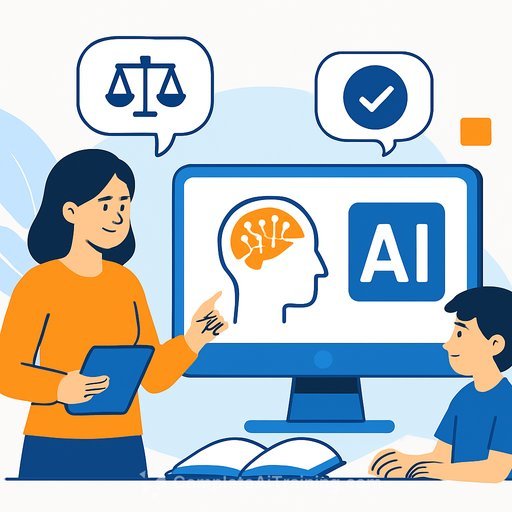
Research summarized in Nature points to four core principles of AI ethics knowledge: fairness and inclusivity, privacy protection, human-centricity, and responsibility and accountability. That knowledge improves students' ethics attitude and competence. Together, these lift students' self-reported learning competence when using AI.
Starter language for your policy
- AI supports thinking, not replaces it. Students must show their own reasoning.
- Disclosure and citation are required. Note where and how AI helped.
- Consent is non-negotiable. No AI-generated media of real people without explicit permission.
- No deceptive or harmful content. This includes impersonation, harassment, and deepfakes.
- Off-campus conduct: Digital behavior that substantially disrupts school may face consequences consistent with law and policy.
- Education-first enforcement: Misuse triggers teaching and repair; repeated or severe cases escalate.
Next steps for district leaders
- Convene a cross-functional team (curriculum, IT, legal, student services, principals, students).
- Map allowed/encouraged/blocked AI uses by grade and subject; publish a one-page family guide.
- Launch a pilot in three schools; gather data on incidents, student confidence, and teacher workload.
- Train site leaders with the AI Learning Path for School Principals to align policy, training, and classroom practice.
- Set a 60-day review to refine scenarios, rubrics, and reporting pathways based on real cases.
AI isn't going away. Give students the ethics, habits, and guardrails to use it well-and you'll see fewer problems, stronger work, and clearer accountability across your schools.
Your membership also unlocks: