AI-made scam ads are slipping into TikTok. Marketers need a new playbook
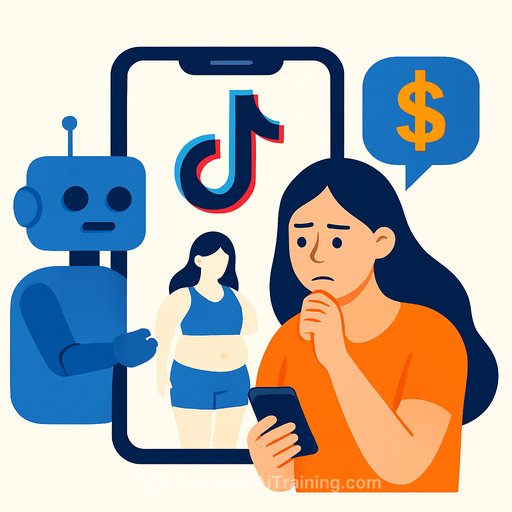
Advertising runs TikTok's business. It also opens the door to a wave of quick-hit, AI-generated ads pushing fake health products, cloned pharmacy sites, and misleading weight loss claims.
Here's the twist: many of these ads are being created with TikTok's own tools - then promoted on TikTok. The platform says moderation kicks in before ads go live, but harmful content is still getting through. And even if it's blocked on-platform, scammers can export the TikTok-made videos and run them elsewhere.
What's fueling this?
TikTok's parent, ByteDance, has poured money into AI. Reports indicate multi-billion dollar chip investments and a big push to scale AI-native content. That includes TikTok Symphony - a creative suite that spins brand inputs into ready-to-run video, voiceovers, translations, and near-human avatars in minutes.
Marketers love faster production. Scammers love faster deception. Ads for non-existent GLP-1 "patches," cortisol belly cures, and appetite suppressants are spreading - often linking to cloned websites posing as trusted pharmacies.
Policy says no. Reality says "some get through."
TikTok's ad rules ban misleading, inauthentic, and deceptive content, including health misinformation. Symphony outputs are reportedly labeled "AI-generated," and ads are meant to pass moderation and policy checks before delivery.
Yet marketers are still seeing AI-made weight loss ads with false claims, impersonation, and sketchy landing pages in the feed. That's a brand-safety problem, not just a platform problem.
See TikTok Advertising Policies
Regulatory pressure is building
EU leaders say safeguards are mandatory under the EU AI Act, with enforcement in focus. The message is clear: innovate, but keep it inside the guardrails.
What this means for marketers
AI is compressing production time. That benefits your pipeline and the bad actors. Don't rely on platform checks alone. Build your own controls into briefing, creation, targeting, and post-click monitoring.
Fast checklist: reduce risk without killing speed
- Claims review: ban unsubstantiated health claims, "cure" language, and prescription references unless you have clinical proof and legal sign-off.
- Human-in-the-loop: require manual approval for any AI-generated creative, scripts, or avatars before upload.
- AI labels: keep AI disclosures consistent across platforms; don't strip labels when exporting.
- Landing page QA: verify brand ownership, SSL, business details, returns/refund policy, and contact info. No mismatched domains.
- Impersonation checks: confirm that partners, pharmacies, or experts are real and contracted. Zero tolerance for lookalike sites.
- Targeting hygiene: exclude sensitive audiences; add negative keywords for health miracle terms.
- Third-party verification: use brand-safety, anti-fraud, and post-click tools to flag anomalies (high bounce, bot patterns, deceptive redirects).
- Creator vetting: require KYC-style basics for UGC partners; validate past brand collaborations and audience quality.
- Escalation path: define who pauses spend and who reports violations to platforms and regulators. Make it fast.
- Audit trail: log prompts, versions, and approvals for every AI-assisted asset. You'll need this if regulators ask.
- Geo-aware compliance: align to local ad and health rules, especially across EU markets.
- Performance sanity checks: suspicious CTR with weak conversion quality = investigate.
Red flags your team should spot instantly
- Too-good-to-be-true weight loss promises, "GLP-1 patches," or claims that bypass medical oversight.
- Near-human avatars pushing medical advice with no credentials or disclosures.
- Domains that mimic known retailers with subtle misspellings or mismatched legal pages.
- Stock model faces and AI voices reused across many unrelated ads.
If you market health and wellness
- Require substantiation for every claim; add disclaimers where allowed by law.
- Disable AI avatars for medical claims unless legally cleared and transparently labeled.
- Use strict allowlists for domains and creators; no exceptions.
- Ship with compliance review baked into your sprint - not after the fact.
Questions to ask your media partners now
- What filters and blocklists are active for health claims and impersonation?
- How do you label and track AI-generated assets end-to-end?
- What happens within 60 minutes if fraud is detected? Who hits pause?
- Can we review the moderation outcomes and appeal logs for rejected/approved ads?
Bottom line
AI has made ad creation easy. That convenience cuts both ways. If you want the upside without the brand risk, treat AI like any other production system: controls, audits, and clear lines of accountability.
If your team needs to level up AI production skills and guardrails without slowing down, explore practical training built for marketers: AI Certification for Marketing Specialists.
Your membership also unlocks: