Mastery Over Memorization: How Learn4Life Is Using AI to Deepen Learning
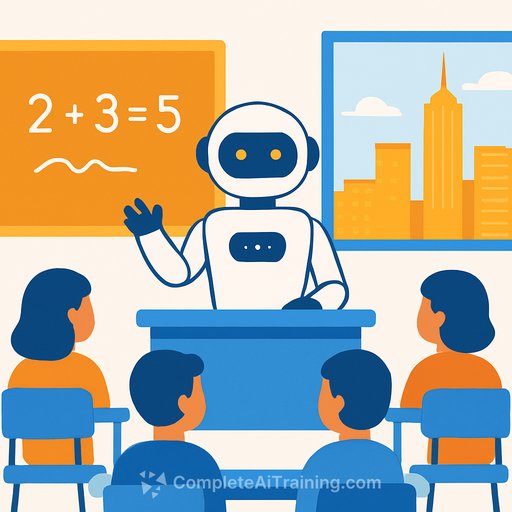
It's time to let go of repetition-based learning. With AI now a fixture in classrooms and set to touch two-thirds of jobs, the priority shifts to mastery-clear thinking, applied skills, and the ability to explain choices. Schools that treat AI as a creative partner, not a shortcut, will see stronger learning gains.
Learn4Life High Schools are leaning into this shift. The focus: help students use AI to go deeper-brainstorm ideas, test assumptions, and practice skills-while keeping real understanding front and center.
What this looks like in real classrooms
- History with context: Students roleplay as German citizens during World War II, using AI to explore scenarios, weigh tradeoffs, and justify decisions. The goal isn't the date-it's the why.
- English with memory aids: AI-generated mini podcasts provide chapter-by-chapter audio summaries that reinforce reading and raise comprehension.
- Career pathways with practice reps: In nursing and dental assistant programs, students take turns as the "patient" to surface real questions and fears. In business and retail classes, they practice de-escalating tough customer interactions through AI-guided roleplay.
Why mastery matters now
"Students are already pretty savvy with AI, so we must be careful to not simply assign a book report which can be easily done with AI and nothing is learned," said John Dugan, who leads Instructional Technology at Learn4Life public schools. He notes that teens stay engaged when they can move faster in areas of strength and slow down when they need support. Teaching everyone at the same pace leaves too many behind and too many bored.
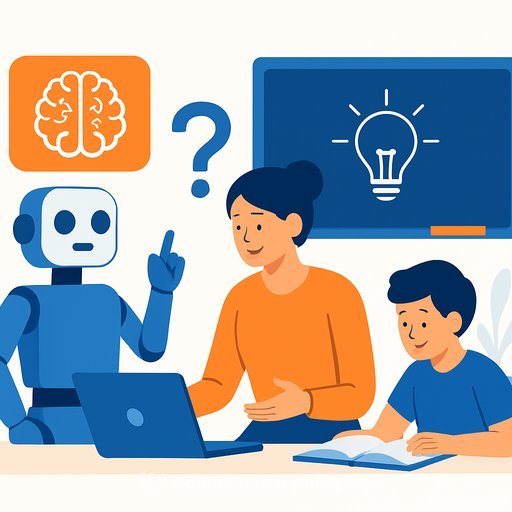
Learn4Life trains teachers on AI best practices to build critical thinking, not shortcuts. For educators seeking evidence-based approaches, see AI in Education Research. Students learn how to use AI for brainstorming, bouncing ideas, quick research, and as an after-hours tutor-without replacing the cognitive work that builds real skill.
Practical moves you can use this term
- Set clear AI use rules: Define when AI is allowed (idea generation, outlining, study prompts) and when it's not (final writing, uncredited answers). Ask students to submit prompts and outputs with their work.
- Design for process, not product: Require thinking artifacts-planning notes, drafts, decision logs, and a short reflection on how AI was used and why. For ideas on designing learning experiences, consult AI Design Resources.
- Use roleplay to build judgment: Create scenarios where students must choose, justify, and revise. Grading focuses on reasoning quality, not recall.
- Turn AI into a study coach: Have students ask AI for multiple explanations, analogies, and practice questions, then check understanding with quick oral defenses or whiteboard proofs.
- Replace "gotcha" detection with instruction: Teach ethical use, citation of AI assistance, and how to spot AI errors. Reserve detection tools for clear cases, not everyday learning.
- Invest in staff practice: Run short PD sprints where teachers build prompts, try lesson tweaks, and share what worked in 15-minute demos.
Policy and curriculum updates at Learn4Life
Learn4Life is adding an AI component to digital skills classes now, with a full AI literacy course coming later this year. The message to students is consistent: AI can speed up feedback and practice, but it doesn't replace the thinking that makes learning stick.
Change is here-make it useful
Some schools are hesitant to shift their model. But as Dugan noted, we moved on from slide rules once calculators were common. Search engines replaced microfiche, and digitized catalogs retired the Dewey Decimal drill. The job now is to help students learn with the tools they actually have.
Resources
- U.S. Department of Education: AI guidance for teaching and learning
- Complete AI Training: AI course paths by job role
About Learn4Life
Learn4Life is a network of nonprofit public high schools offering personalized learning, career training, and life skills. Each school is locally controlled, tuition free, and built around flexibility and one-on-one attention.
Your membership also unlocks: