
AI news ·
AI medical coding improves claim accuracy and cuts denials in healthcare revenue cycles
Hospitals are adopting AI medical coding to cut claim denials and reduce administrative costs across the revenue cycle. The tools scan clinical notes, assign billing codes, and flag error-prone claims before submission.
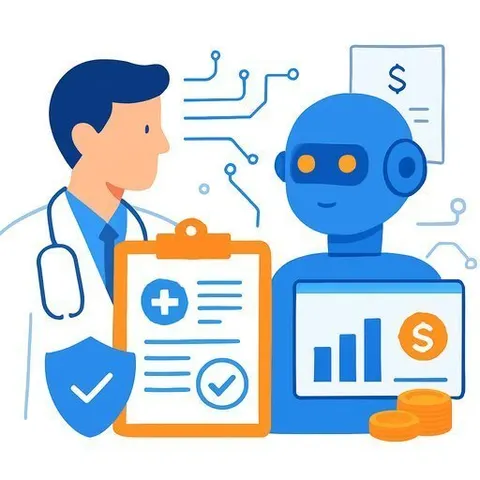
AI Medical Coding Is Now Essential to Hospital Revenue Management
Healthcare organizations are shifting from manual medical coding to AI-assisted workflows to reduce claim denials, cut administrative costs, and stabilize cash flow. The change addresses a persistent problem: when any step in the revenue cycle fails, hospitals lose money fast.
The revenue cycle spans registration, documentation, coding, claim submission, denial management, billing, and collections. A single breakdown cascades through the system. Manual coding-the traditional bottleneck-is slow, error-prone, and struggles to keep pace with document volume.
How AI Improves Claim Acceptance
AI systems use machine learning and natural language processing to scan clinical notes, extract relevant information, and assign billing codes consistently. They recognize patterns across datasets, apply payer-specific rules, and validate codes across clinical scenarios. The result: fewer rejected claims.
Healthcare organizations using these tools report notably higher first-submission claim acceptance rates. AI platforms conduct real-time claim scrubbing-detecting errors, verifying insurance eligibility, and aligning claims with payer requirements before submission. This "clean claims" approach reduces rework costs and accelerates reimbursement.
Predictive data analysis strengthens this further. By assessing historical claim data and denial patterns, AI forecasts which claims face rejection risk. Staff can then intervene proactively, addressing issues before they escalate and minimizing revenue leakage.
Freeing Staff for Higher-Value Work
Medical coding has traditionally consumed significant workforce resources on repetitive tasks. AI agents and automation handle routine coding work, allowing staff to focus on exceptions, complex cases, and strategic initiatives.
The efficiency gains extend beyond coding. AI tools automate insurance verification, billing entry, and payment posting. Real-time integration with electronic health records ensures coding teams work with current, complete patient information. These systems reduce manual handoffs that introduce errors and delays.
Administrative cost savings are substantial. Organizations deploying advanced coding automation report significant reductions in labor-intensive tasks and improved productivity. This matters as healthcare facilities contend with staffing shortages and the need to balance resource allocation with financial viability.
Compliance and Patient Experience Improve
AI platforms maintain adherence to evolving coding standards and regulatory changes, reducing audit and penalty risk. They create more transparent billing experiences for patients and payers alike.
Patient-facing benefits are emerging too. AI-driven revenue cycle tools generate clearer, more accurate bills and provide visibility into expected out-of-pocket costs. This transparency improves patient satisfaction as healthcare billing becomes more patient-centric.
As healthcare organizations navigate tightening finances, AI medical coding represents a direct lever for revenue optimization and operational resilience. The technology continues to improve, promising further gains in accuracy, efficiency, and financial performance.