"Do Not Let AI Affect Your Thinking Process": Justice P S Narasimha to the Bar and Bench
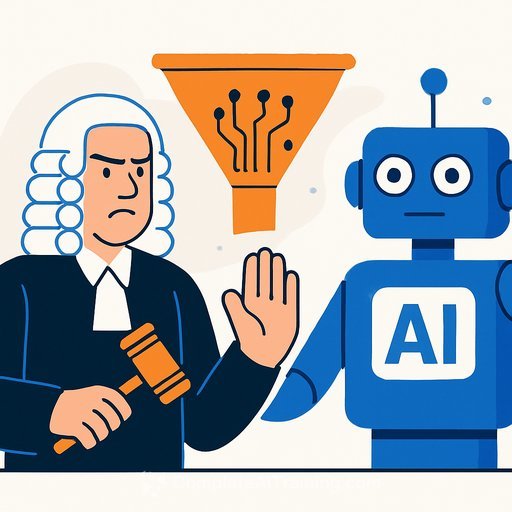
At a felicitation event hosted by the Andhra Pradesh High Court Advocates Association in Vijayawada, Supreme Court judge Justice P S Narasimha delivered a clear message: use artificial intelligence, but do not let it blunt your judgment.
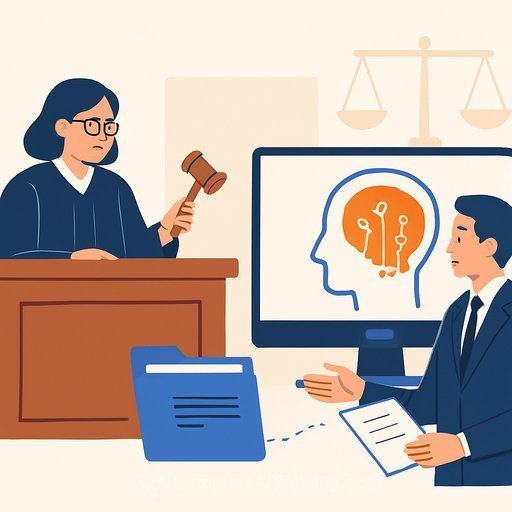
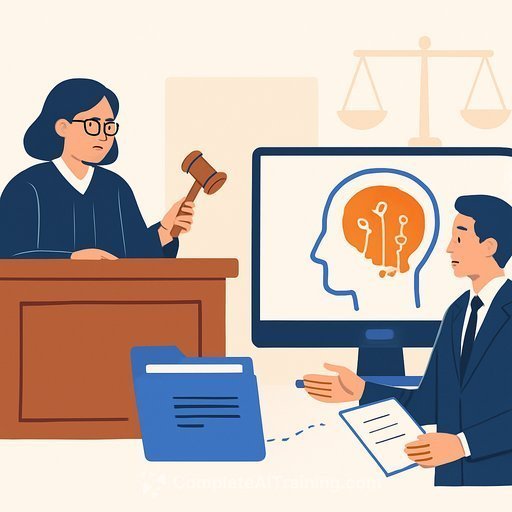
He cautioned lawyers and judges against leaning too heavily on AI, noting that while technology has helped improve performance, it can also influence how we think. "With AI, even the judicial system will witness huge transformation in the days to come," he said, urging the legal community to keep independent analysis at the center of every decision.
Why this matters for legal professionals
Justice Narasimha's position is straightforward: AI is a tool, not a substitute for legal reasoning. The promise of speed and convenience comes with a cost if critical thinking is outsourced.
His call is for balance-use technology to assist, never to decide. Training, standards, and discipline will make the difference.
Key takeaways from the address
- Keep judgment human: AI can draft, summarize, and organize, but it cannot weigh equity, context, or consequences. Final calls must remain with lawyers and judges.
- Guard your thinking process: If you accept AI outputs without challenge, your analytical muscle weakens. Treat every suggestion as a hypothesis to test against the record and the law.
- Institutional training is now essential: Justice Narasimha urged structured programmes for legal professionals so they can use AI responsibly without eroding core skills.
- Build checks into your workflow: Fact-check citations, verify quotes against primary sources, and document your review. If you did not read it yourself, you cannot rely on it.
- Protect confidentiality: Do not paste client-sensitive material into public tools. Use approved systems, access controls, and written client consent where needed.
- Clarify roles and accountability: Technology assists; counsel takes responsibility. Make human review and sign-off explicit on every AI-assisted output.
Training and a permanent legal academy
Calling for preparedness, Justice Narasimha pressed for a permanent legal academy for advocates, akin to judicial academies. He encouraged senior law officers and professional bodies to lead the effort and offered his support. Resources such as AI for Legal can help shape curricula and training modules that focus on responsible, practical use of AI in law.
The message to the Bar is practical: continuous learning is no longer optional. As client expectations rise, clarity and competence must keep pace.
A bench-level perspective
Justice Dhiraj Singh Thakur, Chief Justice of the Andhra Pradesh High Court, attended the programme, underscoring the importance of the conversation. The discussion was not about rejecting technology-it was about disciplined use that strengthens, not weakens, legal work.
The human core stays non-negotiable
Justice Narasimha also spoke about the pressures on courts and counsel in recent years and acknowledged the patience and discipline shown by the legal community. The principle is simple: justice sits at the core of the system, even as tools and client profiles change.
On a personal note, he met visitors from his ancestral village, Medepalli in Prakasam district, asked about local conditions, and promised a visit. A reminder that behind the docket and the data, there is a human thread.
A practical checklist you can use now
- Define where AI can help (search, drafting outlines, formatting) and where it cannot (final analysis, legal advice, strategic judgment).
- Set written protocols: approved tools, confidentiality rules, disclosure standards, and mandatory human review.
- Train teams on prompt discipline, bias risks, and verification habits.
- Require primary-source validation for every case citation and quote.
- Maintain an audit trail: prompts, outputs, edits, and reviewer sign-off.
The direction is clear: let technology assist, but keep your thinking sharp. That is the difference between convenience and competence.
Your membership also unlocks: