Huawei's AI-Native Framework Lands: Practical Wins for Operations Teams
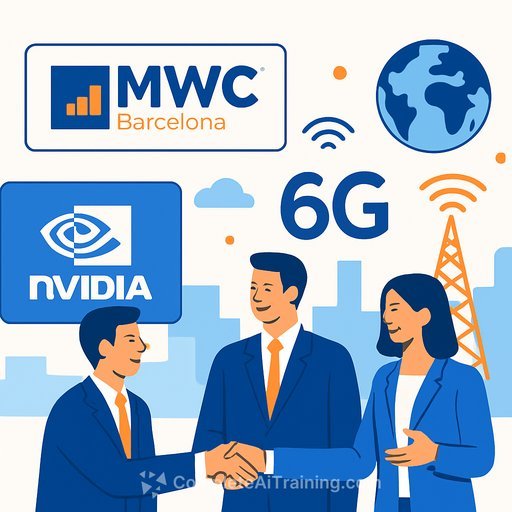
At MWC Barcelona 2026, Huawei introduced the industry's first AI-Native framework for intelligent operations, along with three solutions built on it: Agentic BSS, SmartCare Intelligence, and AUTINOps. The promise is simple: shorter time-to-outcome, fewer manual loops, and stronger service stability. If you run operations, this is the direction networks and BSS will move in over the next 12-24 months.
What "AI-Native" Means in Practice
This isn't a single tool. It's a system for getting measurable results from AI across production environments.
- Outcome-oriented: Solve problems legacy stacks couldn't, and tackle upcoming risks before they hit KPIs.
- DTN & domain model-driven: Use network digital twins and telecom-domain models to simulate, select, and close the loop on optimal actions.
- Agentic operations: Redesign workflows so human experts and digital employees work as a team, increasing speed and consistency.
Agentic BSS: From Intent to Offer in Hours
Agentic BSS uses a Digital Manager Agent to segment users and predict needs. Offer, Product, and Assessment Agents sync to design, test, and launch new offerings within hours, not weeks.
With SmartCare's precise experience signals feeding it, the system runs "empathetic marketing and care": the right offer, to the right user, at the right time. For operations, that means fewer ad-hoc campaigns, cleaner governance, and faster revenue experiments without breaking fulfillment or care processes.
SmartCare Intelligence: Just-in-Time Optimization
Built on SRCON 2.0 and large models for user experience (UELM) and beam space (BSLM), SmartCare Intelligence analyzes network data in real time. It simulates options, generates the best optimization plan, and delivers changes for immediate performance gains-turning "user-seeking-network" into "best network always ready."
Operational impact: fewer manual tuning hours, faster KPI recovery after events, and clearer causality between actions and outcomes. Expect tighter loops on throughput, latency, and VoNR/VoLTE experience, with less spreadsheet drift and war-room fatigue.
AUTINOps: T-1 + T0 "Dual Protection" O&M
Using a cross-domain, multi-vendor digital twin network and the EDNS 2.0 operations model, AUTINOps scans network and service status continuously, flags risks, and prepares recovery plans. The goal is prevention at T-1 and rapid recovery at T0 to keep services steady.
- Preempt hot spots with capacity moves validated in the twin before rollout.
- Catch configuration drift, propose fixes, and auto-verify outcomes.
- Run disaster-recovery readiness checks with generated playbooks and success criteria.
- Get root-cause hypotheses and ranked actions based on live evidence.
Connectivity and Compute Still Set the Ceiling
AI needs strong connectivity and enough compute to scale. That puts site and central office upgrades, energy efficiency, and quality backplanes on your near-term roadmap. Think "Facility & Infra-Ready, Operation-Ready, Performance-Ready" before you scale agents across domains.
Ops Leader Checklist to Start Now
- Map where you can run a digital twin today; fill data gaps (topology, configs, counters, logs).
- Define outcome KPIs per domain (e.g., MTTR, dropped calls, SLA breaches, energy per bit, time-to-offer).
- Set agent guardrails: scope, rollback policies, human sign-off levels, audit trails.
- Pilot in "shadow mode," then controlled execution with auto-rollback on deviation.
- Align skills: data engineering, model ops, and agent orchestration for NOC/BSS teams.
- Validate multi-vendor interoperability inside the twin before change windows.
- Stress-test fail-safes: chaos drills, DR playbooks, and post-change verification gates.
90-Day Pilot Plan
- Days 1-15: Choose a contained domain (e.g., RAN optimization in one city or offer experimentation for a single segment). Baseline KPIs.
- Days 16-45: Connect data sources, stand up a minimal DTN, run agents in shadow mode, compare recommendations vs current playbooks.
- Days 46-75: Allow agent-led changes with human approval and auto-rollback; measure impact and drift.
- Days 76-90: Lock in governance, expand scope, and document runbooks for scale-out.
Why This Matters Now
The era of agentic networks is arriving as 5G-A scales and the path to 6G becomes clearer. AI-centric network solutions aim to accelerate progress toward level-4 autonomous networks (AN L4), where closed-loop assurance and optimization are standard practice.
If you're targeting AN L4, align your KPIs and governance now. For context on AN levels, see TM Forum's overview of autonomous networks levels here.
See It at MWC Barcelona
MWC Barcelona 2026 runs March 2-5 in Barcelona, Spain. Event details are on the official site MWC Barcelona.
Further Learning
Want practical playbooks and examples for adopting AI in operations? Start with AI for Operations. For teams focused on network models, twins, and closed-loop assurance, see the AI Learning Path for Network Engineers.
Your membership also unlocks: