
AI news ·
AI notetakers trigger consent, privacy and privilege risks across global jurisdictions
AI notetakers record, transcribe, and summarize meetings across industries-but their routine use triggers data protection, consent, and employment laws that many organizations haven't addressed. Risks span the U.S., EU, UK, Brazil, and China.
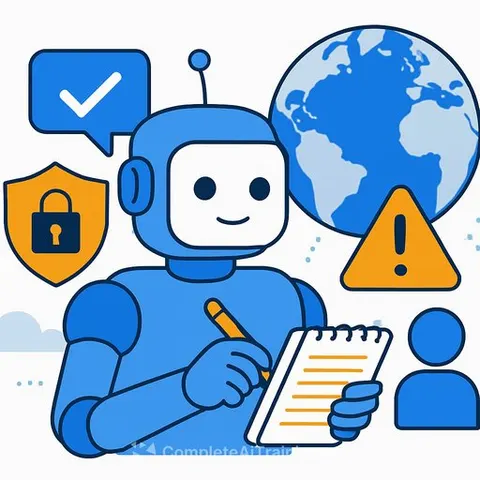
AI Notetakers: Productivity Tool or Emerging Legal Risk?
AI notetakers have become routine in virtual meetings across industries and geographies. These tools join calls to record, transcribe, and summarize discussions, often generating written notes within minutes. Sometimes they announce their presence. Sometimes participants only realize they were there when a summary arrives in their inbox.
The appeal is straightforward: they streamline documentation, enhance accountability, and reduce administrative burden. Yet their rapid normalization has outpaced legal and compliance scrutiny. As these tools record, process, and retain conversations across borders, they activate regulatory frameworks that many organizations have not fully mapped.
For global organizations, the challenge is capturing productivity gains without losing sight of legal obligations. The risk does not stem from exceptional misuse, but from everyday deployment in meetings where consent, transparency, and accountability are handled informally or inconsistently.
Why This Matters Now
AI notetakers are no longer confined to technology-forward sectors. Financial services, healthcare, legal, manufacturing, and professional services firms now encounter these tools regularly-whether they have adopted them internally or because clients, vendors, or other counterparties bring them to meetings.
A single recorded meeting generates a data trail that may include personal information, business-sensitive discussions, and material implicating legal privilege, regulatory requirements, or trade secrets. Without robust governance, organizations risk losing visibility and control over how meeting data is created, retained, shared, and accessed.
AI notetakers fundamentally change the nature of meetings. They transform conversations that would otherwise fade from memory into searchable, reusable records capable of circulating well beyond their original context. Transcripts and summaries are often stored centrally, indexed for retrieval, and integrated into enterprise systems such as customer relationship management tools or knowledge bases. Over time, these records may be accessed by individuals who were not present at the original meeting, or who should not have access.
The persistence of meeting data raises significant questions about secondary use. AI-generated summaries may be relied upon to support performance evaluations, contractual negotiations, internal investigations, or strategic decision-making, even though they are generated through probabilistic models that may omit nuance or mischaracterize context. As these outputs increasingly shape organizational knowledge, inaccuracies or bias introduced at the recording stage can propagate across systems and decisions.
Compliance Triggers Across Jurisdictions
AI notetakers are squarely within the scope of existing legal and regulatory frameworks. Across jurisdictions, many laws governing data protection, communications, and workplace practices already regulate how organizations may record, process, retain, and reuse information generated in business interactions.
Certain compliance principles recur across virtually all regulatory environments: participant notice and transparency; lawful basis and consent; purpose limitation and data minimization; vendor accountability; and rules governing sensitive data and biometrics. Cross-border data transfers also require specific transfer mechanisms.
United States: One-Party Consent and State Variations
Federal law under the Wiretap Act establishes a "one-party consent" standard that generally permits recording where at least one party to the communication is aware of and consents to the recording. However, a growing number of states impose stricter "all-party consent" standards requiring every participant to be notified and to consent before recording begins. These include California, Connecticut, Florida, Illinois, Maryland, Massachusetts, Michigan, Montana, Nevada, New Hampshire, Pennsylvania, and Washington.
The California Invasion of Privacy Act warrants particular attention. It separately prohibits unauthorized third parties from accessing recorded communications without consent and from using information obtained in that manner. This creates potential liability for AI notetaker vendors whose operations may involve access to recorded data. The theory remains subject to ongoing litigation but has already produced significant case activity that organizations and their vendors should monitor.
Several states impose separate employee electronic monitoring notification requirements. Connecticut, Delaware, and New York, among others, require employers to provide advance written notice before engaging in electronic monitoring of employees. This area has been a prime target for plaintiff's attorneys because using an AI transcription service requires recording a meeting. Otter.ai was sued for "deceptively and surreptitiously" recording private conversations without participant permission and for failing to disclose that data would be used to train its transcription service.
Certain state privacy laws impose additional consent and notice requirements for collecting sensitive personal information. Illinois' Biometric Information Privacy Act requires written consent before collecting, storing, or using individuals' biometric data, including voiceprints that AI notetakers may generate to identify speakers. The California Consumer Privacy Act requires notice before collecting personal information, including biometric data. Depending on how the AI notetaker's transcription service operates, it may analyze accent, sentiment, or other characteristics of the speaker's speech while transcribing. If this occurs, there may be biometric data-related privacy concerns.
Meeting transcripts may include errors or misquotes, with risk heightened for individuals with accents or speech patterns the AI notetaker is less familiar with. If inaccurate transcripts are relied upon in employment decisions, investigations, performance management, or disciplinary processes, potential allegations of discrimination or disparate impact may arise. If the AI notetaker systematically produces lower quality transcripts for speakers of certain ethnicities or linguistic backgrounds, the resulting records may create risk for allegations of bias in discrimination litigation or regulatory investigations.
AI notetaker use in workplace investigations warrants particular caution. Recording complaint intake interviews, witness statements, or investigative meetings may chill candor and discourage participation. Similarly, recordings of meetings involving reasonable accommodation requests or interactive process discussions under the Americans with Disabilities Act may capture protected medical information that employers are required to maintain as confidential and in separate files.
Recording performance management, disciplinary, or termination meetings creates a verbatim record that may be discoverable in subsequent wrongful termination or discrimination litigation. If a supervisor makes an offhand comment or joke during a meeting, it is preserved in writing and discoverable-often without the benefit of hearing tone of voice and other contextual factors. Inconsistent recording practices, where some meetings are recorded and others are not, can create strategic evidentiary issues.
Organizations should be aware that AI notetaker use in meetings where employees discuss wages, working conditions, or engage in organizing activity may raise concerns under the National Labor Relations Act regarding employer surveillance and the protection of employees' Section 7 rights.
Another risk is disclosure of transcripts, especially those containing sensitive or confidential data, whether in connection with a subpoena, civil litigation, regulatory investigation, or data breach. AI-generated transcripts can expand the volume of data subject to litigation hold obligations, potentially increasing e-discovery costs. This risk may be exacerbated by poor data retention policies that result in transcripts being retained longer than necessary.
For meetings involving privileged communications, organizations should evaluate whether the use of third-party AI notetakers creates an unacceptable risk of privilege waiver. In United States v. Heppner (S.D.N.Y. 2026), the court declined to extend attorney-client privilege to materials a defendant prepared using a consumer-grade generative AI platform. The court held that privilege requires "a trusting human relationship" with "a licensed professional who owes fiduciary duties and is subject to discipline," and that "[n]o such relationship exists, or could exist, between an AI user and a platform such as Claude." The court rejected the argument that privilege attached once materials were shared with counsel because "non-privileged communications are not somehow alchemically changed into privileged ones upon being shared with counsel."
Established privilege doctrine points in the same direction. United States v. Kovel permits privilege to extend to a third-party expert, but only where that expert's involvement is necessary to facilitate communication between attorney and client, not merely to record it. An AI notetaker, whose function is to transcribe, fits uneasily within this exception.
Organizations should conduct jurisdiction mapping to identify applicable consent standards based on participant locations, applying the strictest consent standard. As remote and hybrid-work arrangements continue to evolve, participant locations may change frequently, and organizations should avoid relying on assumptions based on office assignments or prior meeting history.
Organizations should review AI notetaker vendor terms of service to assess whether recordings may be used for model training or accessed by third parties, and negotiate contractual restrictions where necessary to avoid liability exposure.
The Federal Trade Commission has signaled an increasing willingness to scrutinize AI-driven data practices under its Section 5 authority to prohibit unfair or deceptive acts or practices. The FTC's September 2024 Operation AI Comply sweep resulted in actions against five companies for allegedly deceptive or unfair uses of AI. State attorneys general have likewise become more active in pursuing enforcement and pre-enforcement activity. Massachusetts' attorney general was the first in the country to issue guidance clarifying that existing consumer protection law applies to AI to the same extent as any other product in commerce, with Oregon and New Jersey issuing comparable advisories.
Organizations should establish clear internal guidance on how AI-generated meeting records interact with manually prepared notes, including which version controls in the event of inconsistency and how factual disputes will be resolved.
China: PIPL, CSL, and AI-Specific Measures
China's regulatory framework sits at the intersection of three overarching data laws: the Personal Information Protection Law, the Cybersecurity Law, and the Data Security Law, supplemented by AI-related measures including rules on generative AI. PIPL applies to any processing of personal information within China, as well as processing conducted outside China where the purpose is to provide products or services to, or analyze the behavior of, individuals within China.
AI notetakers capture audio input and produce transcripts, summaries, analysis, and metadata containing personal information, triggering PIPL obligations. AI notetaking often involves processing sensitive personal information, such as voice and biometric characteristics, triggering stricter duties including enhanced notice and separate consent. PIPL also mandates a Personal Information Protection Impact Assessment for certain processing activities, including sensitive personal information and cross-border data transfers, both commonly implicated by AI notetakers.
Service providers utilizing generative AI, deep synthesis technologies, or algorithmic recommendation technologies to provide internet information services or content generation services in China are subject to AI-related regulations imposing obligations concerning algorithm transparency, security assessments, content moderation, and mandatory labeling of AI-generated content. Businesses using AI notetaker tools in China should choose vendors that demonstrate compliance with these requirements and support onshore processing or can operate without exporting data where feasible.
Users publishing AI-generated content online are required to declare and label such content using labeling functions provided by the service provider. Users shall not maliciously delete, alter, hide, or forge any labels on AI-generated content.
Cross-border data flows remain a significant area of exposure. Business users should map end-to-end data flows for AI notetaking, confirm whether any data leave mainland China, and assess whether a cross-border data transfer exemption genuinely fits the use case. Where no exemption applies, users should select the appropriate transfer mechanism and maintain comprehensive governance records including consent logs and vendor contractual safeguards.
Brazil: LGPD and Joint Liability
Brazil's General Data Protection Law applies to the processing of personal data through AI notetakers whenever the relevant processing activity is connected to Brazil. This includes situations where processing takes place in Brazilian territory, involves individuals located in Brazil, or relates to personal data collected in Brazil, regardless of where the organization is established or where data is ultimately stored.
AI notetakers fall within LGPD's scope because their operation entails collecting and processing audio recordings, transcripts, summaries, and related metadata that constitute personal data. In many deployments, this data is collected in Brazil but stored, accessed, or processed outside Brazilian territory, triggering additional compliance obligations related to international data transfers.
In an employment context, Brazilian labor law affords employers greater latitude to implement proportionate monitoring that is necessary for security and legitimate management purposes, subject to LGPD requirements. However, systematic recording of employee meetings must be carefully calibrated: monitoring that exceeds what is necessary or lacks clear justification may be challenged as excessive surveillance, potentially giving rise to claims of moral harassment or violation of employee dignity under constitutional protections.
Organizations should assume that LGPD transparency obligations require participant-facing documentation to be made available in Portuguese, including privacy notices, consent language, and information regarding international transfers. Documentation prepared solely in foreign languages may undermine the ability to demonstrate transparency and informed participation by data subjects located in Brazil.
LGPD establishes a joint liability framework. Data controllers and processors may be held jointly and severally liable for damages caused to data subjects. This means that organizations deploying AI notetakers may share liability with the tool vendor for data protection violations, even where the breach originates in the vendor's systems or practices. Vendor contracts should clearly allocate responsibilities, include indemnification provisions, and require compliance with LGPD obligations.
European Union: Special Category Data and High-Risk AI
Global organizations will need to assess whether data processed by the AI notetaker falls in scope of the GDPR-if participants in calls are based in Europe, that is likely to be the case. It may be challenging for the data controller to define the legal basis for processing the personal data, given that the type of personal data processed by the AI notetaker can vary significantly depending on the context in which it is used.
If participants to a meeting discuss their health-or the health of a third party-this would constitute special category data which can only be processed on specific legal grounds, such as explicit consent. Obtaining consent of the participants may also be advisable under national laws of EU Member States to respect constitutional rights protecting confidentiality of communications and personality rights, and to avoid infringing criminal law statutes prohibiting unauthorized recordings. These laws vary depending on the relevant EU Member State.
Beyond data protection requirements, generating records and documents on an automated basis may increase the risk that confidential information becomes available to third parties. Organizations should assess how recordings, transcripts, and notes should be handled and stored. Vendor due diligence regarding data processing is advisable, as well as understanding how the output of AI notetakers fits into broader data retention policies.
Data processed in an employment context can be subject to more specific national rules, such as requiring the involvement or approval of a works council. Organizations should consider whether specific guardrails are needed around use of AI notetakers in an employment context.
The EU AI Act provides that some AI use cases are "high-risk." Use of AI systems for specific use cases in recruitment, or to monitor and evaluate employees, can trigger the high-risk categorization. Exemptions may apply, but this would require a case-by-case legal analysis. Organizations using high-risk AI systems will be subject to a range of compliance requirements, such as monitoring the system's operation, retaining logs generated by the system, and assigning human oversight to competent persons to oversee the use of the system. Even where the AI system is not high-risk, the EU AI Act requires employers to take measures to ensure that individuals have a sufficient level of AI literacy to use these tools.
Organizations should conduct a mapping exercise to identify which EU Member State laws apply to their AI notetaker deployments, particularly where participants are located across multiple jurisdictions. The interplay between GDPR, national communications privacy laws, and employment regulations creates a layered compliance environment that cannot be addressed through a single EU-wide policy.
United Kingdom: Legal Professional Privilege and Open vs. Closed Systems
The UK regulatory landscape draws on the UK General Data Protection Regulation and the Data Protection Act 2018, supplemented by sector-specific regulatory requirements and common law principles. As in the European Union, the UK GDPR requires organizations to identify a lawful basis for processing personal data captured by AI notetakers, provide clear notice to participants, and observe data minimization and purpose limitation principles.
However, the UK context also raises additional questions in relation to legal professional privilege. When AI notetakers are deployed in meetings involving legally privileged discussions, the recordings, transcripts, and summaries generated by these tools may compromise that privilege. The core risk is that inputting privileged information into an AI tool operated by a third-party vendor may amount to disclosure to a third party, thereby waiving the privilege that would otherwise attach to those communications.
The Courts and Tribunals Judiciary has advised that users "should treat all public AI tools as being capable of making public anything entered into them." Uploading confidential or privileged information into an open AI tool places it in the public domain, thereby waiving legal privilege and potentially breaching confidentiality obligations. Closed AI tools, which do not make information publicly available, can be used for tasks like summarizing "without these risks." However, users should still handle privileged materials carefully and store them securely.
Organizations deploying AI notetakers in the United Kingdom should implement clear policies restricting use of AI recording and transcription tools in meetings involving legally privileged discussions, and ensure any use of AI involves closed-source systems. Where AI notetakers are used in meetings that may touch on privileged matters, organizations should assess whether adequate safeguards exist to prevent privilege waiver, including evaluating vendor data handling practices, whether recordings are accessible to third parties, and whether terms of service authorize the vendor to access or reuse meeting data.
Building a Governance Framework
Effective AI notetaker governance requires translating cross-cutting principles and jurisdiction-specific requirements into operational reality. Organizations should establish clear internal policies defining scope of use, consent and notice protocols, vendor management standards, retention rules, training requirements, and incident response procedures.
A tiered meeting classification model can operationalize this governance. Routine administrative meetings may be eligible for approved AI notetaker use subject to standard notice, retention, and access controls. Meetings involving legal advice, HR investigations, employee performance, regulated-client matters, sensitive personal information, trade secrets, board or executive deliberations, or cross-border participants should require heightened approval or default to not using an AI notetaker unless legal, privacy, and information security safeguards have been confirmed.
The governance framework should require approved vendor lists, retention limits, deletion workflows, participant notices, consent logs where required, human review before material reliance, and escalation procedures for unauthorized or external AI notetakers.
Organizations should periodically reassess governance mechanisms as regulatory expectations evolve, enforcement activity increases, and tool capabilities change. The goal is not perfect harmonization across jurisdictions, but controlled variation that preserves legal defensibility without undermining operational efficiency.
The Broader Picture
AI notetakers are part of a broader shift toward ambient data collection in modern workplaces and business interactions. The legal exposure they create does not arise from extraordinary misuse, but from ordinary deployment in environments where governance has failed to keep pace with technological capability.
Early decisions around vendor selection, consent mechanisms, and retention practices shape long-term risk. Organizations that invest in proportionate, well-documented governance frameworks position themselves to capture productivity gains while maintaining credibility with regulators, courts, and business partners.
For global organizations, success lies in coordinated, jurisdiction-aware governance grounded in widely recognized principles and adapted thoughtfully to local requirements. Responsible AI notetaker deployment has become an indicator of mature compliance culture, not merely a technical or operational choice.