Infant nutrition in the age of AI search: What every brand needs to know
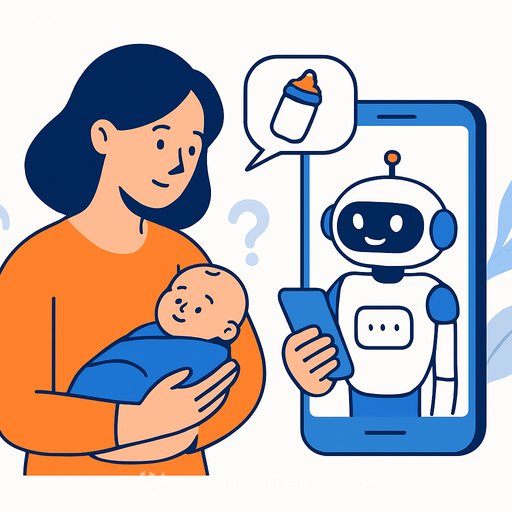
Parents are no longer "clicking around" to find answers. AI-driven search tools like Google's AI Overviews, Perplexity, and ChatGPT now act as answer engines, resolving a large share of healthcare queries on the spot. The first touchpoint with your brand is often an AI-generated summary-not your website, not a press article, not Instagram.
That shift raises the bar. Content must be accurate, evidence-led, and structured so machines can parse it, verify it, and surface it. If your brand story isn't machine-readable, you're invisible at the exact moment parents need clarity.
What parents are actually asking
Search behavior is getting more specific and more emotional. Parents ask about infant gut health, probiotics, HMOs, allergy management, digestive comfort, and personalized nutrition. They want to know why it matters, what outcomes to expect, and they want reassurance from credible voices.
These are long-tail, natural-language questions. Perfect for AI summarization. If your answers aren't structured and citable, someone else gets quoted.
Why this changes PR strategy
- AI-optimized content is essential: Structure claims, messages, and expert commentary so AI can parse and verify them. Use clear FAQs, consistent headings, and attach citations to every claim.
- Schema, FAQs, and citations: Add FAQ sections, define key terms (e.g., HMOs, probiotics), and link to primary sources. Make it obvious what statement is supported by which study.
- Surface expert voices: Clinician quotes, advisory board statements, and thought leadership need to be on the public web with bios and credentials. If an expert's authority isn't visible, AI can't use it.
- Digital PR with AI in mind: Target high-authority outlets AI often cites. Mentions from sources like Healthline or BBC Health increase your chance of being pulled into answers.
- Monitor AI answers, not just media hits: Track how AI tools summarize your space. Are your claims accurate? Are competitors being highlighted instead?
What "AI-ready" content looks like
- Evidence block: For each claim (e.g., "supports digestive comfort"), add a 1-2 sentence plain-English summary plus a citation. Note study type and population.
- Expert quote with credentials: Name, title, affiliation, and a short, jargon-free quote. Include a visible bio page.
- Clear definitions: Short explainers for HMOs, prebiotics vs. probiotics, allergy vs. intolerance-written at a parent-friendly reading level.
- Structured FAQs: Direct Q→A format that mirrors how parents ask questions. Keep each answer tight, source-backed, and scannable.
- Safety and suitability notes: Indications, age ranges, and "talk to your pediatrician" guidance where appropriate.
Insight-led PR: start where parents search
Build stories from the questions parents type into search bars and ask in forums and groups. Use social listening, SEO data, and customer support logs to prioritize topics. Write the answer once, then repurpose it across press materials, owned content, and expert interviews.
Distribute those answers where AI can see them: newsrooms, reputable health sites, clinician blogs, and your brand's medical hub. The same facts, consistently presented, raise your authority signal.
Digital PR that AI notices
- Target high-authority health and news outlets: Secure explainers, expert Q&As, and data-led pieces. Anchor every claim with a citation.
- Standardize your expert kit: Headshot, bio, credentials, conflicts, and a library of quotable statements mapped to sources.
- Maintain consistency: The same claim should read the same way across your site, press materials, and interviews. Consistency reduces ambiguity for LLMs.
Monitoring: the new PR scoreboard
- Answer share-of-voice: How often does your brand appear in AI-generated answers for priority queries?
- Citation frequency: Which of your pages or quotes are being referenced?
- Accuracy score: Are claims summarized correctly? Where are errors creeping in?
- Competitor presence: Who's winning key answers and why-authority, clarity, or distribution?
- Time to correction: How quickly can you update content and nudge AI systems to reflect the change?
A simple 30-60-90 plan
- Days 1-30: Audit priority queries, map claims to sources, create or refresh FAQs and evidence blocks, publish expert bios.
- Days 31-60: Pitch authoritative explainers and expert Q&As, secure 2-3 mentions in reputable outlets, standardize quote library.
- Days 61-90: Stand up AI answer monitoring, track share-of-voice, correct inaccuracies, and expand into adjacent parent questions.
Pitfalls to avoid
- Vague claims without citations.
- Hiding key data in PDFs or gated hubs that AI can't access.
- Inconsistent terminology across pages and press materials.
- Expert quotes with no visible credentials or bio page.
- Long, marketing-heavy copy that doesn't answer the exact question.
The takeaway for PR and communications teams
AI now filters the first impression parents get about infant nutrition. Brands that combine scientific credibility with structured, machine-readable content will earn that first answer. Those that don't will be sidelined by competitors who do.
Upskill your team to think and produce for AI answer engines. If you need a fast start, explore practical training for PR and communications teams: AI for PR & Communications.
Your membership also unlocks: