AI enters college admissions: what educators should know and do now
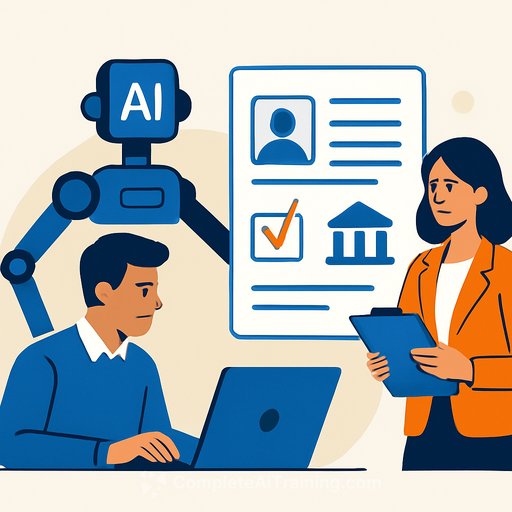
December is go-time for seniors, and the admissions process is shifting. Several universities are testing or using AI to speed up screening, while keeping humans in charge of decisions.
That change is raising practical questions for admissions teams, high school counselors, and families. Here's a clear view of what's happening-and how to respond.
What universities are actually doing
NC State reports receiving more than 49,000 applications for the 2025 freshman class. To handle the volume, the university uses AI to summarize key data from applications and transcripts. A human then reads the essay and reviews the file in full.
"At NC State, we have a holistic review, and it's important to us to really understand the context that the student is coming from," said Don Hunt, Senior Vice Provost of Enrollment Management and Services. He also flagged the right questions: "What about the efficacy… bias, potential transparency and how do we come together collectively?"
UNC-Chapel Hill notes that it uses AI programs to create data points from the Common App essay and school transcripts. Every application is reviewed comprehensively by trained human evaluators, and the final decision is made by an admissions committee member.
North Carolina Central University shared that it does not use AI tools at any point in the admissions process.
How students and counselors are reacting
Students want humans involved. "There is a person behind every story, every GPA, every number. I think it's important that you get the whole picture of who you are accepting," said NC State junior Vinay Sadhwani.
Others are skeptical of automated screening. "I think the people should actually read it. That's what they're being paid to do," said student Jackson Goodrich.
Families are anxious about fairness. "There's so much at stake… This could be a barrier," said counselor Colleen Paparella, who also advises students to avoid using AI to produce their written work. Her guidance is simple: follow directions from colleges and keep essays authentically student-written.
Why AI now: volume and consistency
Application counts keep climbing. Schools are turning to AI for summarization and triage so staff can spend more time reading. The core promise is throughput and consistency, not replacing human judgment.
Guardrails admissions leaders should put in place
- Define purpose limits: use AI only for data extraction and summaries-no automated admits or denies.
- Keep a human in the loop for every decision; require sign-off by trained readers.
- Document the workflow: where AI is used, what models, prompts, and outputs are allowed.
- Run bias and accuracy checks on a schedule; sample outputs across subgroups and file types.
- Provide applicants a clear notice of AI use and a contact for questions or concerns.
- Offer a review/appeal path if applicants believe AI summaries missed important context.
- Log AI interactions and retain summaries for audit and training purposes.
- Limit data exposure: minimize personal data in prompts; apply strict access controls.
- Train staff on AI literacy, data privacy, and how to spot flawed summaries.
- Avoid essay "AI detection" tools as evidence; they produce false positives and harm trust.
Guidance for K-12 counselors and teachers
- Set clear expectations: essays should be student-written. Brainstorming is fine; submitting AI-written text is not.
- Teach students how to show their voice-specifics, reflection, and lived context beat generic phrasing.
- Remind students to follow each college's directions exactly; small misses can flag an application.
- If schools disclose AI use, help families understand that people still read and decide.
What this means for fairness
AI can reduce time spent on paperwork, but it also introduces risk. Bias can creep in through training data, prompts, or inconsistent use across teams. Transparency, documentation, and routine audits are the safety net.
The core principle remains unchanged: holistic review with human judgment at the center.
Useful resources
- U.S. Department of Education: AI resources for education
- NACAC: guidance and policy updates for admission professionals
Upskilling your team
If your office is moving from pilot to practice, invest in AI literacy and process design. Start with short, focused training and build standard operating procedures as you go.
The bottom line: some colleges are using AI to summarize and structure information, but people still make the call. Keep it transparent, keep it audited, and keep the student's story at the center.
Your membership also unlocks: