How AI could help improve dealer operations
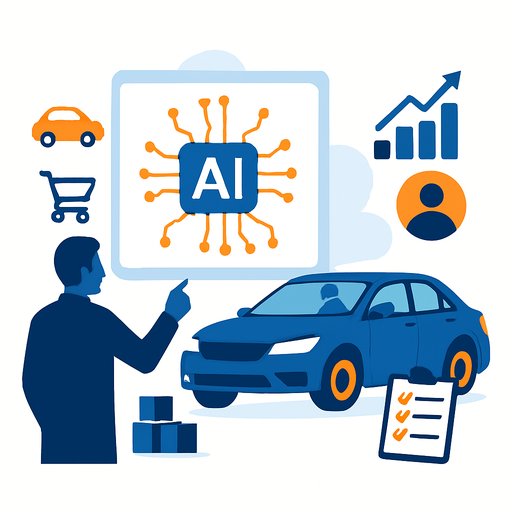
AI is reshaping how customers shop and how stores run. For operations leaders, the value is simple: fewer handoffs, faster cycles, tighter control over margins, and better customer satisfaction.
The opportunity spans the entire store. From sales conversations to fixed ops and used inventory, AI gives your team leverage - more output without adding headcount.
Start where revenue walks in: front-end sales
First priority: equip sales with the data a shopper has already shared online. When a customer arrives, your team should see the vehicles they viewed, preferences they gave, and the next best step - all in one screen. That boosts throughput and reduces the number of people needed to land a deal.
Sales assist tools can also prompt reps in real time. As customers ask about availability or specs, on-screen suggestions keep answers fast and accurate. The result: fewer stalls, more confidence, and cleaner notes pushed back into your CRM.
Automate the communication loop
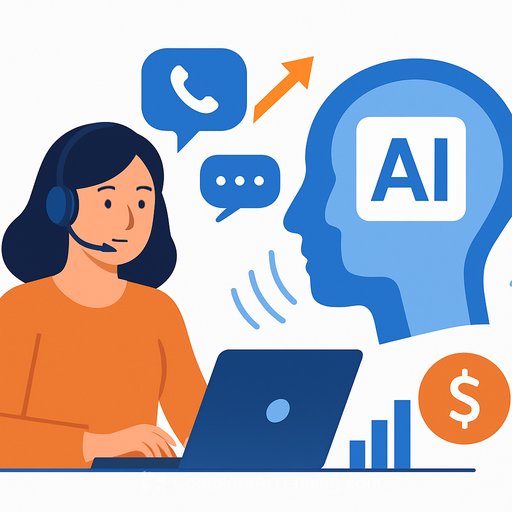
Messaging is the most common entry point. AI can handle 24/7 chat, text, and email, route inquiries, and keep the conversation moving until a human is required.
- 52% of franchised dealers are already using AI for real-time chat, text, or email engagement 24/7.
- 48% use AI to create personalized emails and texts.
- 39% use AI to predict who's ready to buy and target them with tailored messages.
Source: Cox Automotive's Auto AI Readiness in Auto Retail Study (April-August 2025). AI here acts as a friction remover - faster responses, consistent follow-up, and cleaner CRM data for your team to work.
Service: the highest ROI in the store
Fixed ops runs on volume and timing, which makes it a strong fit for automation. Platforms can mine the DMS for customers due for service, send personalized offers, book appointments, answer missed calls, and push updates automatically. That lifts show rates, reduces idle bays, and makes advisors more productive.
Tools that centralize service communication also help. They pick up missed calls, route to the right advisor, and confirm appointments. Fewer voicemails. Fewer gaps. More hours per RO.
Used inventory: buy smarter, turn faster
On the pre-owned side, AI can analyze demand, look at six months of retail and wholesale pricing, and forecast the next 90 days. When you're debating a trade or an auction purchase, that context helps avoid overpaying and reduces aging.
Combine those signals with your local turn rates and recon times. Set bid ceilings, tighten acquisition criteria, and keep a balanced mix that matches what actually sells in your market.
Data quality and compliance come first
Most dealers see more upside than risk with AI, but a quarter are still waiting. The hesitations are fair: data sources, privacy, and anti-discrimination. The fix is boring - and necessary.
- Know where the data comes from and how it's used.
- Get consent, provide opt-outs, and log why the system made a decision.
- Audit for bias and accuracy on a schedule, not just at launch.
AI is only as good as the data you feed it. Treat governance like a feature, not a checkbox.
Implementation playbook for operations leaders
- Pick one high-friction use case per department (e.g., missed service calls, sales response time).
- Integrate with your CRM/DMS and phone system. No copy-paste workflows.
- Define clear KPIs: first-response time, appointment show rate, advisor load, days-to-sale, aging days.
- Run a pilot at one rooftop with a control group. A/B test scripts and routing.
- Train staff on escalation rules and how to review AI-made notes before they hit the record.
- Review vendor security, retention policies, and monitoring. Document everything.
- Scale only after you see consistent ROI and clean compliance logs.
What to evaluate in your vendor stack
- Sales assist: real-time prompts, spec lookups, pricing context, CRM logging.
- Comms automation: 24/7 chat/text/email, call pickup, routing, appointment setting.
- Service engagement: DMS mining for due customers, recall outreach, follow-ups.
- Inventory intelligence: six-month pricing history, 90-day forecasts, local turn insights.
Skill up your team
Your people don't need to be data scientists. They do need to QA outputs, write clear prompts, and understand privacy basics. A few hours of focused training goes a long way.
If you're building an operations-focused upskilling plan, see practical program options here: AI courses by job role. For a deeper view of how the industry is moving, you can also review resources from Cox Automotive.
The bottom line
Start where the impact is clearest: front-end conversions, service scheduling and outreach, and used inventory decisions. Keep humans in the loop, measure everything, and put guardrails around data.
Do that, and you'll sell more cars with fewer handoffs, keep bays full, and run a tighter, more predictable store.
Your membership also unlocks: