AI Orchestrators Are Turning Software Development Into Product Development
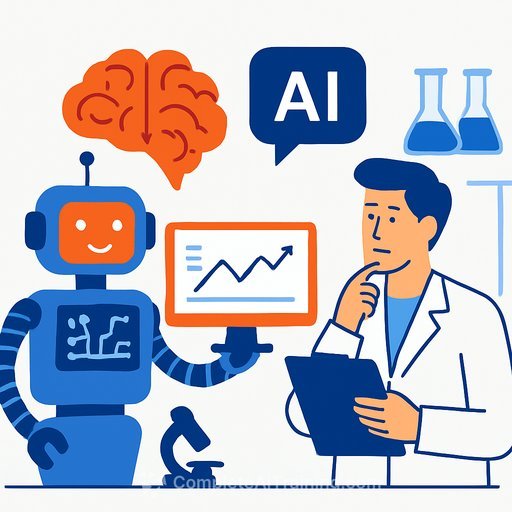
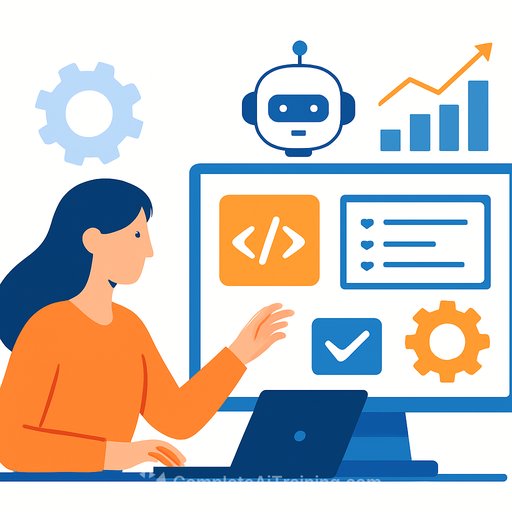
AI systems that coordinate entire product creation are replacing traditional software development methods. These AI orchestrators take a human description of what a system should do and generate not just the code, but also documentation, training materials and marketing content - all from a single prompt.
The shift from software development lifecycle (SDLC) to product development lifecycle (PDLC) cuts timelines, reduces costs and redefines what developers and managers do.
How AI Orchestrators Work
An AI orchestrator receives a description of a desired system from a technical product manager or architect. It then works with a small group of experts to clarify ambiguities and fill in details. Once aligned, the system generates the complete product autonomously.
Consider a customer relationship management solution for an oil and gas company that detects pipeline failures using sensor data. Traditionally, this required software developers to write code, integrate modules, create documentation, prepare marketing materials and configure cloud infrastructure - with different specialists handling each piece.
An AI orchestrator handles all of it. It produces the software, end-user documentation, training videos and marketing copy without manual intervention at each stage.
EY built a demo investment management tool using this approach. Without AI orchestration, the project would have taken six or seven developers at least 10 weeks. The AI orchestrator created an enterprise-grade platform with authentication, authorization and backend monitoring in two days.
The Economics of Speed and Quality
Organizations no longer face the traditional trade-off between speed, cost and quality. The PDLC approach achieves all three simultaneously - better outcomes delivered faster at lower cost.
This works because AI orchestrators eliminate what developers call "toil tasks" - the painstaking documentation, checkbox verification and repetitive work that consumes time but requires little creativity. Developers spend hours on these tasks today. AI removes that burden entirely.
Developers and Managers Will Evolve, Not Disappear
The shift doesn't eliminate software development jobs. Instead, roles transform fundamentally.
Developers will stop writing code line-by-line and managing traditional project workflows. They'll focus on verifying that AI-generated systems match the original intent, catching errors and managing teams of AI agents. Managers will lead these teams and handle strategic oversight rather than coordinating schedules and dependencies.
This creates space to tackle the backlog of features and projects that have accumulated across organizations. Resource constraints and shifting priorities have left many companies with years of unfinished work. AI orchestrators let smaller teams address these backlogs efficiently.
Within five years, enterprise systems running in production could be developed by a handful of people working with AI agents. The humans verify intent matching - ensuring the output reflects what was actually requested. The AI handles the bulk of execution.
The Human Oversight Problem
AI systems make errors. They can produce unintended consequences, embed bias or fail to account for edge cases. Organizations need experienced professionals monitoring and guiding AI agents, not just turning them loose.
This isn't a reason to slow down AI adoption. A study of mammography algorithms found that AI assigned higher cancer detection scores to women who would develop breast cancer four to six years before radiologists spotted it clinically. Overrelying on human judgment alone would have delayed those diagnoses. The answer is embedding oversight mechanisms, not abandoning the technology.
Transparency in how AI systems make decisions, accountability for outcomes and frameworks protecting user privacy are essential. Organizations need to balance innovation with responsibility.
Managing the Transition
Organizations should invest in reskilling programs to help employees adapt to new roles. Transparent communication about how work is changing reduces uncertainty.
Internal champions - people passionate about innovation and comfortable with new technology - play a critical role. They demonstrate the benefits of AI-enabled processes, guide peers through change and show that adoption works. Without advocates inside the organization, even promising transformations falter.
The Broader Shift
The waterfall method dominated software development for decades but failed frequently. The Standish Group's Chaos Report found a 59% failure rate for waterfall projects between 2013 and 2020. Agile methods improved flexibility but still focused only on producing code, not complete products.
A market-ready software product now requires far more than executable code. It needs documentation, training materials, infrastructure setup and marketing collateral. Assembling these components requires roughly twice the effort of building the software itself.
AI orchestrators address this by treating product creation as a unified process, not a series of disconnected tasks.
Learn more about how AI is changing developer roles with AI Learning Path for Software Developers or explore Generative Code capabilities.
Your membership also unlocks: