AI Is Moving Faster Than Law. Here's How Legal Teams Can Keep Up
Artificial intelligence has left the lab and is now in classrooms, hospitals, courtrooms and kids' pockets. Karni Chagal-Feferkorn, an assistant professor at the University of South Florida's Bellini College of Artificial Intelligence, Cybersecurity and Computing, is clear: the tech's pace is outpacing the legal playbook.
For legal professionals, that gap isn't academic. It's risk, liability and policy exposure in real time. Below is a practical brief drawn from her research and advice.
Liability: Product, Negligence, or Something Else?
AI isn't a person, but it also doesn't behave like a standard product that follows instructions predictably. That makes the usual doctrines feel incomplete.
Two paths are emerging: treat AI like a product (classic product liability) or analyze harms through negligence (as we do with human actors and organizations). Europe's updated thinking on the Products Liability Directive is one signpost for product-based claims in certain uses.
On the negligence side, we're already seeing U.S. plaintiffs argue that an autonomous vehicle was "negligent" in how it acted. Courts will need to decide when developer or deployer fault attaches-and how to weigh foreseeability when systems are probabilistic.
- Action for in-house counsel: define duty and control in contracts. Specify data ownership, model update rights, audit rights and kill-switch authority.
- Action for litigators: press for logs, training data lineage and human-in-the-loop policies. These will shape foreseeability and standard-of-care arguments.
- Policy note: aim for a balance that rewards reasonable safety investments without freezing useful innovation.
EU Product Liability guidance offers context on where product theories may fit.
Children and AI: The Highest Stakes
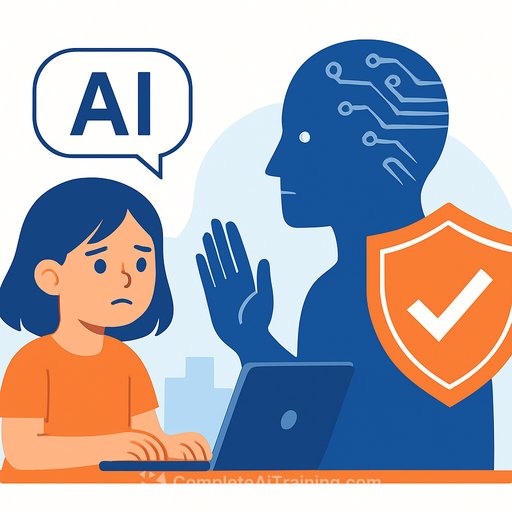
Chagal-Feferkorn points to mounting evidence of harm: AI companions exposing minors to sexual content, encouraging violence, and even conversations tied to self-harm. The risk profile is different here-sensitive users, serious harms, and broad exposure.
- Content gates: block certain categories outright for minors; escalate to safe responses on self-harm signals.
- Identity cues: continuous reminders that the user is engaging with AI, not a human.
- Data restraint: strict limits on collection, retention and downstream use for minors.
- Parental oversight: short sessions, visible use in shared spaces, and age-appropriate conversations about risks.
Expect more state action-and possibly federal steps-that codify these protections. For companies, this is the wrong area to cut corners.
Build Law into Design, Not Postmortems
The old model-ship, then lawyer up-won't work with AI systems that learn, adapt and influence decisions. Bring legal, policy and engineering together before a single user sees the system.
- Pre-deployment reviews: run threat modeling for safety, discrimination and misuse. Document assumptions and mitigations.
- Red-teaming: test for prompt abuse, unsafe outputs and content filter bypasses. Log and fix before launch.
- Governance by default: enable audit trails, versioned models and rollback plans. Define incident response triggers.
- Translate policy to code: map abstract requirements (age gating, consent, data minimization) to concrete implementation checks.
Sandboxes and Public-Private Collaboration
Legislation moves slower than deployment cycles. Sandboxes let builders and regulators test in controlled settings, sometimes with limited exemptions. That shortens feedback loops without opening the floodgates.
- Join or propose sandbox pilots with sector regulators (health, finance, education).
- Use pilot terms to shape realistic reporting, monitoring and off-switch obligations.
- Pair sandbox results with internal guardrails: risk tiers, model change management and periodic re-certification.
Regulation matters, but it's only part of the answer. Education and voluntary standards will carry a lot of weight.
Skills the Next Wave of Legal Pros Will Need
- Learn fast: treat model architectures, evaluations and safety patterns as living subjects.
- Cross-literacy: read model cards, understand dataset provenance and question evaluation metrics.
- Risk fluency: spot prompt injection, content safety gaps, bias leakage and logging blind spots.
- Deal craft: negotiate data rights, safety SLAs, indemnities tied to model changes and audit access.
- Practical testing: ask for demos of failure modes, not happy paths.
What To Do This Quarter
- Inventory AI use across your org: who's deploying, what data is involved, and how outputs are used.
- Set a default standard of care: human oversight points, logging, and escalation thresholds.
- Update contracts: add safety warranties, change-control triggers, incident notice windows and termination rights for unsafe behavior.
- Prepare for minors: if any user could be a child, implement age gating and strict content controls now.
- Pilot a sandbox: pick one high-value use case and test it under enhanced monitoring with a regulator or industry group.
The gap between capability and law won't close by itself. As Chagal-Feferkorn argues, the smart move is to build safer systems upfront and give courts and regulators a clear record of reasonable care.
If you're upskilling your team for AI risk, governance and policy translation, see curated training and resources: AI for Legal and AI Research Courses.
Your membership also unlocks: