Hotels Are Using AI to Move Beyond Guest Personas
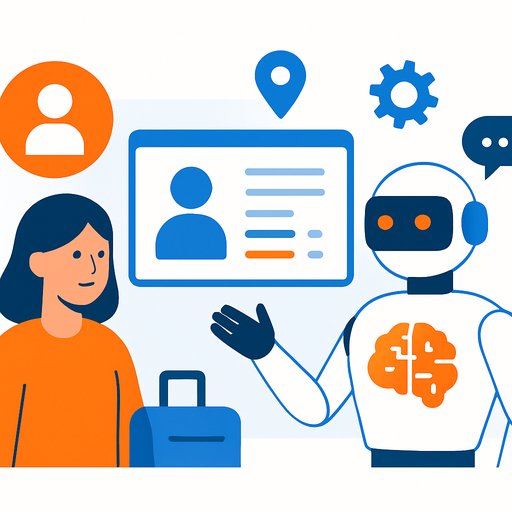
Hotel guest personas-simplified profiles that bundle customer data into stories about preferences and behaviors-have long been standard practice. But as hotels deploy AI for pricing, forecasting and personalization, many are discovering that personas actually block the technology from working effectively.
The core problem is structural. Personas were designed to reduce complexity. AI creates value by learning from it. When hotels train AI systems on averaged guest profiles, they strip away the individual variation, context and real-time signals the technology needs to be precise.
Personas Hide the Variation AI Needs
A persona compresses many observations into a single narrative-a "typical guest." That simplifies internal alignment. It also destroys accuracy.
Two guests assigned to the same persona may respond very differently to a rate increase, cancellation rule or upgrade offer. The same guest may react differently on different trips, even within the same travel category. When AI trains on averaged assumptions, it loses the granular differences that separate a good prediction from a poor one.
Guest Behavior Shifts With Context
Guest decisions are not fixed. They depend on travel purpose, trip duration, fatigue level, reimbursement rules, urgency, budget constraints, who else is traveling and many other situational factors. These variables interact. A static persona cannot capture this fluidity.
Consider a business traveler who normally dines in restaurants and avoids room service. On three separate long-haul trips with morning arrivals-to Indianapolis, Shanghai and Boston-that same traveler wanted room service badly. The pattern was identical: exhaustion after travel, a shower, a meal in the room, then work. The traveler would have paid for early check-in and room service together. Only one of the three hotels offered room service. All three offered free early check-in, which the traveler did not want.
A persona-based system would classify this guest as "restaurant-preferring" and miss the revenue opportunity entirely. An AI system trained on contextual data-long-haul arrival, fatigue signals, business travel indicators-could have offered a tailored package and captured the sale.
Real-Time Signals Matter More Than Historical Profiles
Personas are backward-looking. They use historical data to predict future behavior. AI can operate in real time if given the right inputs.
A guest's live behavior during booking-how long they hesitate, which questions they ask, whether they compare alternatives, how they respond to offers-reveals far more about conversion likelihood than any persona. A guest's behavior after arrival matters too. Someone who appeared price-conscious at booking may become convenience-driven upon arrival. Someone who declined ancillaries online may become receptive to add-ons once plans change. Weather, schedule disruptions, unexpected work obligations and companions' preferences all shift needs hour by hour.
Personas miss this dynamic context. The result is personalization that looks tailored but feels generic.
Deep Data From Human Insights Works Better
Transaction data alone mostly records outcomes and past behavior. Human insights from staff interactions reveal subtle cues that AI can interpret at scale and translate into timely actions.
Staff conversations with guests surface why decisions are made and under what circumstances. Combined with AI, these signals enable adapted recommendations, adjusted service timing, communication tone shifts and real-time cross-selling opportunities. Personalization should not stop at the booking confirmation. The real value of AI starts after the guest clicks reserve.
Deep, interaction-informed data lets AI move from static personalization to situational relevance. That difference separates a generic "personalized" message from a genuinely bespoke experience.
Hotels that rely solely on guest personas are applying advanced technology on top of outdated assumptions. The path forward requires deeper data that explains how and why guests make decisions, not just who they are.
Learn more about AI for Hospitality & Events and how AI Data Analysis can inform better business decisions.
Your membership also unlocks: