AI and Hydrogen in LNG Operations: What Matters Now
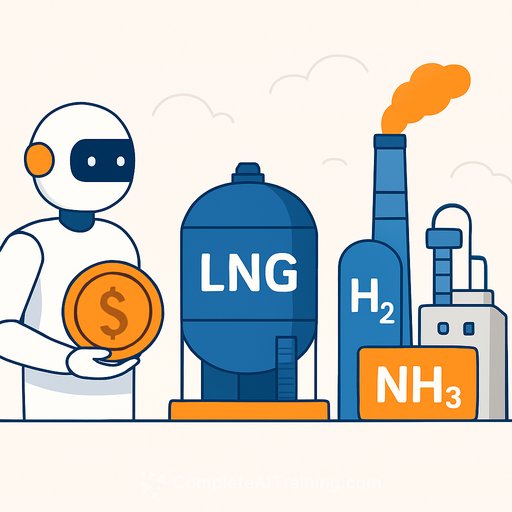
The final day of LNG2026 closed with two parallel Spotlight Sessions moderated by the International Gas Union (IGU): The Catalyst for Hydrogen and Ammonia, and Digital Transformation in the LNG Industry. If you run assets, fleets, or terminals, here's the distilled signal - what to do, what to watch, and where to get value fast.
Hydrogen and Ammonia: Practical Paths for LNG Operators
Moderated by IGU's Director for Strategy and Advocacy, Mark McCrory, the panel unpacked how LNG can support a measured rollout of hydrogen and ammonia. The discussion covered blue hydrogen and ammonia with carbon capture and storage (CCS), and how existing LNG infrastructure could be adapted.
Panel: Matt Spalding (Honeywell), Nimit M. Shah (KBR Sustainable Technology Solutions), Volkmar Galke (WinGD), and Ed Crooks (Wood Mackenzie). The takeaway: policy and investment have cooled, growth continues but slower than forecast, and LNG's scale discipline offers playbooks worth copying for hydrogen and ammonia.
- Start with integrity: review metallurgy and materials for hydrogen embrittlement and ammonia compatibility (valves, seals, storage, transfer systems). Build a clear register of what's fit for purpose and what needs upgrade.
- Map retrofit options: evaluate partial blending strategies and phased conversions. Prioritise units with shortest tie-ins and high emissions leverage.
- Pilot CCS where heat integration and footprint make sense. Use modular capture units to reduce outage risk and learn fast. For context on CCS frameworks, see the IEA overview here.
- Copy LNG's scaling lessons: standardised modules, repeatable templates, and disciplined project governance. Fewer bespoke packages, more templates. For practical guidance on repeatable approaches, see Design.
- Plan shipping and engines early: align with OEM roadmaps for ammonia and hydrogen-capable engines and bunkering interfaces. Lock in safety cases and class requirements ahead of procurement.
- Upgrade safety programs for ammonia and hydrogen: leak detection strategy, ventilation design, emergency shutdown logic, and operator training scenarios.
Digital Transformation: Immediate Wins for Maintenance, Safety, and Predictability
Moderated by IGU's Communication Director, Ella Minty, the panel explored how modern digital tools are changing day-to-day operations. Panel: Bjarte Pedersen (ABB), Joshua Divin (ABS), and Dominique Gadelle (Technip Energies).
Three points were clear: AI can deliver near-term financial and operational benefits in maintenance and operations; digitalisation can be highly reliable for process safety and predictability; and human oversight remains essential for the foreseeable future.
- Focus your first AI use case: rotating equipment (compressors, turbines, large pumps). Start with anomaly detection on vibration, temperature, and lube oil data. Tie alerts directly to CMMS work orders to shorten time-to-action.
- Stabilise the data foundation: confirm historian tags, sensor health, time sync, and data quality rules. Bad inputs kill ROI before models even start.
- Make safety digital by default: apply digital permits-to-work, interlock verification, and alarm rationalisation tied to operating envelopes. Use predictive models as decision support - final calls with experienced operators.
- Stand up a model lifecycle process: version control, model drift checks, and periodic human review. Treat models like equipment - they need maintenance too.
- Secure it: align with site cybersecurity standards, segment networks, and audit vendor access. No exceptions.
- Measure what matters: track unplanned downtime, mean time between failures, maintenance backlog age, and emissions intensity per tonne LNG. Review quarterly and refresh the backlog of AI candidates.
For broad context on AI's role in energy systems, the IEA has a useful primer here.
90-Day Action Plan for Operations Leaders
- Pick one hydrogen/ammonia readiness check and one AI maintenance pilot per site. Keep scope tight, success criteria explicit, and timelines short.
- Create a joint operations-maintenance-digital working group. Weekly standups, clear owners, and a visible dashboard.
- Standardise templates: PFD/P&ID markups for retrofits, data quality checklists, and AI model acceptance criteria.
- Pre-wire procurement: preferred vendors, interface standards, and cybersecurity clauses to cut lead times.
- Train the crew: upskill control room and maintenance teams on new tools and failure modes (especially for ammonia handling and model-based alerts).
- Close the loop: after each pilot, capture lessons and decide scale, pivot, or stop. Then move to the next asset class.
Why This Matters
Hydrogen and ammonia will progress, even if the tempo is uneven. LNG operations that prepare smart retrofits and copy proven scale tactics will move faster with less risk.
On the digital side, the value is here now - in fewer surprises, cleaner handovers, and safer runs. Keep humans in the loop, make data reliable, and pick problems worth solving.
Want a fast way to upskill your team on applied AI for maintenance, reliability, and safety? Explore curated options by job role at Complete AI Training.
Your membership also unlocks: