
AI news ·
AI pipelines need zero trust security and human oversight as agentic tools expand attack surfaces
AI development teams are skipping security reviews to hit market deadlines, leaving AI pipelines exposed as primary attack surfaces. Five steps-from zero trust access controls to production monitoring-can close the gaps before they're exploited.
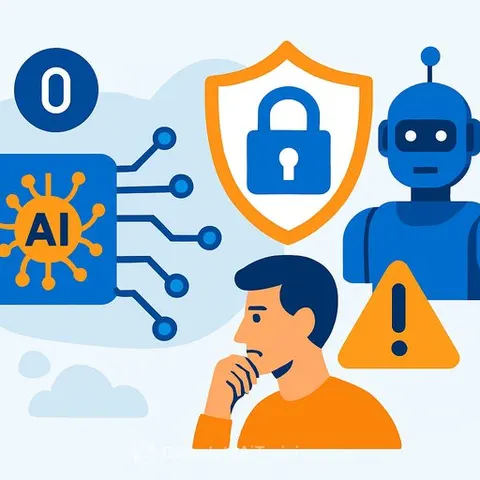
Speed-first AI development is creating serious security gaps
The pressure to release AI systems quickly is pushing security and testing into the background. Product teams without technical expertise are leading AI initiatives, prioritizing market timing over proper risk assessment. This trend mirrors earlier DevOps security failures, but with higher stakes: AI systems now operate as autonomous, high-privileged identities with direct access to sensitive data.
The shift demands a fundamental change. Security teams and subject matter experts must have the authority to block releases based on risk, not just recommend caution.
Where AI pipelines differ from traditional code
Standard DevOps manages predictable code. MLOps manages live, evolving models that require elevated access to data and SaaS environments. The risks extend beyond misconfiguration. Autonomous activities within the pipeline are harder to control and monitor than traditional code deployments.
Before generative AI became standard, most AI implementations stayed behind internal infrastructure. Today, AI serves end users directly and sits exposed on the internet. This architectural shift turns the AI pipeline itself into a primary attack surface.
The SaaS and MCP problem
AI agents increasingly use Model Context Protocol (MCP) tools to connect with external SaaS platforms and move data autonomously. This creates a security blind spot if foundational controls are missing.
Two risks compound here. Many MCP servers lack the native authentication controls that standard APIs provide. Second, generative AI produces non-deterministic outputs-you cannot always predict how a model will interact with these tools. An AI agent with edit or write permissions might autonomously grant access or move data in ways that violate security protocols, all without detection.
Cloud providers don't solve the problem alone
Major cloud platforms offer comprehensive MLOps tools, but responsibility for using them correctly sits with development and security teams. A powerful MLOps platform doesn't secure your pipeline if data flows are unmonitored or access controls are overly permissive.
Treat every AI component as a digital identity. Apply the same zero trust principles you would use for human employees or external applications.
LLMs can help, but cannot replace human oversight
Using language models to automate security reviews, monitoring plans, or assessments can be a useful starting point. These outputs should never be treated as final authority.
LLMs excel at surfacing potential issues and augmenting expert work. They cannot replace the nuanced judgment of a human security lead. Use AI to flag problems, but require human experts to conduct deeper analysis and guide production decisions.
Five steps to secure your MLOps pipeline
1. Make security a baseline requirement, not a final step
Incorporate rigorous testing and monitoring during development and production phases. Conduct a comprehensive security review of the entire pipeline before it reaches production.
2. Map your data flows completely
Understand where data originates, how it's accessed, where it's modified, and where it's stored. Track every intermediate step where data might be cached or processed by third-party services. Distinguish between real customer data and synthetic test data.
3. Apply zero trust to AI identities
Define read, edit, and write permissions using least privilege access. When using external MCP tools or SaaS integrations, perform the same data access and authentication reviews as you do on internal systems.
4. Audit your supply chain and track dependencies
Your pipeline is only as secure as the libraries it uses. Regularly review dependencies for known vulnerabilities that could allow server hijacking or malicious dataset loading. Track software bill of materials (SBOMs) as you add more open source and vendor ML libraries.
5. Monitor for non-deterministic behavior in production
Traditional testing is insufficient for generative AI. You need production monitoring to catch anomalous behavior or unintended data exposure before it escalates.
Security becomes a competitive advantage
AI agents will become major, high-volume users within SaaS environments. Governing these identities with the same rigor applied to human employees is not optional-it's essential.
The companies that win won't be the fastest to market. They'll be the ones that customers trust most. Security must move from being a gatekeeper at the pipeline's end to being its foundation.
For more on securing AI systems in development environments, explore resources on AI for IT & Development and Generative AI and LLM.