Human Behavior Remains Cybersecurity's Biggest Vulnerability. AI Can Help Reduce It
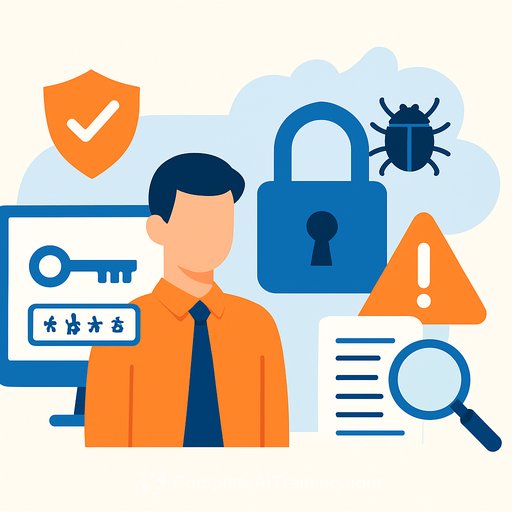
Social engineering attacks account for 98% of cyberattacks not because they're technically sophisticated, but because they work. Attackers manipulate employees into clicking malicious links, opening infected attachments, or disclosing sensitive information.
Traditional security awareness training hasn't solved this problem. Most programs deliver the same content to all employees, track completion rates, and assume learning translates to behavior change. It often doesn't. An employee who passes a phishing quiz may still click a phishing email weeks later.
AI-powered human risk management takes a different approach. Instead of one-size-fits-all training, it continuously analyzes how individual employees interact with email and business systems, assigns risk scores, and delivers personalized interventions based on actual behavior patterns.
Why Traditional Programs Fall Short
Completion doesn't equal behavior change. Organizations can track whether employees finish training, but not whether they actually respond correctly when they encounter a real phishing email or suspicious request.
Fixed training schedules don't match threat velocity. Social engineering tactics evolve quickly. By the time employees finish an annual training course, attackers have moved to new tactics the course doesn't address.
One-size-fits-all content ignores job roles and individual risk profiles. An accountant handling wire transfers faces different threats than a software developer. A user with a history of clicking phishing simulations needs different reinforcement than someone with strong security habits.
How AI Enables Behavior-Based Risk Reduction
Continuous behavioral analysis: AI monitors how employees interact with email, data, and business systems. It identifies patterns-repeated clicks on simulated phishing emails, ignored security warnings, failure to report suspicious messages-that indicate vulnerability to social engineering.
Dynamic risk scoring: AI assigns risk scores to users that update automatically as behavior changes. Security teams can then prioritize which users and actions pose the greatest threat, focusing mitigation efforts where they'll have the most impact.
Personalized interventions: Rather than generic training, organizations deliver targeted simulated phishing campaigns, real-time warnings, or policy reminders based on individual risk signals. An employee who repeatedly ignores security warnings gets different interventions than someone who reports suspicious emails consistently.
Adaptive feedback: AI can trigger interventions at critical moments-when a user's behavior suggests heightened risk-rather than on fixed schedules.
Benefits for Security Teams and Organizations
Better resilience against social engineering. Targeted training and simulations help employees recognize and respond to evolving phishing and business email compromise attacks.
Reduced human-driven incidents. Identifying risky behaviors early and reinforcing smarter security habits minimizes the number of employees who become attack vectors.
Improved team efficiency. AI automates risk analysis and content personalization, freeing security teams to focus on strategic decisions rather than administrative work.
Earlier detection of insider risk. Behavioral analytics highlight unusual activity or repeated risky actions, giving security teams earlier visibility into potential insider threats.
Implementation Requires Careful Consideration
Transparency matters. Employees should understand how behavioral data is collected and used. Security decisions based on opaque analysis breed distrust.
Privacy and data governance are non-negotiable. Behavioral data must be handled responsibly with clear policies for collection, storage, and use.
Data quality determines insight quality. Accurate risk scores depend on reliable data from training programs, phishing simulations, and security tools.
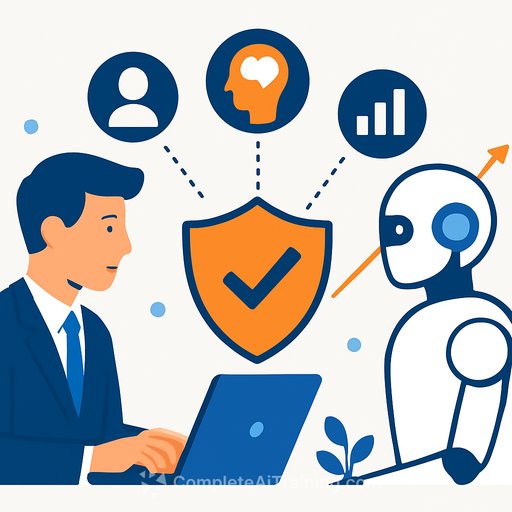
Humans remain accountable. AI can recommend and automate interventions, but security teams set overall strategy and maintain oversight of AI systems. Algorithms inform decisions; they don't make them.
A Core Security Capability
As attackers refine behavioral attacks, organizations need to measure and reduce human risk more precisely. Static annual training programs can't keep pace with threat evolution.
AI-powered human risk management allows organizations to adjust interventions responsively, feeding behavioral insights into email security, identity systems, and incident response in real time.
For managers overseeing security or HR functions, understanding this shift from training completion to behavior change is critical. Learn more about AI for Management and how AI tools are reshaping organizational security strategy. Those in HR leadership may also benefit from exploring the AI Learning Path for CHROs, which covers how AI applies to workforce management and risk reduction.
Your membership also unlocks: