
AI news ·
AI-powered scams impersonating authors and publishers target aspiring writers
Scammers impersonating Colleen Hoover and other authors are using AI to send writers convincing fake pitches, sometimes stealing unpublished manuscripts. One federal case saw three people charged with defrauding authors of nearly $44 million.
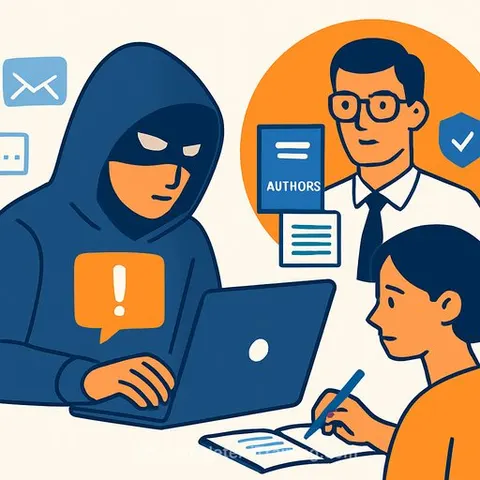
Scammers Impersonating Authors Are Targeting Writers With AI-Generated Pitches
Bestselling author Colleen Hoover has warned readers about an escalating wave of publishing scams that impersonate well-known authors, pose as book clubs, and offer shortcuts to Hollywood deals. The scams often use artificial intelligence to generate personalized, emotionally convincing emails that praise a writer's work-making them harder to spot as fraudulent.
In one recent case, an aspiring author spent three months communicating with someone they believed was Hoover before realizing they'd been talking to a scammer. The author had already shared their unpublished manuscript. "This author spent a year writing this book and now they've shared it with a scammer and there's nothing I can do for them," Hoover wrote on Facebook in late March.
The Scope of the Problem
These scams have grown more frequent and sophisticated. A federal grand jury charged three people last year with defrauding elderly authors out of nearly $44 million by promising to turn their books into Hollywood productions for a fee.
Victoria Strauss, who cofounded the watchdog group Writer Beware in 1998, said the problem has "just gotten worse over the years." Historically, scammers targeted self-published writers exclusively. "This new wave of AI scams is targeting everybody," Strauss said. "I've only ever published traditionally, so I never got the scam solicitations until now."
Most scams originate overseas. Hoover said she used to pay a company to track down and report impersonators, but the volume has become unmanageable. "There's one of me and thousands of them, and I'd be spending my entire career fighting it," she wrote.
How Scammers Exploit Writer Psychology
The emails often open with specific, authentic-seeming praise about a writer's work. "These scams have a pretty good grasp of writer psychology, which is what makes them so insidious," Strauss said.
Kathryn C. Kelly, an author based in Texas, received multiple fraudulent offers at the start of this year. One "book club" claimed it could put her work in front of nearly 800 readers in London. They asked her to contribute €1 per participant to a refreshment budget. She sent $50-money she could barely spare after mounting medical bills from cancer treatment.
Another fake organization offered a customized "book trailer" for $200. In both cases, the scammers asked Kelly about her health struggles and offered sympathy. "Of course I'm desperate to find readers and all of this seems too good to be true, but like an easy fix," Kelly said. "There is no such thing as an easy fix."
On April 20, Kelly received an email from usatodaybookfeatures@gmail.com claiming to be from USA TODAY Books. An "Alex Morgan, Senior Editor, Book Features" offered her a national newspaper feature for $200. There is no such person in the USA TODAY newsroom, and USA TODAY does not charge for features or placement on its bestseller list. Legitimate USA TODAY emails end in usatoday.com or usatodayco.com.
The Hollywood Dream as a Lure
Some scammers dangle adaptation deals. Nicole Loufas, a self-published author in California, once paid $300 to have her book reviewed on TaleFlick, a site promoted as a searchable library for Hollywood producers.
She received an email from someone claiming to work with Shonda Rhimes and saying Rhimes wanted to adapt her book. The scammer used the name of a real Shondaland employee. When Loufas called to discuss details, the person told her she would have to write the screenplay herself-or pay them to hire one. She hung up and complained to TaleFlick, which is no longer active.
How to Protect Your Work
Strauss says "knowledge is a writer's best tool and best defense." Here are specific steps to take:
- Verify email addresses carefully. Agents and publishers use company email addresses, not Gmail or free providers. Check for slight misspellings.
- Know how legitimate publishing works. Agents take a commission from sales, not upfront fees. Traditional publishers don't ask for payment. If a service requires a fee for exposure, research it thoroughly. NetGalley is legitimate; many others are not.
- Check an author's official channels before responding. Visit their website and social media. Does the email address match what's listed there? Can you confirm the request through their publicist or agent?
- Be skeptical of cold emails from established authors. Hoover said she has never made professional connections through unsolicited emails. "Authors don't have time to reach out to other authors and readers and make friends in that way," she wrote. "The best place to meet authors authentically is through social media or at book signings."
Hoover added: "I received an email from a dead author last night."
Understanding how generative AI and LLM technology works can help you recognize when emails are AI-generated rather than written by a real person. Awareness among the writing community remains the strongest defense against these schemes.