How AI Product Photography Is Redefining Visual Marketing in 2026
Visual marketing has shifted from aesthetics to speed, scalability, personalization, and performance. Ecommerce growth demands fresh, channel-ready visuals at a volume that traditional shoots can't match. AI product photography closes that gap with fast generation, precise editing, and automated variants-without dragging teams through endless reshoots.
The outcome is practical: shorter production cycles, lower costs, consistent branding, and visuals that convert. For marketing teams, this isn't a trend. It's how you keep up-and win.
The New Demands on Visual Content
Digital channels multiply the image workload. One product needs dozens of variations to fit formats, audiences, and regional tastes.
- Product images for ecommerce listings
- Lifestyle visuals for social and ads
- Website banners and feature tiles
- Marketplace-optimized imagery
- Mobile-first vertical formats
- Region-specific and seasonal versions
Traditional studio production stretches timelines and budgets. AI helps teams scale without sacrificing quality.
Speed Is a Competitive Edge
Trends move fast. Promotions turn weekly. Social needs daily iteration. If your visuals lag, your campaign underperforms.
- Launch new product imagery instantly
- Swap backgrounds and scenes digitally
- Produce variants for A/B tests at scale
- Localize for markets without re-shooting
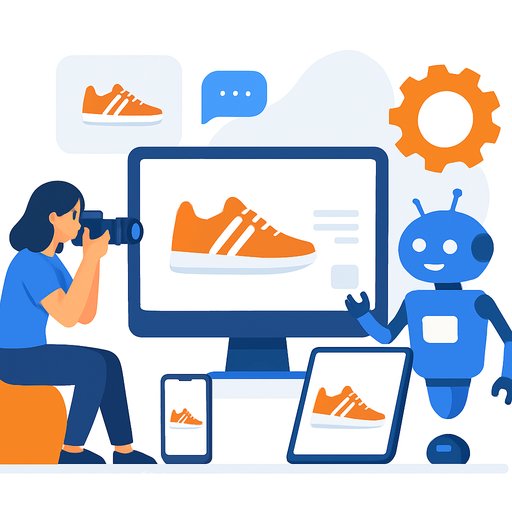
Example: a footwear brand can place one shoe across urban, beach, and minimalist studio scenes-no shipping, no set builds, no delays.
Cost Efficiency Without Sacrificing Quality
Studios, lighting, models, stylists, retouching-costs stack up fast. AI reduces spend by turning one base shot into many on-brand assets. You cut re-shoots and retouch queues while keeping professional polish.
This levels the field. Small teams get production quality that used to require enterprise budgets.
Personalization at Scale
Relevance drives clicks and conversions. AI allows marketers to tailor imagery to segments without rebuilding every scene from scratch.
- Backgrounds and settings by region
- Seasonal variations per market
- Lifestyle scenes for specific demographics
- Formats tuned to each platform
Result: visuals that feel made for the viewer-delivered on schedule.
Conversion Gains You Can Measure
Customers can't touch products online. Your images do the heavy lifting. AI helps you remove friction and increase trust.
- Cleaner lighting and sharper detail
- Distraction-free compositions
- Accurate color and material rendering
- Realistic lifestyle contexts that answer "How will this fit my life?"
Good product imagery improves decision confidence and reduces returns. For usability research on images and ecommerce, see Nielsen Norman Group.
Omnichannel, One Asset
Every platform has different specs. AI turns a single master into channel-perfect assets without quality loss.
- Square posts for Instagram
- Vertical ads for TikTok and Reels
- Homepage hero banners
- Marketplace thumbnails and zoomable images
Keep a standards checklist. For marketplace constraints, review Google Merchant Center image requirements.
Sustainability With Real Impact
Physical shoots require shipping products, building sets, and tossing props. Digital scenes reduce material waste and logistics. Fewer reshoots also means fewer returns trips and shipments.
Better for budgets and better for the planet.
Creative Freedom, Zero Logistics
Weather, studio size, and geography no longer limit your ideas. Creative teams can test scenes and styles without waiting on availability or permits.
- Exotic landscapes
- Futuristic or stylized sets
- Seasonal and holiday themes
- On-brand artistic treatments
Data-Driven Creative
AI isn't just a generator-it's a feedback loop. Tie your visuals to performance data and iterate with intent.
- Continuous A/B testing of scenes, angles, and crops
- Data-backed creative decisions over gut feel
- Faster adjustments to winners across campaigns
Big Advantage for Small Teams
What used to require an agency bench is now accessible in-house. Founders and lean teams can produce ecommerce-grade visuals, keep pace with content demands, and compete on presentation-not just price.
Risks, Limits, and How to Stay Honest
Use AI to present accurately, not to mislead. Trust is the asset you can't buy back.
- Match visuals to the real product (size, color, finish)
- Be transparent about enhancements when relevant
- Follow advertising and marketplace standards
- Institute QA for color accuracy and material realism
What's Next
AI will keep moving closer to the point of interaction-faster, smarter, more contextual. Expect deeper links with 3D, AR, and live customization.
- Real-time visual generation based on user behavior
- AI styling suggestions informed by performance data
- Fully virtual product environments
- Seamless AR try-on and placement
Quick Start Playbook for Marketing Teams
- Audit your top 20 SKUs and priority channels. Define image specs, gaps, and conversion goals.
- Set a master visual standard: angles, lighting, backdrop, file types, naming.
- Adopt two workflows: background/scene generation and bulk variant production. Build a prompt and template library.
- Create a QA checklist for color, shadow realism, reflections, and compliance.
- Label AI-edited assets internally. Document what changed for legal and support teams.
- Run A/B tests on key scenes (studio vs. lifestyle, angle, crop). Optimize by CTR, add-to-cart, and CVR.
- Localize variants for season, language, and region once you have winners.
- Automate distribution to your CMS, ads manager, and marketplaces with version control.
Further learning
- AI for Marketing - strategies, tools, and workflows to integrate AI visuals into your campaigns.
Bottom line: 2026 rewards teams that move fast, personalize at scale, and measure everything. AI product photography turns content production into a repeatable, data-driven system-without blowing your budget or your timeline.
Your membership also unlocks: