AI Could Turn Novel-Writing Into a Supervised Process
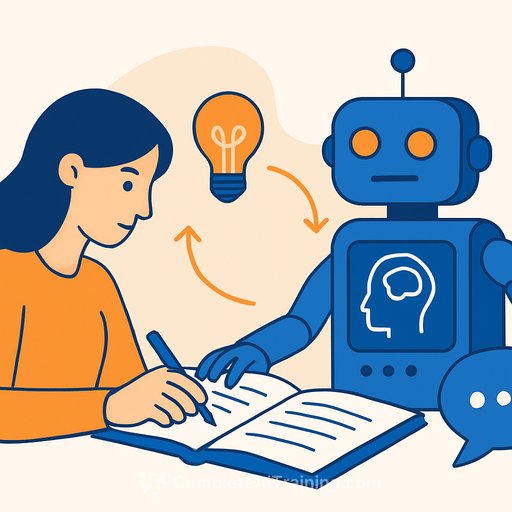
Novels succeed or fail on more than prose quality. Readers respond to premise, plot, character, and voice-elements that don't all need to come from a single person. As AI tools make draft generation faster and cheaper, the publishing industry may shift toward a model where authors act as editors and supervisors rather than sole creators.
This isn't new. James Patterson has run what amounts to a novel factory for decades, supplying collaborators with outlines and overseeing dozens of projects simultaneously. His approach distances him from literary fiction in some eyes, but it's the only practical way to sustain a long-running series at volume.
AI accelerates that model. A romance writer using the pseudonym Coral Hart generates drafts in roughly 45 minutes using AI, then revises and self-publishes hundreds of books under dozens of names. She reportedly earns six figures and teaches others her method. The output is industrial. The financial incentive is clear.
The Disclosure Problem
The risk isn't high volume itself-it's opacity. Readers assume a Booker Prize winner was written entirely by the named author. They know television comes from writers' rooms. They understand journalism involves editors. But if AI-assisted books arrive without disclosure, readers won't know what they're buying.
Amazon asks sellers to flag AI-generated content. Compliance remains inconsistent.
Intent Matters More Than Tools
Technology doesn't determine outcome. A hammer builds houses and breaks windows. AI can generate churn, or it can help a writer overcome technical limits and realize a personal vision.
The question isn't whether AI will change publishing-it already is. The question is whether authors and platforms will be honest about how books are made, and whether writers use these tools to produce more or to create better.
For writers evaluating AI tools, transparency and intent are the real stakes. Learn more about AI for Writers and how Generative AI and LLM systems work.
Your membership also unlocks: