As AI Enters the Courtroom, Nursing Home Operators Brace for New Legal Threats in 2026
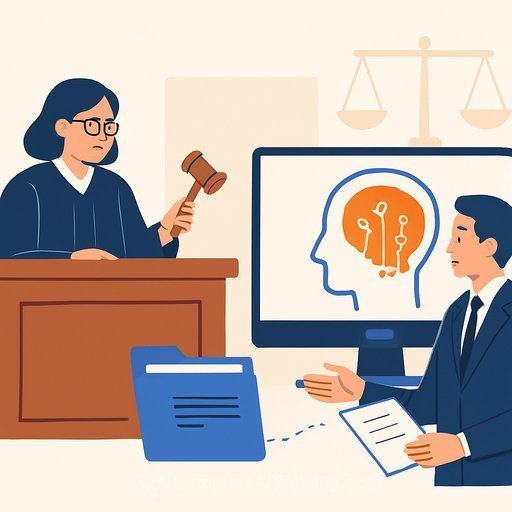
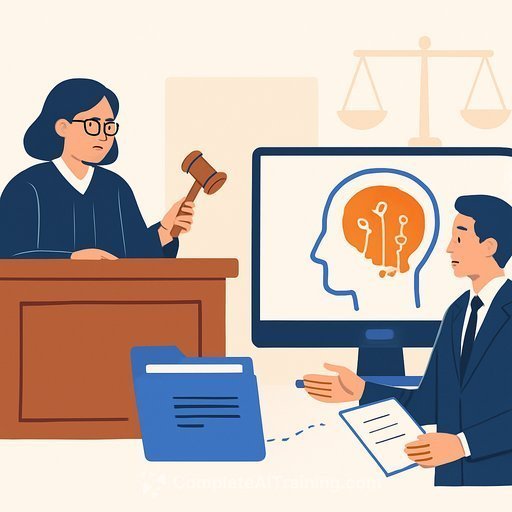
Plaintiffs are using AI to parse medical records and public datasets at scale. That's exposing documentation gaps, reshaping case selection, and pulling more defendants into the frame - from operators and management companies to third-party vendors.
Expect 2026 to bring sharper scrutiny of records, more corporate-level claims tied to ownership transparency, privacy fights around resident monitoring, added False Claims Act pressure, and state-driven staffing enforcement. The legal playbook for skilled nursing needs a refresh - fast.
AI is rewriting discovery and case selection
With AI, firms that haven't historically focused on skilled nursing can digest huge medical records and public data faster and cheaper. That widens the pool of plaintiff firms willing to file.
Documentation is the first casualty. Activities of daily living (ADLs), care delivery, communications, and handoffs are all easier to map - and easier to attack - when algorithms surface inconsistencies and missing entries. As one defense partner noted, AI is "fine-tuning which cases they pursue" while making "gaps a little bit more glaring."
The takeaway: fragmented or siloed records will be treated like admissions. Integrated, consistent, time-stamped entries across providers are now a core defense asset.
Corporate exposure and multi-defendant suits are climbing
Plaintiffs are mining public ownership data to press corporate-level theories and attempt to pierce the veil, especially where private equity is involved. Confusion around revalidation and disclosure requirements adds fuel when records don't line up across filings.
At the same time, bankruptcies and stays are nudging plaintiffs to name adjacent providers: medical directors, wound care vendors, therapy, dietary, and other outsourced services. Think hospital-style "name everyone" complaints and earlier pre-suit negotiations.
Defense counsel should assume joint defense dynamics from day one and lock down contracts, indemnity, and cooperation clauses across the vendor stack.
Resident monitoring, privacy, and consent are back in focus
Live video to improve safety and support surveys is gaining attention again, but only with clear consent and HIPAA-compliant controls. Expect legislation and policy to insist on notice, documented consent, and access limits.
Review privacy notices, signage, retention schedules, and who can view footage. Chain-of-custody and audit trails will matter once video becomes evidence. For baseline privacy standards, see the HIPAA Privacy Rule from HHS: HHS HIPAA overview.
False Claims Act risk is rising with funding pressure
Budget constraints ripple through Medicaid financing. As states adjust, disputes over medical necessity, documentation, and coding can quickly turn into FCA theories - especially where patterns of inaccurate claims appear in AI-assisted reviews.
Make sure billing, MDS/PDPM coding, therapy minutes, and physician orders line up with what's in the chart. Self-audit, correct promptly, and document repayments. DOJ guidance remains the north star: False Claims Act basics.
Staffing enforcement and resident rights: more action at the state level
States facing survey backlogs are reassessing enforcement priorities. Expect more state-driven staffing oversight and stronger resident rights statutes. Illinois, for example, expanded protections against retaliation tied to complaints and regulatory participation, with implications for admissions, arbitration, and grievance handling.
Use these shifts to push for a balanced oversight model while tightening policies that will be scrutinized first: complaint response, incident reporting, and staff escalation protocols.
Operator and defense playbook: actions to take now
- Tighten documentation across the continuum: Standardize ADL and care workflows, require contemporaneous entries, and align timestamps across EMR, therapy, pharmacy, and vendor systems. Build cross-entity audit trails that survive AI scrutiny.
- Run an "AI stress test" on records: Privileged mock reviews using analytics can spot patterns plaintiffs will find. Fix recurring gaps (late entries, inconsistent vitals, missing handoffs) and retrain teams accordingly.
- Ownership hygiene: Keep org charts, governance minutes, and disclosures consistent across Medicare, Medicaid, and state filings. Clarify roles of management companies and investors. Prepare a clean narrative for control, operations, and capitalization.
- Vendor risk transfer and alignment: Update BAAs, data-sharing, audit rights, indemnity, and cooperation clauses. Confirm insurance coverage, notice provisions, and arbitration. Set unified litigation holds and evidence protocols before a claim hits.
- Monitoring policy package: Written consent, posted notice, access controls, retention limits, and request workflows. Document exceptions. Train staff on who can view footage and how to preserve it without overwriting.
- FCA prevention: Quarterly internal audits, coder education, and a clear repayment policy. Protect your hotline from retaliation claims and close the loop with documented corrective action.
- Pre-suit readiness: A rapid-response team, litigation hold templates, early case assessment checklists, and playbooks for mediation. Track repeat fact patterns across facilities to guide settlement strategy.
- State-law tracking: Monitor resident rights, staffing, arbitration, and admissions changes. Update forms and policies within 30-60 days of enactment and retain version histories.
What to expect in 2026
Traditional falls and wounds won't disappear, but more filings will lean corporate, data-heavy, and multi-defendant. AI will influence who sues, which stories get told, and how aggressively gaps are amplified.
The firms best positioned to defend will treat documentation and ownership clarity as evidence strategy, not back-office tasks. The earlier you align operators, management, and vendors around that standard, the fewer surprises you'll face.
Build AI fluency on your team
If your legal team is standing up internal AI review practices or training staff on model-driven document analysis, consider structured upskilling resources: AI courses by job role.
Your membership also unlocks: