
AI news ·
AI reshapes creative work but shows little impact on artists' earnings or employment, Gallup finds
Artists use AI more than most workers, but it hasn't cut their pay or jobs, a Gallup analysis of Bureau of Labor Statistics data from 2017-2024 found. Most creatives use it for idea generation and admin tasks, not to replace core artistic work.
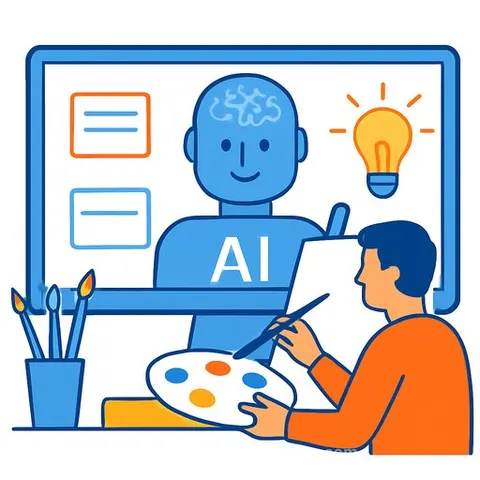
AI isn't displacing creative jobs - it's changing how artists work
About one-in-four artists use AI frequently, compared with one-in-five workers across all industries. A new analysis of employment and wage data finds little evidence that generative AI has reduced artists' earnings or caused widespread job losses in creative fields.
Gallup examined data from the Journal of Cultural Economics using a 2024 occupational exposure index that measures how exposed different jobs are to AI assistance. The analysis covered employment and wage statistics from the Bureau of Labor Statistics between 2017 and 2024.
Exposure varies sharply by role
AI exposure differs dramatically across creative occupations. Music directors and composers face the highest exposure at 0.7, reflecting how AI tools can help draft or modify compositions. Special effects artists and animators scored 0.54, while art directors and producers landed around 0.5.
Roles requiring live presence and physical skill showed far lower exposure. Dancers scored 0.04, actors around 0.18, and choreographers and craft artists between 0.27 and 0.28. Generative AI cannot easily replace the interpretation and embodied skill these fields demand.
Earnings and employment trends remain stable
Artists in highly AI-exposed occupations saw earnings trends "broadly similar" to those with lower exposure between 2017 and 2024. The estimates were slightly positive but not statistically significant.
Employment patterns showed more variation. Some highly exposed artistic occupations experienced weaker job growth in 2023 compared to less exposed roles. The differences remained modest and fell far short of the job losses often discussed in AI debates.
Census Bureau data showed artists in AI-exposed occupations had modest earnings gains in 2023 that softened in 2024. Total hours worked rose more noticeably starting in 2022 and stayed elevated through 2024.
How artists actually use AI
Creative professionals deploy AI primarily in early-stage work. Artists report using it most for idea generation, creative exploration, and rapid iteration. They also use it to automate small tasks, organize information, and support collaboration.
Artists are significantly less likely than other workers to use AI for operational tasks like customer interaction or equipment management. This pattern suggests AI functions as a creative tool rather than a replacement for core artistic work.
The technology may also give artists more control over their careers. AI can help them produce branding documents, craft outreach materials, and handle administrative work that previously consumed time and resources.
Learn more about AI for creatives and how to integrate these tools into your workflow.