
AI news ·
AI reshapes marketing roles and creates new specialisations for brand professionals
AI is reshaping marketing by automating execution tasks like ad production and boilerplate copy, making roles that direct and oversee AI output more valuable. Eleven new positions are emerging, from AI Creative Director to Brand Voice Trainer.
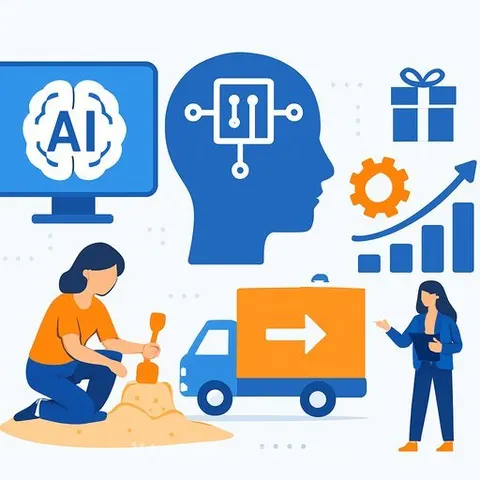
AI Is Reshaping Marketing Roles. Here's What That Means for Creatives
Artificial intelligence is not eliminating creativity in marketing-it is moving it upstream. Execution tasks like producing ad variations, writing boilerplate copy, and resizing creatives are increasingly handled by AI. But the roles that direct, curate, and govern AI output are becoming more valuable than ever.
This shift mirrors what happened when desktop publishing arrived in the 1980s. Software like PageMaker did not kill design; it compressed timelines, democratised access, and created entirely new kinds of creative roles. The industry evolved rather than shrank.
AI represents the same generational change. The human element does not disappear. It changes form.
The Skills That Matter Now
A prompt engineer still needs to understand brand architecture. An AI creative director still needs to know what makes an audience feel something. A synthetic media producer still needs a disciplined eye for brand consistency.
What changes is where you spend your time. Instead of generating original ideas from scratch, you curate and edit what AI produces. Instead of producing one ad, you direct dozens of variations and choose the strongest. Instead of executing a campaign, you design the systems through which AI and human intelligence work together.
The marketer of tomorrow combines creative sensibility with analytical fluency and a working knowledge of AI systems. Part creative, part data scientist, part systems designer.
Eleven Emerging Roles in Marketing
AI Prompt Strategist. Designs instructions that guide tools like ChatGPT and Midjourney to produce on-brand outputs at scale. Builds reusable prompt libraries that codify a brand's creative DNA for AI consumption. Quality of output depends entirely on quality of input.
AI Creative Director. Decides which parts of a campaign call for human originality and which can be accelerated through AI. Orchestrates mixed workflows involving image generators, video tools, and language models. Brings the creative judgment to ensure the final product feels coherent and human.
Marketing Automation Architect. Designs customer journeys that adapt in real time based on behaviour and predictive data. Integrates CRM platforms, chatbots, email systems, and paid media into self-optimising ecosystems that make decisions on the fly.
Conversational AI Designer. Crafts the tone, language, and flow of AI-powered chatbots and voice assistants. Works at the intersection of UX design, copywriting, and behavioural psychology. A brand's conversational AI either feels like a natural extension of its identity or erodes trust.
Personalisation & AI Experience Manager. Builds systems that deliver experiences adapted in real time to each user's actions and preferences. Moves marketing from addressing broad segments to what practitioners call a "segment of one."
AI Marketing Analyst / Predictive Insights Specialist. Works predictively rather than retrospectively, using machine learning to forecast behaviour, identify churn risk, and simulate outcomes before decisions are made. Shifts focus from describing the past to anticipating the future.
Synthetic Media Producer. Creates AI-generated advertising creatives, product explainers, branded avatars, and campaign assets using image synthesis, video generation, and voice cloning tools. Requires technical proficiency and a disciplined eye for brand consistency.
AI Ethics & Brand Safety Manager. Audits AI-generated campaigns, establishes guardrails and governance frameworks, and ensures compliance with regulations. Prevents AI systems from producing biased, inaccurate, or culturally insensitive content. This is an operational necessity, not a luxury.
AI-Native Growth Marketer. Uses generative tools to produce dozens of campaign variations simultaneously, run automated tests at unprecedented scale, and continuously optimise performance. What once took weeks now takes days.
No-Code AI Tool Stack Builder. Creates powerful marketing systems without writing code, combining platforms like Zapier, Make, and Notion AI into integrated workflows. Serves as a bridge between AI capabilities and practical marketing needs.
AI Brand Voice Trainer. Fine-tunes large language models on a company's existing content so AI-generated outputs feel authentically on-brand rather than generic. Develops AI-specific brand guidelines that define how a brand should instruct its AI tools.
The Window Is Open
These roles are not rebranded versions of old jobs. They require meaningfully different skills and mindsets. The question facing every professional now is not whether AI will change marketing; it already has.
The question is whether you will shape that change or be shaped by it.
Those who learn to direct, curate, and govern AI output will find themselves more valuable than those who have built careers around execution alone. The tools are here. The roles are emerging. The window to position yourself advantageously is open.
Start with Prompt Engineering Courses to understand how to craft quality inputs for AI systems. Or explore the AI Learning Path for Marketing Managers to develop skills across the full range of AI-driven marketing work.