Do AI-Savvy Authors Really Earn More? A New Survey Says 64% More
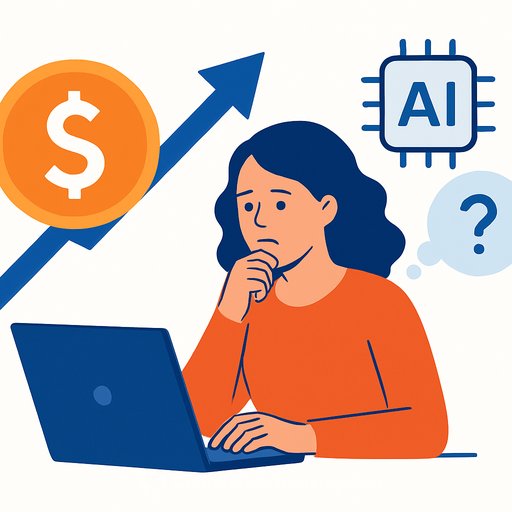
Writers using AI tools report a 64% higher median income, landing around $120,000. The reason is simple: more output in less time, without sacrificing quality when editing stays human-led.
That said, higher pay isn't just about tools. Experience, niche, and client mix still matter. But the signal is clear-AI is now a competitive edge for working writers.
TL;DR for busy writers
- Median income for AI users: $120,000-about 64% higher than non-users.
- 60%+ of writers use AI; roughly 25% use it daily for brainstorming, titles, summaries, and research.
- Fiction writers are more skeptical; frequent users view AI as a workflow partner.
- Risks: creativity drift, ethical misuse, and quality issues without strong human editing.
- Winning approach: use AI strategically, keep your voice, maintain strict oversight.
Why AI users are earning more
Time is money. AI speeds up research, ideation, outlining, and early drafts. That lets you handle more pitches, say yes to rush requests, and spend more time on high-value edits and client strategy.
Many writers use the time savings to move upmarket-packaging services, adding audits, or offering content systems. That shift, not just faster drafting, is where the income jump comes from.
What AI actually does in a writer's workflow
- Brainstorming: Idea sprints, angles, hooks, and counterarguments.
- Title creation: Multiple headline options that you refine.
- Content summarization: Quick briefs from long PDFs, interviews, or reports.
- Research assistance: Sources to vet, quotes to verify, outlines to shape.
- Draft support: Rough passes you rewrite in your voice.
- Admin: Client emails, briefs, and scope summaries.
What the pay gap doesn't prove
Correlation isn't causation. Writers earning more may already be operating in high-demand niches, with stronger systems and better clients. Those writers also adopt useful tools faster.
The practical takeaway: AI won't fix a weak market position. It will amplify whatever system you already run-good or bad.
Concerns you shouldn't ignore
- Creativity drift: Over-relying on AI can make your work feel generic, especially in fiction and memoir.
- Ethics and IP: Disclose when needed, avoid copying voices you don't own, and verify sources.
- Quality control: Only 1% of surveyed writers publish AI text without heavy editing. Human oversight isn't optional.
- Client and data privacy: Never paste sensitive client info into public tools without consent.
A practical playbook for responsible AI use
- Define your voice: Write a short style guide with examples. Feed that into your prompts.
- Use AI for leverage, not final prose: Ideation, outlines, research, and rough drafts-then you rewrite.
- Set rules: Disclosure, IP boundaries, source verification, and what never goes into an AI tool.
- Create reusable prompt templates: Briefs, outlines, angles, and editing checklists.
- Build a QA checklist: Thesis clarity, originality, claims verified, citations noted, voice consistent.
- Track outcomes: Time per deliverable, cycles to approval, acceptance rate, and revenue per hour.
Fiction vs. nonfiction: use cases that work
- Fiction: Use AI for character sheets, world rules, scene beats, and "what-if" threads. Write the prose yourself.
- Nonfiction: Use it for source mapping, summaries, structure, and counterpoints. Add first-hand stories and interviews to keep it original.
Simple starter stack (no brand loyalty required)
- Research assistant: Ask for sources, then verify every claim.
- Outline engine: Generate structures, then prune and reorder.
- Draft helper: Rough passes to beat blank-page syndrome.
- Editing aid: Clarity, flow, and voice checks-final pass is yours.
- Snippet bank: Save great prompts, intros, and transitions you actually wrote.
Metrics that move your income
- Billable hours saved per piece
- Approval cycles to "final"
- Accepted pitches per month
- Average fee per deliverable
- Client retention and referrals
What the research suggests
Independent studies show productivity gains from generative AI in knowledge work, especially for drafting and support tasks. Results depend on task type and user skill-AI helps most with structured, repeatable work.
See NBER: Generative AI at Work
Bottom line
AI won't make you a better writer by itself. Used well, it gives you time to do more of the work only you can do-sharper thinking, cleaner structure, stronger voice.
Treat it like a junior assistant with infinite drafts and zero taste. You lead. It supports. That's how you close the gap-and keep your integrity intact.
Further learning for working writers
Your membership also unlocks: