AI Scribes Are Making Healthcare More Expensive, Not Cheaper
Healthcare executives promised that artificial intelligence would slash costs for patients. The opposite is happening.
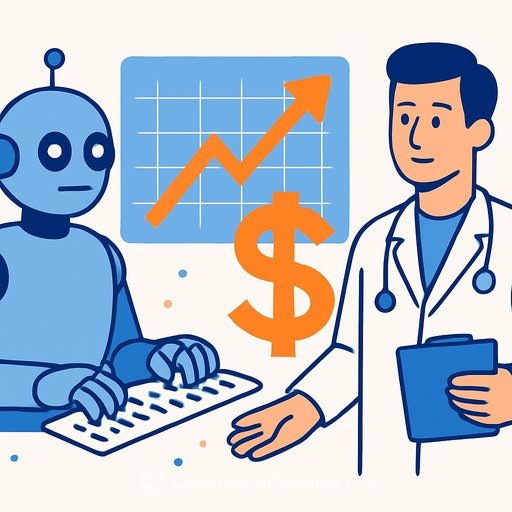
Oscar Health's co-founder said AI was the "only way" to reduce doctor visit costs over the next three to five years. McKinsey projected AI could generate $360 billion in annual healthcare savings. Instead, hospital administrators and health insurers now agree that AI for Healthcare tools have driven costs up, according to healthcare industry publication Stat.
The problem centers on AI "scribes"-tools that transcribe doctor-patient conversations into clinical notes. These systems have not delivered the promised financial relief.
How AI Scribes Inflate Bills
Three mechanisms are driving up costs.
Higher complexity ratings: Doctors previously cut corners on paperwork, writing minimal notes for visits and billing them as "simple" cases even when they were complicated. AI scribes now capture every detail, causing many visits to be classified at higher complexity levels-which justify higher billing rates.
Diagnosis nudging: The software prompts doctors to add diagnoses they discussed but didn't document. One chief medical information officer described the experience: "Now you have a tool that's saying, 'hey, you talked about their UTI, but you didn't add it to your visit diagnosis. Do you want to add it now?'"
Increased patient volume: When doctors stop typing notes, they see more patients. At FMOL Health, clinicians using AI scribes saw 22 percent more patients overall. As one executive put it, "the more people they see, the more payment they get."
The Core Problem
Technology cannot resolve the fundamental tension between healthcare driven by profit margins and the need for affordable care. AI Agents & Automation tools work within existing financial incentives-and those incentives reward higher billing, not lower costs.
Caroline Pearson, executive director at Peterson Health Technology Institute, acknowledged the reality plainly: "Right now, ambient scribes are inflationary, and that's a problem. We need technology to help us lower health care costs."
The gap between what was promised and what has occurred serves as a cautionary note for healthcare leaders evaluating other AI implementations.
Your membership also unlocks: