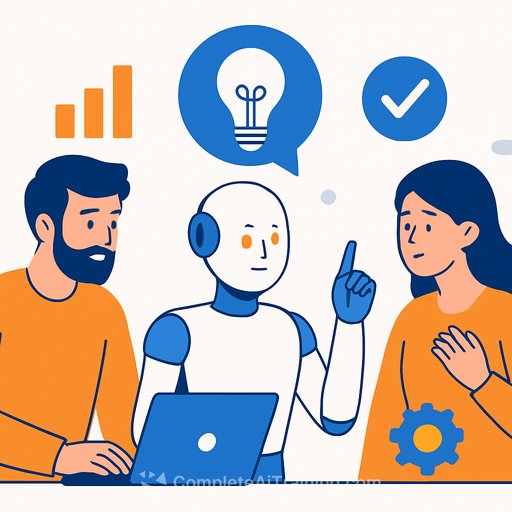
AI is changing career advice at home: parents pivot to practical skills
AI is reshaping how families think about work. New research from Halfords shows 89% of parents have changed the guidance they give their children, and half now recommend building hands-on skills alongside digital fluency.
The message is simple: pair tech with tools. That mix builds resilience against automation, opens apprenticeships and technical routes, and still keeps doors open for university and STEM paths.
What parents are seeing
Parents worry AI will disrupt entry-level roles and widen the "opportunity gap" for kids without access to quality tools or training. Fewer than 20% want their child in pure tech or digital roles, yet almost three-quarters see engineering, construction and mechanical repair as smart bets.
Halfords CEO Henry Birch summed it up: "They're concerned that AI could disrupt their children's careers, and they're rediscovering the importance of blending digital fluency with real-world, problem-solving skills."
What kids are saying
Children are split. A third want coding, AI or gaming careers. Classic professions like doctor, lawyer and engineer also score highly.
Only around 20% say they want a practical trade right now, but 60% would consider roles in maintenance and repair-vehicles, robotics, electrical systems. Many think AI could make it harder to get a job, so they value working with tools, machinery and tech together.
Why practical still matters
The UK already faces shortages across engineering, construction and mechanical repair. These sectors need people who can diagnose, fix and improve physical systems-often in settings where full automation isn't realistic.
That's where a dual skillset wins: basic coding and data skills plus electrical, mechanical or fabrication experience. It's harder to replace a technician who can think, prototype and repair on-site.
The access problem
AI can widen gaps if only some learners get meaningful exposure. Lack of devices, software, mentorship and structured practice leads to uneven outcomes. At the same time, organisations automating entry-level tasks risk reducing the on-ramps where young people learn the ropes.
Schools and parents can counter this with early hands-on projects, community equipment access and visible pathways into technical work.
What schools and parents can do now
- Blend skills: pair basic coding, prompt use and data literacy with electronics, mechanics, and fabrication.
- Make work visible: invite technicians, engineers, and apprentices to speak; run "career in a day" workshops.
- Build a portfolio: projects that involve diagnosing a fault, fixing it, and documenting the process.
- Use apprenticeships: mix paid workplace learning with accredited study via schemes like Apprenticeships.gov.uk.
- Add service work: repairs for school equipment, community bikes or robotics clubs create real accountability.
- Teach tool safety and care: competence builds confidence-and employability.
The core skill stack for the AI era
- Soft skills: communication, creative problem solving, initiative, teamwork under constraints.
- Technical basics: spreadsheets, scripting or low-code, prompt use, version control, IoT fundamentals.
- Hands-on: diagnostics, schematics, soldering, basic CNC/3D printing, mechanical assembly and repair.
- Process: documenting work, estimating time/cost, quality checks, customer service.
Policy and industry: what needs fixing
Halfords is calling on government to review the AI skills framework and elevate practical, vocational routes-especially in digital tech and engineering. Industry partnerships can make these careers visible, accessible and valued.
For a wider view of where jobs are growing and which skills hold up under automation, see the World Economic Forum's analysis of future skills demand: Future of Jobs Report.
Quick start for educators
- Set one "diagnose and fix" project per term (bike, printer, robot arm, small engine, or electronics kit).
- Require a one-page job sheet: symptoms, tests run, fix chosen, cost/time, follow-up checks.
- Pair each practical task with a simple digital tool (sensor logs, spreadsheet analysis, AI assistant for documentation).
- Offer pathways: apprenticeship talks, local employer visits, and a "skills passport" checklist for students.
Resources to build capability
If you want structured AI upskilling mapped to roles, explore curated course paths and certifications here:
Bottom line: teach kids to think with software and work with their hands. That combo travels well across careers, pays early, and holds up as AI evolves.
Your membership also unlocks: