AI Systems Are Shifting Environmental Science From Observation to Prediction
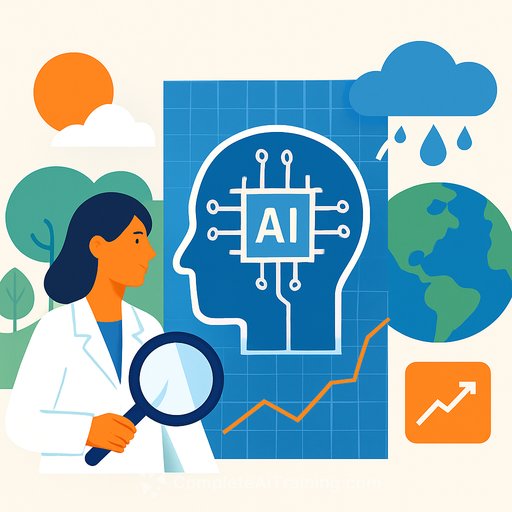
Environmental researchers are moving away from traditional field measurements toward AI-driven systems that can integrate massive datasets and forecast environmental changes before they occur. A new perspective article from Shenyang Agricultural University examines how machine learning, deep learning, and large language models are changing water management, soil research, atmospheric science, and waste handling.
The shift matters because traditional environmental studies often work with isolated datasets that miss the complex interactions across water, soil, air, and ecosystems. AI systems can connect diverse data sources and identify patterns that were previously undetectable.
Water Quality and Contamination Detection
AI-powered monitoring systems combine sensor data, satellite imagery, and environmental models to track pollution and water quality in real time. These systems detect anomalies and predict contamination events, allowing authorities to respond before problems spread.
Soil Analysis and Risk Assessment
Machine learning models analyze soil datasets to predict pollutant concentrations and identify contamination sources. Researchers use these tools to develop more precise monitoring and remediation strategies.
Air Quality and Climate Analysis
AI techniques integrate data from monitoring stations, satellites, and meteorological models to create high-resolution pollution maps. This approach supports more accurate forecasting and better air quality management decisions.
Waste Sorting and Recycling
Image recognition and robotics systems automatically identify and sort waste materials. These tools improve recycling efficiency and support circular economy strategies.
Data Quality Remains a Challenge
Environmental datasets are often incomplete, inconsistent, or highly complex. These gaps can reduce the reliability of AI models. Researchers also flag ethical concerns and data accessibility issues that need to be addressed before AI tools can be applied responsibly across different regions and organizations.
What Comes Next
Integrating AI with remote sensing, cloud computing, and Internet of Things technology could enable real-time global environmental monitoring. This combination would support faster decision-making for environmental management.
The research emphasizes that environmental scientists, engineers, and data scientists need to collaborate closely. Success depends on combining advanced data analysis with existing scientific knowledge to develop practical solutions.
For professionals in research roles, understanding how AI integrates with environmental data analysis is becoming essential. Consider exploring AI Data Analysis Courses or AI Research Courses to develop these skills.
Your membership also unlocks: