
AI news ·
AI shifts legal apprenticeship from routine tasks to output verification
Nearly 50% of top Australian law firms use AI for routine tasks, shifting junior lawyer training. Firms must now teach graduates to verify machine outputs.
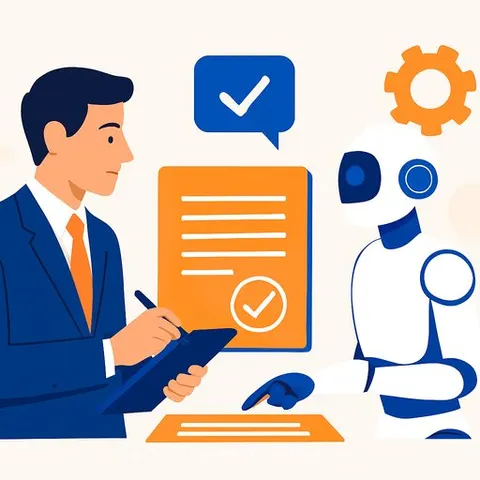
AI adoption across Australian law firms is reshaping the traditional apprenticeship model, with nearly half of the country's leading firms now using AI platforms like Harvey for tasks that once trained junior lawyers. The shift is forcing the profession to confront how early-career lawyers will build the judgment and technical skills they need when routine research, contract analysis and document review are increasingly handled by machines.
Disrupting the apprenticeship
Law was one of the first fields studied by AI researchers because it has clearly defined rules across many areas. Today, AI and generative AI tools are deeply embedded in top-tier firms and gaining traction across the profession. Researchers at the Center on the Legal Profession at Harvard Law School describe AI as "structurally reconfiguring the profession - how legal services are delivered, who delivers them, how lawyers are trained and what it means to exercise professional judgement."
For young lawyers entering the profession, the widespread adoption of AI is prompting questions about the future of the legal apprenticeship. "It's now possible for the profession to see a time that AI will perform some tasks through which juniors traditionally built some of their legal skills and judgement," said Dr Kate Booth, head of learning and development at MinterEllison. Dr Sergio Sulmicelli, a legal scholar recently appointed to a three-year position at The University of Sydney Law School, highlights three tasks increasingly performed by AI: research, writing legal documents and litigation.
Many commentators worry that automating these tasks risks unsettling the traditional pyramid model of legal work, where junior lawyers sit at the base doing high-volume work that builds experience. Some top-tier firms are reducing junior hires, and business futurist Morris Misel notes thousands of legal roles could cease to exist by the mid-2030s. For those exploring how AI for Legal is changing practice, the pressure on traditional training pathways is a central concern.
Amplify, not replace, expertise
Despite the fears, many experts argue the real change is not that juniors will do less work, but that they will do different work earlier in their careers. Julie Marcus, an Australian and Hong Kong-qualified lawyer at Marcus Legal, has been working with AI since 2018. She believes the apprenticeship model will evolve rather than disappear.
"By delegating routine grunt work to machines, we do not erase the junior lawyer - we clear the runway for them," Marcus said. "Constant verification of AI outputs by junior lawyers will act like a flight simulator, rapidly building their confidence and the self-trust they need to transition into problem solving, intense research and complex legal strategy."
Sulmicelli sees AI as a form of upskilling, provided lawyers build critical literacy, including knowing how to verify AI outputs and comply with ethical rules. "There will be a time in the future, if legal education does this right, where you want to have a lawyer that knows how to use artificial intelligence," he said. Booth echoed this view: "AI fluency is fast becoming table stakes, not a specialism that only a few need."
Belinda Fisher, a specialist legal recruiter and partner at Burgess Paluch, believes most recent reductions in graduate hiring are economically driven and not directly tied to AI. "You're not going to be bogged down with process driven work in terms of due diligence; you're going to be adding a lot more value at an earlier stage," she said. Sulmicelli went further: "The truth is that artificial intelligence will create the need for more lawyers."
Experts in the loop
The profession is focused on an "expert in the loop standard," where AI generates output but a qualified human reviews, verifies and takes responsibility for it. "AI is most valuable when the expert in the loop is actively engaged - not just passively accepting outputs, but using AI as a tool, critically," Booth said. The question is how juniors build the legal reasoning to interrogate those outputs and take professional responsibility for them.
The Harvard researchers point to accelerated simulations, mentorship, real-world exposure and AI-assisted feedback as possible approaches to training. Marcus believes the traditional decade-long learning curve will compress significantly. "You're going to have lawyers learning so much quicker and probably becoming sharper lawyers between zero and five years," she said. For paralegals and junior lawyers adapting to these new expectations, the AI Learning Path for Paralegals offers structured training in the verification and critical assessment skills that firms now demand.
Sulmicelli, who joined Sydney Law School to embed AI literacy into its core curriculum, said universities must build the critical thinking skills that allow graduates to interrogate AI outputs. "Legal education must be very focused on the idea of critical thinking," he said. Booth argues human capabilities like curiosity, communication and building trust will continue to set excellent lawyers apart. Fisher agrees: "With greater use of AI, it will be even more important for all lawyers, including juniors, to have emotional intelligence and strong client-facing skills."
Why this matters for legal professionals
The legal apprenticeship is not vanishing - it is compressing. Junior lawyers will be expected to verify AI outputs, exercise judgment on complex matters and engage directly with clients far earlier than in the past. This means early-career lawyers must build AI fluency alongside traditional legal reasoning skills, and they must do it faster than previous generations. Firms that invest in structured training for these new demands will produce sharper, more capable lawyers in less time. Those that rely on the old model without adapting risk leaving their juniors - and their practices - behind.