
AI news ·
AI shifts public relations toward data-driven planning and measurement as professionals emphasize human judgment
AI cuts PR research from three days to three hours. Leaders stress human judgment remains critical for crisis management and building journalist trust.
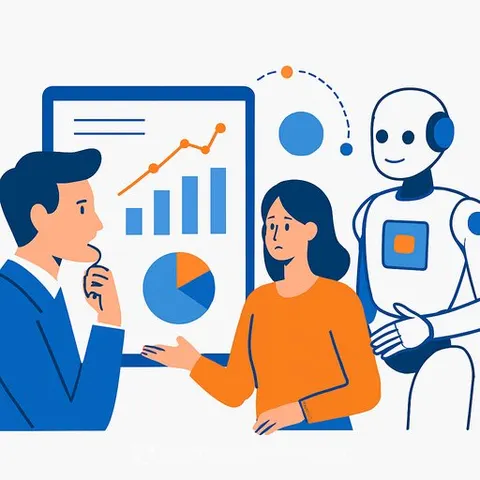
Artificial intelligence is turning PR from a gut-feel craft into a data-driven discipline, according to four communications leaders from Eastern India. Campaigns that once took days of manual research now launch in hours, but the shift places a fresh premium on human judgment, relationships, and the authenticity that algorithms cannot manufacture.
From instinct to intelligence
Gulrez Alam, Co-Founder and Director of Teamology Softech and Media Services, said AI has "fundamentally shifted PR from an instinct-driven profession to an intelligence-driven one." His team now plans campaigns with predictive audience analytics, automates distribution, and A/B tests narratives in real time. Measurement has moved to live dashboards that track sentiment, share of voice, and earned media value.
"What used to take a team three days - media landscape mapping, influencer identification, competitive benchmarking - now takes three hours," Alam said. "That compressed timeline changes what's possible in campaign strategy entirely."
Anushka Dey, Vice President of Public Relations at SRV Media, said the biggest gain is time. Research, trend analysis, content structuring, and report compilation that once stretched across days now finish in hours. She sees AI helping teams gather deeper audience insights and track sentiment more effectively, enabling a move from reactive communication to proactive decision-making.
Paromita Ghosh, Director of Candid by Paromita, called AI a tool that makes PR predictive rather than reactive. "In planning, it anticipates how narratives will trend. In execution, it automates hyper-personalized targeting and distribution. Most importantly, in measurement, AI allows us to move past vague vanity metrics and accurately track real-time sentiment, share of voice, and direct business ROI."
Where algorithms fall short
Despite the speed gains, the professionals drew a hard line around tasks that remain exclusively human. Alam put it bluntly: "No algorithm can read a room at a press conference. No tool can navigate a crisis with cultural sensitivity. No AI can build the trust between a journalist and a PR professional that takes years to earn."
Dey echoed the point. "During a crisis, a leadership transition, or a reputational challenge, stakeholders aren't looking for perfectly generated content. They are looking for authenticity, accountability, and human judgment."
Shilpi Jaiswal Sen, a PR consultant with nearly two decades in the industry, said the human element in media pitching remains irreplaceable. "A media pitch succeeds not because it is perfectly written, but because it reflects an understanding of what matters to the journalist and the audience."
Eastern India's pragmatic adoption
While the region has a reputation for slow technology uptake, the experts described a different reality. Alam noted that agencies in Kolkata are using AI-powered media monitoring to track coverage in Bengali, Odia, and Assamese - languages that once made manual monitoring exhausting. "The agencies here that are combining AI efficiency with deep regional cultural intelligence will outperform those just running global tools without local context," he said.
Dey said the biggest misconception about Eastern India is that it resists change. "Eastern India has always been rich in creativity, intellectual curiosity, and strong storytelling traditions." She sees organizations asking a straightforward question: "How can technology help us work smarter and create more value?" That balance, she added, "may well become Eastern India's biggest strength in the AI era."
Speed vs. authenticity
As AI-generated content floods channels, trust becomes the industry's defining tension. Alam warned that one inauthentic story "can undo months of brand equity." His agency follows an "AI-assisted, human-verified" approach. "Trust is not a deliverable. It is a daily practice," he said.
Dey framed the challenge simply: "The easier it becomes to create content, the more difficult it becomes to earn trust." She stressed that speed has never been the foundation of credibility.
For Sen, the answer lies in a hybrid model. "AI should handle repetitive and analytical tasks, while communication professionals focus on strategy, creativity, and relationship-building." Her guiding principle: "People trust people, not algorithms."
Why this matters for PR professionals
PR teams that blend AI's analytical power with human judgment will hold the advantage. Tools that automate monitoring and reporting free up time for the nuanced work that builds reputation - counseling leaders, navigating crises, and maintaining journalist relationships that no bot can replace. Professionals looking to build these hybrid skills can start with an AI Learning Path for Public Relations Specialists, which covers practical applications from media listening to campaign measurement. The goal is not to replace instinct with algorithms but to make instinct sharper and faster.