
AI news ·
AI shifts TMS from post-route reporting to real-time dispatch decisions
AI is shifting transportation management systems from post-day reporting to live decision support during active routes. The main barrier isn't the technology-it's fragmented data across routing, telematics, and order systems.
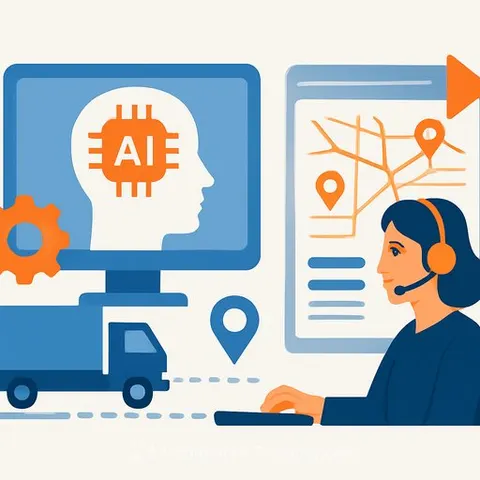
AI Is Pushing Transportation Management Beyond Reporting Into Real-Time Decisions
Dispatch teams build routes each morning expecting them to hold through the day. By mid-morning, traffic has shifted, a delivery window moved earlier, or a driver found an address problem that adds unexpected time. Most transportation management systems (TMS) log these changes and generate reports explaining what happened. Few actually help dispatch decide what to do next while the route is still unfolding.
That gap is closing as artificial intelligence moves TMS from static reporting toward real-time operational decision support.
Visibility shows the problem but not the fix
Fleets have invested heavily in tracking tools, telematics, and dashboards over the past decade. These systems delivered real value: operations teams gained clearer visibility into their networks, and customers got better tracking information.
But seeing that a route is running late does not tell dispatch how to fix it. Last-mile delivery remains one of the most operationally demanding parts of the supply chain. Dense routes, tight delivery windows, and constantly changing conditions throughout the day create constant pressure. Last-mile delivery can account for more than half of total shipping costs in many networks, meaning execution mistakes are expensive.
Most systems highlight problems only after it is too late to address them.
Operational intelligence differs from analytics AI
Many AI tools in logistics focus on analytics or conversational interfaces that summarize operational data quickly. These capabilities improve reporting and help managers identify patterns across routes. They do not necessarily change how the operation runs at that moment.
Operational intelligence works differently. Instead of sitting on top of the system, it sits inside the workflow itself. The platform evaluates conditions as routes progress. It recognizes when a route is trending toward a missed delivery window and signals the risk early. It adjusts estimated arrival times as traffic patterns shift and recommends route adjustments when new orders appear or drivers encounter delays.
The system now manages operations directly rather than simply describing them. The distinction matters because the real pressure in last-mile delivery is about timing. Dispatch teams need guidance while the route is unfolding, not after the day ends.
Prediction changes when decisions happen
The ability to detect disruptions before they fully materialize is one of the most meaningful advantages of AI in transportation management. Delivery networks operate in conditions that change by the hour: traffic patterns shift, drivers encounter unexpected delays at loading docks, and customers request changes during the day.
A traditional system reacts to disruptions after they appear. Predictive systems approach the problem earlier by analyzing historical route performance alongside real-time operational signals. AI models can detect patterns suggesting a route is trending toward failure long before the missed delivery occurs.
That early signal changes the options available to dispatch. A nearby driver might absorb a stop, the route sequence might shift, or the customer might receive an updated arrival window before the delivery becomes late. These small adjustments protect service levels and reduce operational pressure across the network.
Data quality is the actual barrier
Interest in AI across logistics continues to grow, yet many fleets are still in early stages of adoption. The main barrier is rarely the algorithm itself. It is the operational data environment surrounding it.
Delivery operations rely on multiple disconnected systems. Routing tools, driver applications, telematics feeds, order management platforms, and customer communication channels all produce separate information streams. When those signals are fragmented, predictive systems struggle to generate reliable operational recommendations. A McKinsey survey found that 60% of firms face challenges related to data quality and integration.
AI cannot guide execution until organizations ensure that operational signals flow consistently across their systems. Without that foundation, even advanced models struggle to produce recommendations that operators trust.
Trust determines whether teams will use the system
Even when the technology works, adoption depends on whether operators believe the recommendations. Dispatch teams carry direct responsibility for daily outcomes. When a route fails, they are responsible. Drivers experience the impact in real time, and customer support teams handle the consequences.
Algorithmic recommendations are only useful if operators understand and trust them. Dispatchers want to see that the system is interpreting the same signals they rely on. They need visibility into why a recommendation appears and confidence that it reflects reality.
Systems only deliver full value when teams believe the outputs reflect real conditions and begin relying on them consistently rather than overriding them by default.
TMS is becoming a live operational system
TMS has traditionally been viewed as a planning and reporting tool. Routes were built at the start of the day, and performance was reviewed once deliveries were complete.
AI is unlocking an entirely new role for TMS. Instead of acting primarily as a historical record, the system is beginning to function as a live operational tool that monitors conditions, evaluates risks, and recommends adjustments throughout the day. Dispatchers remain central to the process, and human judgment continues to guide the final decision. What changes is the amount of operational context available at any moment.
Effective transportation systems will continue to evolve. They will explain why last week's route succeeded or failed. Most importantly, they will help operations teams decide what to do while today's routes are still in motion.
Learn more: Explore AI for transportation managers or discover AI for operations to understand how these tools apply to your role.