AI Is Compressing Legal Work. Treat It as a Design Challenge, Not a Crisis.
The sell-off in legal publishing and research giants isn't about one tool. It's a signal. The classic model-charging premiums for information, drafting, and manual workflow-is being squeezed. AI eats the mechanical parts of legal work, the bits that once justified time, staffing, and margin.
That doesn't end the profession. It reshapes it. Firms that redesign how they deliver outcomes will pull ahead. Firms that keep selling hours and hand-offs will feel the squeeze most.
The real risk: dependence without governance
Technology isn't the threat. Unquestioned reliance is. If lawyers accept AI outputs without interrogation, if juniors stop building first-principles thinking, or if you can't explain how you got to a conclusion, judgment erodes. That's where regulators, negligence claims, and reputation problems enter.
Law is judgment under uncertainty. Clients hire accountability, not autocomplete. No model carries liability. You do. That line must stay bright. Pair legal oversight with role-focused training such as AI Learning Path for Regulatory Affairs Specialists to align practice with regulatory expectations.
Used right, AI removes friction-without removing responsibility
Let machines handle repetition and recall. Keep humans on strategy, negotiation, risk calibration, and interpretation in grey areas. That's where value sits. AI done well doesn't diminish lawyers-it spotlights them.
Clients already expect this. They won't pay premium rates for avoidable inefficiency. They want speed, transparency, and consistency-and they can tell when workflows are designed or duct-taped.
Lead the system, don't let the system lead you
Leadership isn't blocking AI. It's governing it. Keep accountability with people. Build explainability into your process. Train critical thinking on purpose. Make auditability non-negotiable.
Leaders can translate governance into practice with structured curricula; consider the AI Learning Path for CIOs when setting policy and oversight.
Lawyers now need fluency in process and technology as much as black-letter law. The product isn't "hours." The product is outcomes delivered through intelligent systems, guided by expert judgment.
Practical guardrails every firm should implement
- Policy: Define approved use cases, prohibited data, review steps, and sign-off thresholds. Keep it short and enforced.
- Audit trail: Log prompts, sources, drafts, and human changes. If challenged, you need to show the path to the answer.
- Source discipline: Require citations to client docs, legislation, and case law. No source, no reliance.
- Two-step review: Human first pass for material judgments; senior review for high-risk outputs.
- Client disclosure: Explain where AI is used and how quality is assured. Fold it into engagement letters.
- Data hygiene: Strip identifiers by default. Use enterprise controls. Avoid consumer tools for client matters.
- Vendor checks: Test accuracy on your matter types. Validate confidentiality, uptime, and indemnities.
- Training: Teach prompt craft, verification habits, and model limitations. Include drills for new joiners.
- Benchmarks: Track quality, speed, and cost per matter. Compare AI-assisted vs. manual. Adjust where it proves out.
- Incident playbook: Define escalation, client comms, and remediation if an AI-assisted error slips through.
For risk frameworks, the NIST AI Risk Management Framework is a solid reference. For data protection, the UK ICO's guidance on AI is clear on privacy duties and documentation: ICO: AI and data protection.
Where AI already adds clear value
- Document review: First-pass issue spotting, clause extraction, and anomaly detection-always verified by a human.
- Research acceleration: Drafting starting points with linked authorities, then tightened by the lawyer.
- Playbooks and checklists: Consistent application of firm standards across teams, with deviation logs.
- Matter scoping: Rapid summaries, timelines, and risk flags to prepare for client calls and negotiations.
- Knowledge capture: Turning partner know-how into reusable templates and prompts-kept current and curated.
Rethink your operating model
- From billable hours to outcomes: Price the decision, not the keystrokes. Fixed fees with clear scope and quality gates.
- From siloed teams to systemized delivery: Map intake to close. Automate the hand-offs that cause rework.
- From "best efforts" to measured performance: Track error rates, cycle times, and client satisfaction-publish internally.
- From heroics to playbooks: Codify how great work gets done so juniors learn judgment, not just how to click buttons.
Built for this moment
Some firms started digital and remote, with automation embedded from day one. That foundation scales expertise without diluting standards. It's where the profession is heading: human decision-making on top, technology running through the work like wiring, not bolted on at the end.
This is why groups like Inspire Legal can move fast without cutting corners. The structure supports it: clear processes, audit trails, and a culture that puts judgment first.
The simple metaphor that keeps you safe
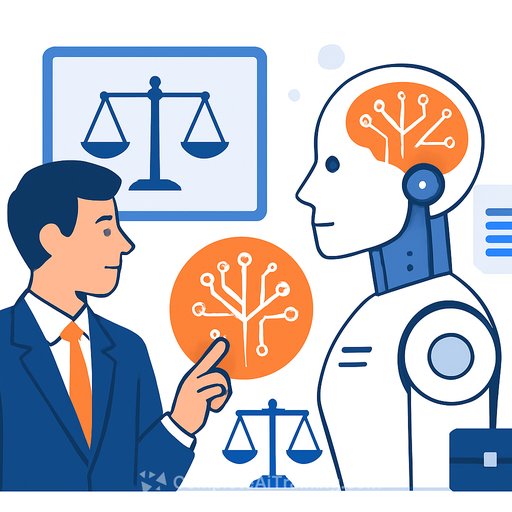
AI should never be the brain of a law firm. It should be the nervous system-fast, responsive, embedded. Humans stay the mind, the conscience, and the final call.
Build for that and you protect what matters: judgment, accountability, and results your clients can trust.
Next steps you can take this quarter
- Pick two use cases. Pilot with a small team. Measure speed, quality, and client feedback.
- Publish a one-page AI policy and a two-page review checklist. Train every matter lead.
- Set up an audit log. If you can't show your work, you don't have a system.
- Tell clients what you're doing and why it improves outcomes. Invite their input.
If you need structured learning to get your team up to speed on practical AI use and oversight, explore curated options by role here: Complete AI Training: Courses by job.
Your membership also unlocks: