AI Skills Shortage is Slowing Growth for UK Businesses, Finds Allianz Trade
The UK is pushing hard to adopt artificial intelligence as part of its digital transformation, but a growing shortage of AI skills is emerging as a major barrier to progress. Allianz Trade’s 2025 Global Survey highlights this challenge among over 400 UK companies.
Nearly one in five firms (17%) identified a lack of internal AI expertise or skilled workforce as their top obstacle to expanding AI use. Despite this, almost all UK companies (99%) are already using AI tools in some form, slightly above the global average of 98%. The drive to increase AI adoption remains strong at the board level, with 68% of businesses planning to boost recruitment of AI talent over the next year.
This hiring push highlights the urgent need to close the AI skills gap and grow internal capabilities. Reflecting this priority, 84% of firms are dedicating up to 20% of their technology and IT budgets specifically to AI projects.
Data Security and ROI Concerns Also Hold Back AI Growth
While skills shortages are significant, data security and privacy risks were the most commonly cited AI challenge, affecting 28% of UK companies. Another 18% expressed uncertainty about AI’s return on investment and overall business impact.
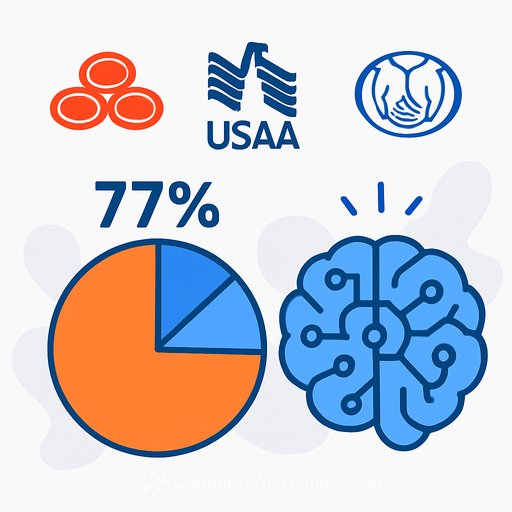
AI’s practical applications in trade continue to expand. For example, 77% of surveyed firms use AI for supply chain monitoring and predictive data analysis, a sharp rise from just 29% last year. These tools help manage inventories and forecast delays or blockages, which is critical for exporters navigating global supply chains.
Wider Skills Shortage Adds Pressure
The survey also revealed a broader skills shortage affecting 94% of UK businesses across industries. This general deficit makes it even harder to recruit specialized AI professionals, creating a dual challenge that could slow innovation and growth.
With the UK renewing its collaboration with the EU on AI research and innovation, building strong domestic AI skills is vital. This effort aims to create new jobs, increase efficiency, and unlock business opportunities within the UK.
Sarah Murrow, CEO of Allianz Trade UK & Ireland, commented: “As more UK firms integrate AI, the demand for innovation is clear. However, a lack of relevant skills remains a key barrier. Access to AI talent is now as important as access to the technology itself. Closing this gap will support productivity and growth in a competitive market.”
UK Exporters Adjust Strategies Amid Tariff Uncertainty
The survey also sheds light on the impact of recent US tariffs. Since their introduction on April 2, UK export optimism has dropped sharply from 85% to just 42%. Most companies (89%) are renegotiating supplier and logistics contracts to manage rising costs.
Only 20% of firms plan to absorb higher tariffs without changing prices, while 38% intend to pass on these costs to customers. Asia Pacific has overtaken North America as the preferred region for relocating production sites, suppliers, and exploring new export markets.
UK businesses are preparing to respond proactively: 60% plan to diversify into new business lines and increase capital investment in key areas to counter tariff-related challenges.
Maxime Darmet, Senior Economist at Allianz Trade, said: “The UK’s trade deal with the US positions it uniquely. While tariff reductions help, they mainly cover selected sectors and do not fully restore the pre-Trump advantages. Businesses face uncertainty but are ready to adapt and seek new opportunities, balancing relationships with the US, EU, and Asia.”
Further Reading
Your membership also unlocks: