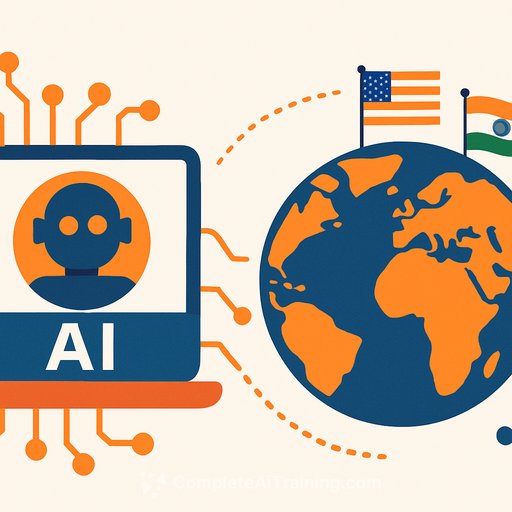
Eye on AI: AI Sovereignty and Strategic Partnerships in Southeast Asia and the Gulf
At a recent economic forum in Kuala Lumpur, leaders from Southeast Asia and the Gulf discussed their urgent desire to benefit from AI advancements while maintaining control over key AI technologies. This concept, often referred to as AI sovereignty, reflects their aim to manage critical parts of the AI ecosystem—from data centers to AI models—without relying solely on U.S. or Chinese technology.
This concern is not just technical but cultural. Large language models embed specific values and cultural norms, which may not align with those of different regions. Leaders worry their unique cultures might be underrepresented unless they develop or customize their own AI solutions. Additionally, geopolitical pressures, especially from Washington, push countries to align strictly with either the U.S. or China, complicating their AI strategies.
Malaysia’s Neutral Stance amid Geopolitical Pressures
Malaysia’s Prime Minister Anwar Ibrahim has maintained a neutral approach, acknowledging the importance of both China as a neighbor and the U.S. as the country’s largest investor and trading partner. He emphasized the need for a global strategy that goes beyond narrow national or regional interests to address AI development and deployment.
The Challenge of Achieving AI Sovereignty
Despite ambitions, true AI sovereignty remains difficult. Kiril Evtimov, CTO of UAE-based AI firm G42, highlighted the high costs involved in building and maintaining advanced AI models and data centers. Most countries can only afford to own select parts of the AI stack. For many, relying on open-source models for specific government applications might represent the closest form of sovereignty they can achieve.
OpenAI’s “AI for Countries” Program
OpenAI recently launched an initiative called “AI for Countries,” which partners with governments to build and host AI models within colossal data centers, part of its Project Stargate. The UAE is the first partner, investing billions to establish a 1 gigawatt data center in Abu Dhabi and contributing to U.S.-based Stargate centers.
In return, the UAE gains access to OpenAI’s software across government sectors like energy, healthcare, education, and transportation. Notably, every UAE citizen receives free access to ChatGPT Plus, which is normally subscription-based.
Customizing AI for Local Needs
OpenAI stresses that its AI offerings will be customized for each partner country, reflecting local languages, cultures, and global standards. They also plan to support local AI startups by investing alongside regional venture capital firms.
Jason Kwon, OpenAI’s Chief Strategy Officer, explained that partnerships will be “co-developed” to fit each country’s unique needs and capabilities. For countries unable to invest billions in data centers, contributions could come in the form of valuable data, AI literacy programs, or facilitating collaboration with local businesses.
The Trade-off: Access vs. Sovereignty
This arrangement raises important questions for governments and citizens about the balance between gaining access to advanced AI and maintaining full sovereignty over their data and models. Trading sensitive data for technology access may feel like a difficult compromise.
Ultimately, many countries face a stark choice: prioritize access to leading AI capabilities or achieve full AI sovereignty. Achieving both simultaneously remains a significant challenge.
Key Takeaways for Executives and Strategists
- AI sovereignty is a strategic priority for emerging markets but comes with significant cost and complexity.
- Partnerships like OpenAI’s “AI for Countries” offer a model for collaboration that balances local control with access to advanced AI.
- Executives should consider how to leverage such partnerships while protecting cultural values, sensitive data, and national interests.
- Investing in AI literacy and local startup ecosystems is essential to maximize the benefits of AI collaborations.
For professionals looking to deepen their understanding of AI applications and strategy, explore practical AI courses and certifications at Complete AI Training.
```Your membership also unlocks: