AI Speeds Patient Identification for Cancer Trials
Cancer patients diagnosed with metastatic disease face a narrow window to enroll in clinical trials before treatment plans must be finalized. Machine learning now helps researchers identify eligible patients faster, giving more people access to experimental therapies that might otherwise remain out of reach.
Jeanine Bortel, Vice President and Head of AI Portfolio Development at Pfizer, witnessed this shift firsthand while managing breast cancer trials. The ability to predict trial eligibility improved dramatically, she said. "We have the ability to be transformative in how we identify patients who are likely to become eligible for a trial - something we simply couldn't do before these new technologies."
The stakes are substantial. Cancer is the second leading cause of death in the United States, claiming more than 600,000 lives annually.
How AI Processes Medical Data at Scale
AI systems now review complex medical records from multiple clinical datasets to flag patients who meet trial criteria. Pfizer aims to increase enrollment rates by more than 20% using these tools. The result benefits both patients, who gain access to trials they might not have known about, and researchers, who can recruit larger, more diverse study populations.
Oncology has used predictive data science since the 1950s, when researchers applied mathematical modeling to understand cancer progression. Computational biology emerged in the 1970s. But insights from these models remained difficult to validate in practice until recently. Tamara Mansfeld, Vice President and Head of AI Portfolio Research at Pfizer, attributes the shift to two converging forces: rapid progress in AI itself and the exponential growth of health data available to train these systems.
Designing New Cancer Treatments
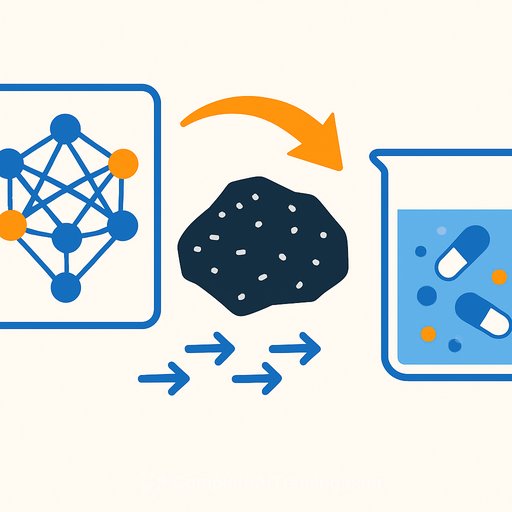
AI extends beyond patient recruitment. In 2020, Pfizer partnered with PostEra, a startup that uses AI to discover new chemical structures called payloads. These compounds enable the development of antibody-drug conjugates - a class of cancer therapies that attach toxic agents directly to tumor cells.
Mansfeld said designing these payloads efficiently would not be possible without AI. The technology generates potential next-generation oncology medicines by exploring chemical possibilities faster than traditional methods allow.
Reducing Administrative Burden
Large language models have improved enough to assist with research documentation. Two years ago, Bortel experimented with LLMs to draft clinical trial reports. The output was unusable. Today, AI regularly generates usable first drafts. Pfizer's document generation system cuts the time to produce an initial clinical study report by 40%, reducing the overall manuscript submission timeline by 15%.
That efficiency matters. Scientists spend less time on administrative work and more on the research itself.
What Comes Next
AI is accelerating both the recruitment side of clinical trials and the development of new medicines. The technology processes data in ways previously impossible, increasing both speed and precision. For cancer researchers, the practical impact is already visible in faster patient identification, new drug designs, and streamlined documentation.
Oncology has historically led adoption of new health technologies. What happens in cancer care often signals broader trends across medicine. For professionals in research and science roles, understanding how AI handles data review, pattern recognition, and complex document generation offers lessons applicable across healthcare.
Consider exploring AI Research Courses or AI for Healthcare to deepen your knowledge of these applications.
Your membership also unlocks: