Healthcare AI is reshaping drug development-and insurance is adapting
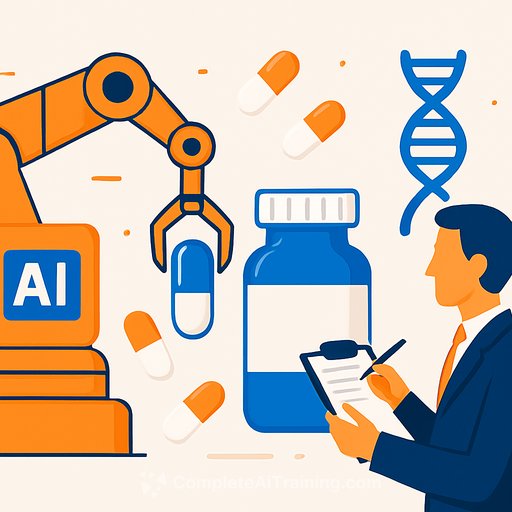
Across U.S. hospitals and life sciences, AI is moving from pilots to production. It's improving drug discovery, tightening clinical trial operations, and speeding up diagnostics. It's also changing how insurers assess risk and structure coverage for AI-heavy workflows.
For providers and biopharma, the upside is clear: faster research cycles and better patient outcomes. For insurers, richer data and new exposures arrive at the same time. Getting both sides in sync is now a business priority, not a tech nice-to-have.
Precision medicine and clinical trials: real gains, real risk
AI models are helping spot disease earlier and match patients to therapies with more detail-especially in oncology and rare conditions. Algorithms can scan EMRs to find patients likely to benefit from a trial, cutting recruitment delays and cost overruns.
On the R&D side, models can parse scientific literature, narrow candidate compounds, and read medical images with accuracy comparable to expert radiologists. The flip side: the risk of overdiagnosis, hidden bias from skewed training data, and security gaps that expose PHI or models to attack.
As Jim Craig, Senior Vice President - Underwriting at Munich Re Specialty, puts it, when data is accessible and high quality, risk selection becomes more precise and insurance can better fit the realities of life sciences. That precision depends on data governance, model transparency, and verifiable performance.
Offshore BPO/KPO is doing the heavy lifting
Many AI-enabled tasks-trial analytics, EMR reviews, imaging workflows-are now supported by nearshore and offshore providers. It's a pragmatic way to scale data labeling, analytics, and human-in-the-loop review without ballooning onshore costs.
The model works if controls are tight: HIPAA-aligned processes, BAAs, role-based access, encrypted pipelines, auditable logs, and continuous QA. Cross-border vendor risk needs the same discipline you'd apply on-site: least-privilege access, red-team testing, and incident response drills.
Coverage is evolving too. Products like Munich Re's aiSure address AI model errors-including generative "hallucinations"-that can trigger lost revenue or legal exposure. Expect more offerings that sit between traditional product liability, tech E&O, and cyber.
What insurers want to see in AI submissions
- Clear model purpose: clinical decision support, operational triage, or diagnostic aid
- Data lineage: sources, consent, de-identification, and refresh cycles
- Validation: performance vs. gold standards, drift monitoring, and recalibration plans
- Human oversight: defined escalation paths and final decision accountability
- Security controls: PHI protection, model integrity, third-party risk management
- Supply chain clarity: where data lives, who touches it, and which vendors are in scope
Risk controls providers and biopharma teams should implement
- Governance: an AI committee with clinical, data, security, and legal voices
- Fairness checks: pre-deployment bias testing and post-deployment outcome reviews
- Model monitoring: drift alerts, performance dashboards, rollback procedures
- Documentation: intended use, limitations, versioning, and change logs
- Security: MFA, encryption, key rotation, secure sandboxes, and red-team exercises
- Vendor management: due diligence, BAAs, SOC 2/ISO evidence, and audit rights
Coverage checklist for AI-driven workflows
- Product liability for AI-enabled devices or software influencing care
- Tech E&O for algorithmic errors, model drift, and system downtime
- Cyber for PHI exposure, ransomware, model theft, and business interruption
- Media/IP for data rights, training data usage, and content generated by models
- Contractual indemnities that reflect cross-border vendors and model providers
For U.S. healthcare organizations, the equation is simple: ship faster, but with guardrails. AI can accelerate research and care delivery, and offshore support can scale it. The insurance market is ready to back it-if you can show evidence of control.
As Craig notes, small and mid-sized life sciences firms have a clear opening to apply AI in drug development and patient care. Managing risk and locking in the right coverage makes that opportunity sustainable.
Helpful references:
If your team needs structured upskilling on AI in healthcare and insurance operations, explore role-based programs:
- AI Learning Path for Regulatory Affairs Specialists
- AI Learning Path for CIOs
- AI Learning Path for Project Managers
Your membership also unlocks: