
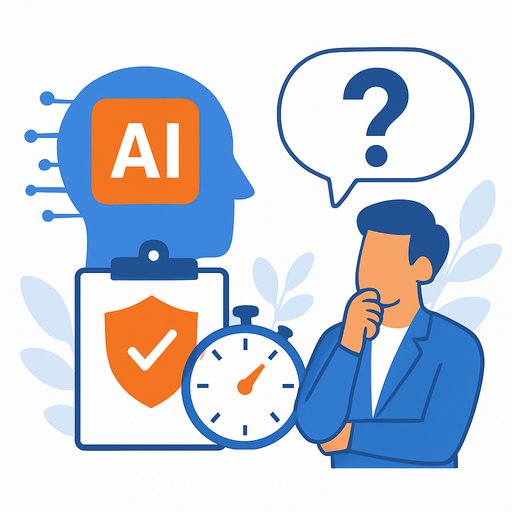
The insurance industry is automating underwriting and claims decisions with AI models that process applications in seconds. Regulators and policyholders are now asking a harder question: when an algorithm denies coverage or adjusts a premium, can the insurer explain exactly why?
Speed has been the headline for years. Machine learning models can ingest structured and unstructured data - from motor vehicle records to social media activity - and return a bindable quote faster than any human underwriter. The trade-off, which risk managers and compliance officers are confronting, is that many of these models operate as black boxes. A decision gets made. The logic behind it remains opaque.
The tension sits at the intersection of efficiency and accountability. Insurance commissioners in several states have signaled they will apply existing unfair trade practices statutes to algorithmic decisions. If a carrier cannot reconstruct the factors that drove a specific outcome, it may struggle to defend that decision in a market conduct examination or a discrimination claim.
How models lose their audit trail
Traditional actuarial models rely on generalized linear models where each variable's weight is transparent. A rate filing shows exactly how much a speeding ticket increases premium. Modern gradient-boosted trees and neural networks find interactions across hundreds of variables. They produce more accurate pricing and sharper risk segmentation. They also make it difficult to isolate why any single applicant received a particular result.
Some insurers have responded by layering explainability tools on top of their production models. SHAP values and LIME explanations can approximate variable importance for a single decision. But approximations are not the same as deterministic logic. A regulator asking "what caused this declination" may not accept a probabilistic answer.
Wholesale and E&S lines face distinct pressure
The surplus lines market, which has adopted AI for triaging complex submissions, operates with fewer rate and form restrictions than admitted carriers. That freedom comes with heightened expectations around documentation. Wholesale brokers placing a difficult property risk or a professional liability account need to tell retail agents why a quote came back at a certain price. When the answer is "the model scored it," relationships strain.
Specialty underwriters who pair algorithmic recommendations with human judgment are finding a middle ground. The model flags risks that fall outside appetite or predicts loss ratios. The underwriter reviews the output, applies their own analysis, and documents the rationale. That documentation becomes the audit trail - not the model's internal weights. It's slower than straight-through processing, but it preserves the ability to explain decisions later.
What regulators are watching
The National Association of Insurance Commissioners has accelerated work on its principles for AI use in insurance. Draft guidance emphasizes that carriers remain responsible for third-party model outputs, including those from vendors who treat their algorithms as proprietary. An insurer cannot outsource its obligation to explain decisions by pointing to a black-box vendor model.
Colorado's 2024 law requiring insurers to report on their use of external consumer data and algorithms has become a template other states are studying. The law does not ban AI. It requires governance frameworks, bias testing, and documentation that shows how decisions are made. Carriers that built these frameworks early are now treating them as a competitive advantage in regulatory conversations.
Why this matters for insurance professionals
Underwriters, claims managers, and agency principals should expect explainability requirements to tighten, not loosen. The same AI for Insurance tools that accelerate workflows will face scrutiny in depositions and regulatory audits. The professionals who will navigate this shift most effectively are those who document how they use model outputs - not just that they use them. For AI for Executives & Strategy leaders, the task is to set a governance framework that treats explainability as a design requirement, not an afterthought. The question is no longer whether AI can decide faster. It's whether the organization can stand behind those decisions when someone asks why.