
AI news ·
AI speeds up production but cannot replace creative judgement, says Stereo Creative strategist
AI speeds up production work but can't replace the taste, cultural judgment, and strategic thinking that make creative work effective. Agencies that treat it as a tool-not a replacement-get the best results.
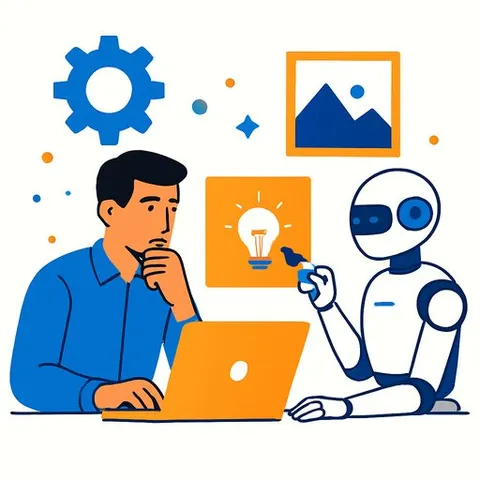
AI accelerates creative work, but judgment and taste remain irreplaceable
Creative agencies cannot rely on artificial intelligence alone to solve production challenges. While AI tools speed up execution, they cannot replace the human judgment, aesthetic sensibility, and cultural understanding that define effective creative work.
This reality shapes how agencies should integrate AI into their operations. The technology works best as a production accelerator-handling repetitive tasks, generating variations, or processing large volumes of content. But the strategic decisions about what to make, why it matters, and whether it resonates with audiences still require human expertise.
Where AI adds real value
AI excels at scaling repetitive work. It can generate multiple design iterations, optimize layouts, or process asset libraries faster than manual methods. For agencies managing large client rosters or tight deadlines, this speed matters.
The efficiency gains free creative teams to focus on higher-order thinking. Instead of spending hours on production mechanics, creatives can spend more time on strategy, cultural insight, and the conceptual work that differentiates an agency's output.
What AI cannot do
Taste is not a technical problem. An algorithm cannot decide whether a campaign reflects authentic cultural understanding or relies on lazy stereotypes. It cannot predict which creative direction will resonate with an audience or feel dated in six months.
Judgment requires context-knowing the client's brand history, the competitive environment, the broader cultural moment. These inputs are qualitative and fluid. They demand the kind of thinking that comes from experience, intuition, and sustained attention to culture.
AI also struggles with originality. The technology works from patterns in existing work. A campaign that breaks through noise typically does so by rejecting the obvious pattern-exactly what AI-first approaches tend to reproduce.
The practical integration
Agencies that treat AI as a tool rather than a replacement see better results. The workflow looks like this: humans set direction and make taste judgments; AI handles production volume and iteration; humans review, refine, and make final calls.
This requires creatives to develop new skills. Understanding what AI can and cannot do, knowing how to prompt it effectively, and recognizing when to override its output all matter. But these are additions to existing expertise, not substitutes for it.
Clients increasingly expect agencies to use available technology. But they also expect work that feels culturally fluent and strategically sound-the outputs that depend on human judgment. Agencies that can deliver both will have an advantage.
For creatives looking to strengthen these skills, AI for Creatives courses can help teams understand how to work effectively with AI tools while maintaining the judgment and taste that define strong creative work. AI Design Courses also cover practical workflows for integrating AI into production pipelines.