AI Expands What Scientists Can Study, But Humans Still Decide What Matters
Artificial intelligence is making previously intractable problems solvable. Researchers can now design new antibodies or simulate 1,000 years of climate in a single day. Yet the technology has a fundamental limitation: it doesn't determine which problems deserve attention.
"AI changes what problems are tractable, but it doesn't tell us what problems matter," said Risa Wechsler, an astrophysicist at Stanford.
This distinction matters for working scientists. The expansion of computational capability creates new possibilities, but it doesn't resolve the underlying question of scientific priority.
The Shift in Research Feasibility
Computational speed has opened avenues previously closed by time and cost constraints. Simulations that once required years now run in hours. Molecular design problems that seemed intractable have become approachable.
But this capability shift doesn't automatically translate to scientific progress. The ability to compute something quickly doesn't mean the computation answers a meaningful question.
Where Human Judgment Remains Essential
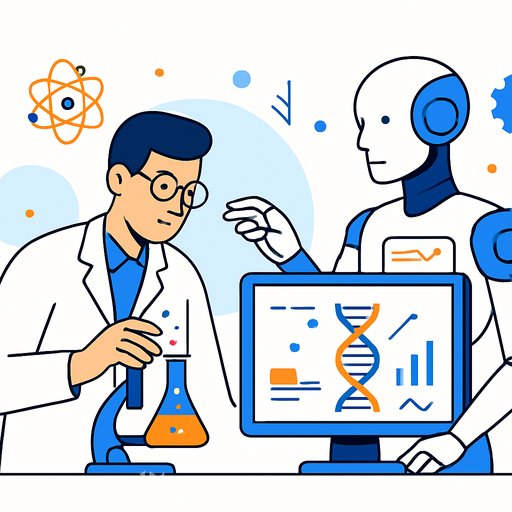
Researchers must still decide which questions to ask, which hypotheses to test, and which results warrant further investigation. AI accelerates the work, but humans determine its direction.
This dynamic appears across scientific disciplines. In drug discovery, AI can screen compounds faster than before, but chemists and biologists decide which compounds matter clinically. In climate science, faster simulations don't eliminate the need for researchers to choose which scenarios to model or how to interpret results.
For scientists integrating AI into their workflows, this means the technology functions as a tool that expands capacity without replacing judgment. The computational advantage is real. The strategic decisions remain human work.
Learn more about AI for Science & Research or explore AI Research Courses designed for research professionals.
Your membership also unlocks: