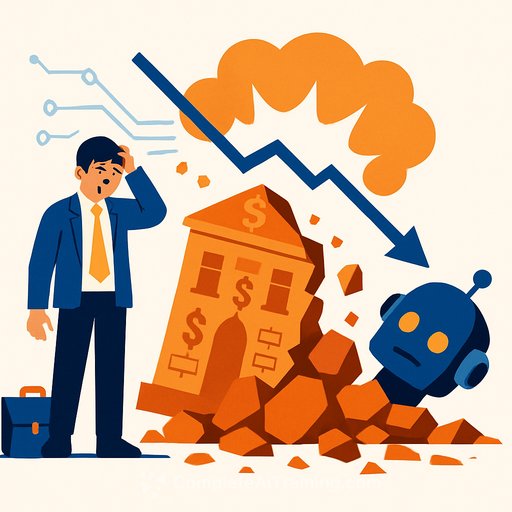
Why Your AI-Built Startup Might Collapse Tomorrow
AI-powered development platforms are making code creation accessible like never before. But this convenience comes with a hidden danger: an unprecedented technical debt problem. As Michael Kisilenko, CEO of UVISION, points out, "the AI takeover in development is inevitable, but preparation means understanding its promises and pitfalls."
The AI shift in software development is already here. Behind the scenes of quick prototypes and impressive demos, a crisis is brewing that could change the tech landscape. Platforms like Cursor, Lovable, v0, Base44, and Bolt democratize coding, but they also generate technical debt that many startups aren’t ready for.
The Rise of Vibe Coding
A new trend called "vibe coding" is taking hold. Developers work alongside AI, producing code without a deep grasp of its architecture. They accept AI suggestions based on intuition rather than solid engineering principles. This speeds up early development but leaves software with hidden structural flaws.
"We're seeing an explosion of products built on shaky foundations," says Michael Kisilenko. "Many companies use vibe coding platforms to craft flashy demos or proofs of concept (POCs) aimed at attracting attention or funding. But those codebases rarely stand the test of time."
The Fundraising Shift
Thanks to AI tools, entrepreneurs can now show off sophisticated prototypes to investors in days or weeks instead of months, with minimal upfront costs. Small teams demonstrate complex features that once required large development resources.
However, this ease has a downside. The gap between demo-ready and production-ready code has never been wider. AI-generated prototypes often lack the necessary architecture for scalability, security, and maintenance. This creates a risky disconnect between what investors see and the realities technical teams will face when building a stable product.
The Coming Technical Debt Crisis
Experts at UVISION and beyond predict a looming reckoning as more AI-generated code moves into production. The issue isn’t AI itself — it’s the difference between fast prototyping and building enterprise-grade software.
"We’re already witnessing this pattern," Kisilenko explains. "Companies come to us after their AI-built POCs secure funding. They need experienced developers to turn those prototypes into scalable, secure products."
Preparing for the New Reality
Organizations must rethink how they use AI in their development process. AI tools are excellent for ideation, quick prototyping, and proof of concept tasks—ideal for fundraising and validating ideas.
But production demands traditional software engineering: strong architecture, security measures, and maintainable code. Smart businesses combine AI-driven prototyping with seasoned development teams to handle production builds. This approach taps into AI’s speed while avoiding crippling technical debt.
The Market Response
Companies like UVISION are stepping up as a bridge between AI prototypes and production-ready systems. "We specialize in taking products built on platforms like Lovable, Replit, v0, Base44, and Bolt, then rebuilding core architecture while preserving the original vision and functionality," Kisilenko says.
- If you want to explore how to balance AI tools with solid engineering, consider checking out practical AI training courses at Complete AI Training.
- For developers and product teams looking to leverage AI effectively, combining rapid prototyping skills with proven software practices is key.
Your membership also unlocks: