AI for Service, Support, and Operations: Moving Beyond the Hype
The CION Vendor Showcase put two operators on center stage: Rezolve.ai and Leena.ai. No sales pitch. Just what works, what fails, and where AI is actually moving the needle in enterprise service and operations.
The takeaway was clear: you do not need a full-stack overhaul to get value. Start with narrow, high-volume use cases, wire AI into the systems you already use, and measure outcomes that matter to Ops-cost per ticket, time to resolve, and employee satisfaction.
Why it matters for Operations
IT and business operations are stretched thin-too many apps, too many tickets, and too much manual work. The question is not whether to use AI, but where it will deliver measurable value.
Automating Tier 1 support, routing routine requests to self-service, and connecting data across tools are high-impact plays that reduce friction fast without adding more complexity.
Start small: deflect tickets and enable self-service
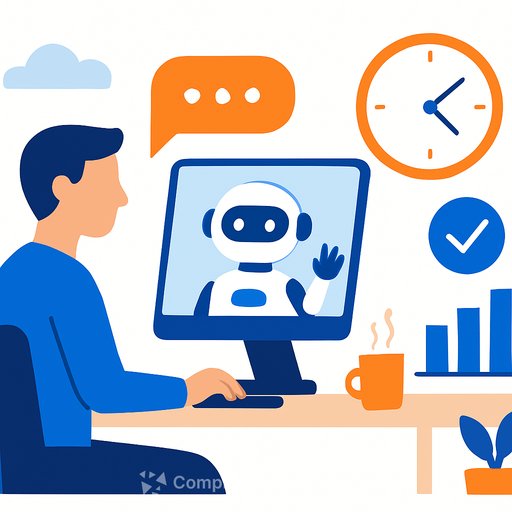
Rezolve.ai's team showed how generative AI can power virtual agents for IT and HR that plug into platforms like ServiceNow and Freshdesk. The result is fewer tickets and faster resolution at scale.
As Manish Sharma noted, "Every enterprise is trying to cut cost per ticket, and AI can do that without cutting quality." Teams are seeing 30-40% deflection rates and improved employee satisfaction.
Reference platforms mentioned: ServiceNow and Freshdesk.
AI agents that think and act across systems
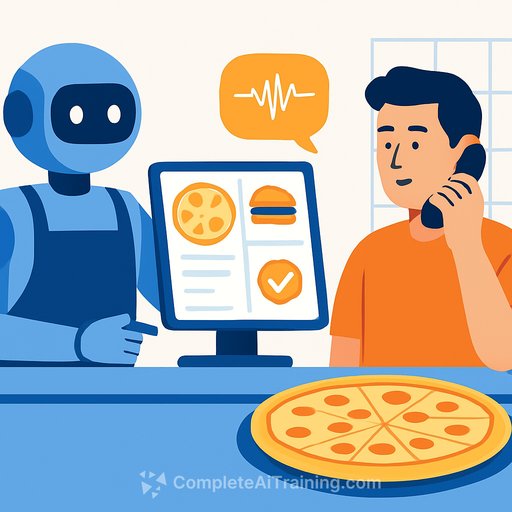
Leena.ai introduced "AI colleagues"-proactive digital workers that execute end-to-end processes across applications, including voice interactions. This is different from reactive chatbots; these agents initiate work and close loops.
As Adit Jain put it, "AI colleagues don't wait for instructions, they get up at seven in the morning and start working." That is the promise: less waiting, fewer handoffs, more done.
Cut friction, not corners
Both vendors focused on removing friction-not just automating tasks. Most enterprises juggle Workday, SAP, ServiceNow, and a dozen more tools. People should not need to remember ten systems just to get one thing done.
With AI as the single front door, requests route to the right workflow, approvals happen in context, and updates sync across systems. Simpler for employees, cleaner for Ops, better for the bottom line.
Trust through transparency and governance
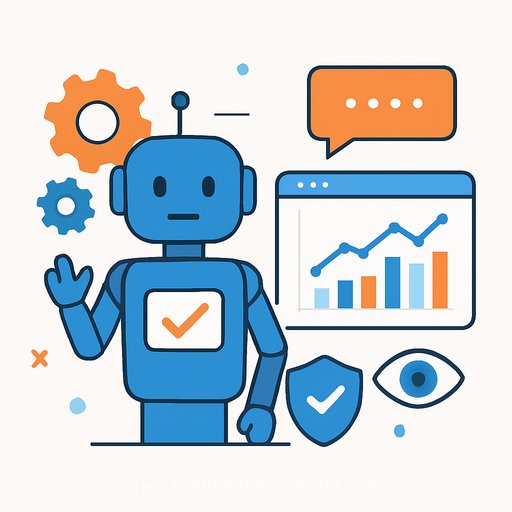
Accountability was a priority in the discussion. Leena.ai highlighted a Transparency Dashboard that logs every agent action-what happened, why, and under which rule-so leaders can audit, review, and reverse if needed.
"Every decision an AI colleague makes is explainable, traceable, and reversible," said Jain. For broader guidance, frameworks like the NIST AI Risk Management Framework can help set policy and controls without slowing delivery.
Measure what matters
Skip novelty and track outcomes. Focus your scorecard on ticket deflection, time to resolution, CSAT/ESAT, and cost per ticket. Tie each pilot to an explicit target and a payback period.
As Sharma said, "For every dollar spent, one can recover more value in operational efficiency than with any other initiative." That is the standard to hold.
From firefighting to impact
When routine tickets, requests, and approvals run through AI, your team gets time back for projects that move the business. Less noise, more progress.
"The real ROI comes when IT stops firefighting and starts leading transformation," said Matt Ruck. That is where Ops proves its strategic value.
Practical next steps for Operations leaders
- Identify your top 10 Tier 1 intents by volume and effort; start there.
- Map required integrations across ServiceNow, Workday, SAP, identity, and comms tools.
- Define guardrails: data access, approval thresholds, rollback rules, and audit requirements.
- Run a 60-90 day pilot with clear targets (e.g., 30% deflection, 20% faster TTR); review weekly.
- Create simple employee comms so people know what the AI can do and where to find it.
- Publish transparent dashboards for leadership and auditors; keep a human override.
Want help upskilling your team?
If you are building AI capabilities in service and operations, these curated resources can help: AI courses by job function and automation-focused training.
Bottom line: AI in service and operations is a practical play. Start focused, integrate with what you have, prove ROI fast, and build trust with transparency. Do that, and you turn support from a cost line into a reliable engine for execution.
Your membership also unlocks: