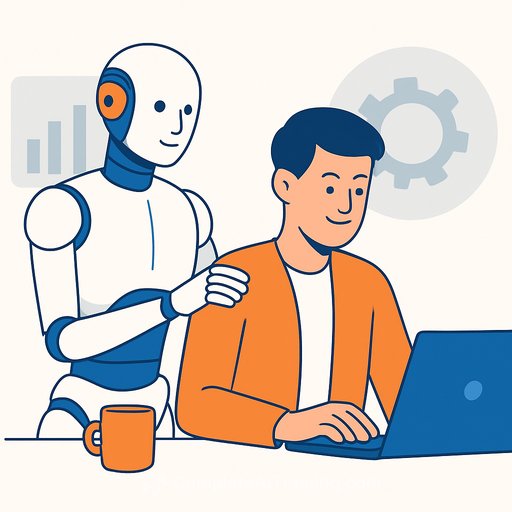
IEEE survey: AI and humanoids will reset robotics in 2026
The IEEE's latest global study points to a sharp turn: 52% of technologists expect robotics to be one of the industries most affected by AI next year. And 77% say humanoids will feel "fun" at first, then fade into the background as everyday co-workers.
Behind the numbers is a simple signal: AI is moving from support tech to the operating system of robots. That changes how robots are built, deployed, and trusted.
Why AI is moving to the core
Three forces are converging: bigger and better models, massive real-world robotic data, and cheaper, faster compute. For years, robots excelled in structured spaces-assembly lines and fulfillment centers-with pre-programmed workflows.
Now they perceive and adapt. Computer vision, sensor fusion, and reinforcement learning give robots contextual awareness and real-time decision-making.
- Manufacturing: robots detect variances and adjust forces or paths without manual recalibration.
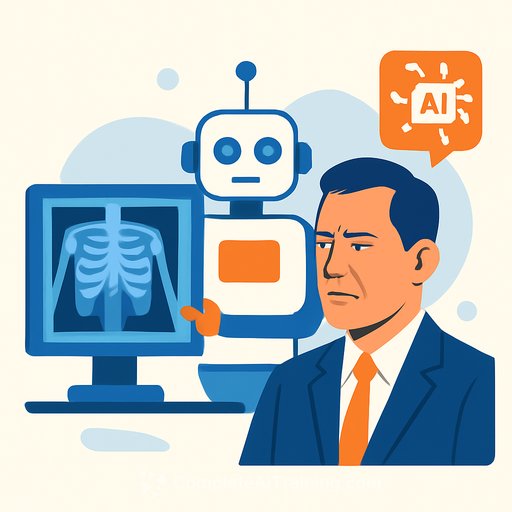
- Healthcare: surgical systems identify structures and guide safe paths during procedures.
The trust gap is closing. Organizations are treating AI as a co-pilot rather than a calculator, even in regulated fields.
What this means for teams and sites
AI is amplifying human expertise. Less-experienced operators can handle complex tasks with guidance from intelligent systems. The shift isn't limited to the final robot-it runs through the entire value chain.
- Design: optimize kinematics, simulate loads, predict tolerances before metal is cut.
- Operations: analyze fleet performance, improve utilization, and refine task planning continuously.
- ROI: more uptime, fewer interventions, faster iteration cycles.
Where generative AI fits
Generative AI is turning robotics into a more creative and adaptive discipline. Instead of only following rules, systems can propose designs, synthesize training data, and reason about tasks.
- Design and simulation: generative design for lighter, stronger parts; synthetic data to train safely at scale (e.g., thousands of realistic surgical scenarios).
- Autonomy: language models evaluate alternative task sequences and simulate outcomes to pick the safest or most efficient plan.
- Human-robot interaction: natural language and multimodal input (speech, sketches, video) let humans express intent while robots execute.
Near term, expect human-in-the-loop systems: AI augments designers and operators, and people validate results before deployment.
Ethical deployment: data, decision, deployment
- Data: collect transparently, get consent, and favor privacy-preserving pipelines. In healthcare, synthetic data can reduce reliance on patient datasets.
- Decision: review AI-generated behaviors with interpretable tooling before they hit the physical world.
- Deployment: monitor for drift, maintain version control for models, keep audit trails, and recertify when behavior changes.
Ethics shouldn't be a checklist. It's a working culture that sustains trust as systems learn post-deployment.
Humanoids: from novelty to normal
Yes, the "fun factor" helps. Eye contact, gestures, and light humor lower resistance and spark curiosity. Then the novelty fades-and that's progress. Value takes over: reliability, adaptability, and smooth collaboration.
We've seen this arc before with social robots like Pepper. The metric shifts from attention to outcomes.
When humanoids become common
- 0-3 years: familiar in controlled spaces-warehouses, labs, and hospital logistics pilots.
- ~2030-2035: broader use across campuses, hospitals, hospitality, and assisted living.
- Late 2030s-early 2040s: from headline to background-another colleague on the floor.
Adoption won't hinge on hardware alone. Cultural acceptance matters. As benefits pile up-less strain in healthcare, safer factories-resistance drops.
What to do next (practical moves)
- Run small, measurable pilots that pair AI perception with human oversight.
- Stand up a data pipeline for robots: consent, diversity, retention, and synthetic augmentation.
- Add interpretability and simulation gates before any new behavior hits production.
- Instrument everything post-deployment: drift alerts, rollback plans, and clear ownership.
- Upskill teams on AI for controls, vision, and HRI; make "safety and ethics" a sprint ritual.
Further reading
Upskill your team
If you're preparing pilots or building internal capability, a focused program can compress ramp time. See curated options here:
Bottom line: AI is becoming the brain of robotics. Humanoids will win acceptance the same way other automation did-by proving steady value in real environments.
Your membership also unlocks: